
Everything about Florida water-damage claims
Short answer: A Florida water damage insurance claim covers sudden, accidental water losses inside your home, such as burst pipes, supply-line failures, and roof leaks. How much you recover usually turns on the water's category, hidden damage behind walls and under floors, the drying methods used, and whether the carrier labels the loss water or flood.
Most Florida water damage claims are not decided by whether water reached your home, but by the disputes that follow. Carriers and policyholders routinely disagree about the water's category, the true scope of damage, and whether the structure was dried correctly. These guides map the recurring conflicts so you can recognize them before they quietly shrink your payout.
The Disputes That Drive Your Payout
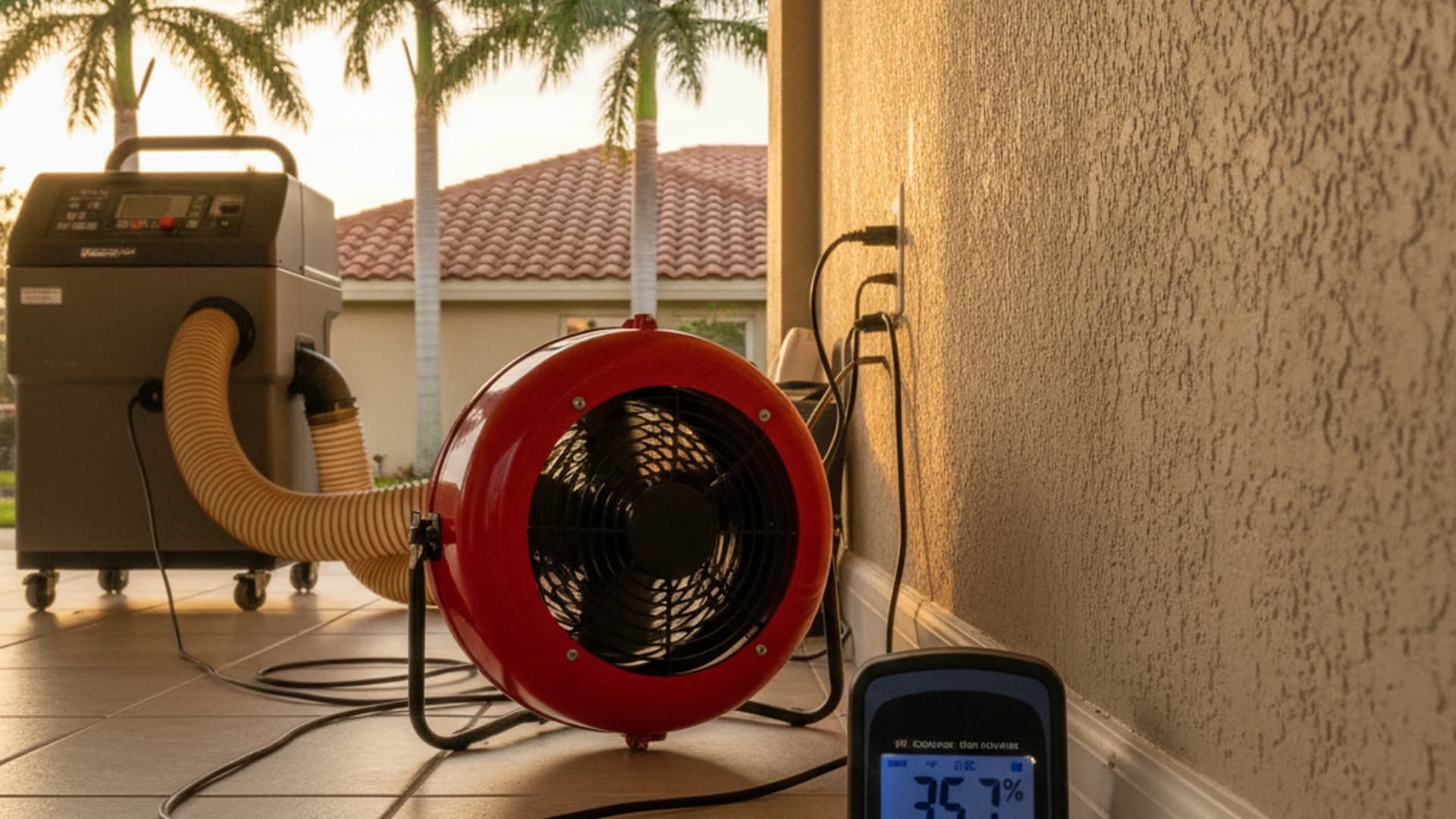
Florida adjusters classify water as category 1, 2, or 3, and that label shapes what mitigation, demolition, and replacement a carrier will fund. Clean supply-line water is treated differently from a contaminated sewage backup, and a misclassification early on can limit everything that follows. Scope is the next pressure point. Water travels behind walls, under cabinets, and into the subfloor, where moisture lingers long after surfaces look and feel dry. When that hidden damage is overlooked, secondary problems like swelling, delamination, and mold can surface weeks later, often colliding with policy mold sublimits.
Where Florida Water Claims Break Down
Several patterns repeat across the state. Mitigation invoices get challenged when a carrier and a restoration vendor disagree on what drying was reasonable. Improper or incomplete dry-out leaves trapped moisture that fuels new damage and fresh arguments about causation. In condos and multi-unit buildings, responsibility splits among unit owners, neighbors, and the association, complicating who pays for what. The costliest dispute is water versus flood, because a loss labeled flood may fall outside your standard homeowners policy and push you toward separate coverage. Tools like Xactimate estimates, moisture readings, and the appraisal clause all become relevant when the numbers do not match the damage in front of you.
Understanding these pressure points helps you document the loss accurately and push back when an estimate feels low. If your water claim has been delayed, underpaid, or partly denied, request a free claim review and have your policy and damage assessed by the team at Ocean Point Claims, a licensed Florida public adjuster that represents policyholders, not insurers.
- WaterCategory 1 vs. 2 vs. 3 Water LossesHow IICRC categorizes water losses, Category 1 (clean), 2 (grey), 3 (black), and how the categorization affects Florida insurance claim scope and cost.Read more
- WaterLong-Term Moisture Intrusion DisputesHow Florida carriers characterize water losses as 'long-term' to deny coverage, and how policyholders counter with documented sudden-event evidence.Read more
- WaterWater Mitigation vs. Carrier ConflictsHow to navigate the conflicts between your water mitigation contractor and the insurance carrier: scope disputes, pricing, and AOB risks.Read more
- WaterImproper Dry-Out ProceduresWhen water mitigation isn't done to IICRC standards, it creates downstream claim problems: mold, structural moisture, and carrier scope disputes. How to document and counter.Read more
- WaterSecondary Damage from Delayed MitigationWhen carriers delay mitigation approval, secondary water damage results. Florida policies typically cover this, but only when documented correctly.Read more
- WaterTear-Out Coverage RefusalsFlorida carriers routinely refuse to cover tear-out and demolition costs on water, fire, and mold claims. How to document necessity and force inclusion.Read more
- WaterPlumbing Access Coverage DisputesFlorida policies cover water damage but often exclude the plumbing repair itself. What's covered, what isn't, and how to navigate the access-vs-repair distinction.Read more
- WaterWater Damage Behind Walls and CabinetsHidden water damage behind walls and cabinets is often the largest scope item in a Florida water claim, and the most commonly underpaid. Detection and documentation matter.Read more
- WaterFlooring Removal Disputes in Water ClaimsWhen flooring must be removed vs. can be dried: the technical standards, the carrier arguments, and how Florida policyholders get full coverage.Read more
- WaterSubfloor and Structural Moisture DamageSubfloor moisture is the hidden driver of many Florida water claim disputes. Detection, documentation, and full-scope recovery including framing and substrate.Read more
- WaterWater Damage to Electrical SystemsWhen water reaches electrical outlets, wiring, and panels, the claim scope expands significantly. How Florida policies cover electrical damage from water.Read more
- WaterHVAC Contamination from Water LossesWhen water damages HVAC equipment, the contamination spreads through ducts to every room. Documenting HVAC scope protects the full claim.Read more
- WaterRepeated Water Loss LimitationsFlorida policies often contain exclusions or sublimits for repeated water losses at the same property. How to navigate these when filing a subsequent claim.Read more
- WaterWater vs. Flood MisclassificationFlorida carriers routinely reclassify covered water damage as excluded flood damage. The distinction, the statutes, and how to win the dispute.Read more
- WaterMulti-Unit Water Claim ConflictsWhen water damage affects multiple units in a Florida condo or HOA building, claim handling conflicts between association, unit-owner, and carrier emerge.Read more
Frequently asked questions
What is the difference between category 1, 2, and 3 water damage?
Does my Florida homeowners policy cover water damage or flood?
Why did my insurer underpay my water damage claim?
What is secondary water damage and why does it matter?
Can a public adjuster help with a Florida water damage claim?
Ready to talk to a licensed Florida public adjuster?
☎ (888) 824-1306Free claim review. No recovery, no fee. Answered 24/7.
Get a free claim review- License
- FL DFS #W829547
- Experience
- 21 years · 500+ mediations
- Rating
- 4.9★ (89 Google reviews)
- Fee
- No recovery, no fee