
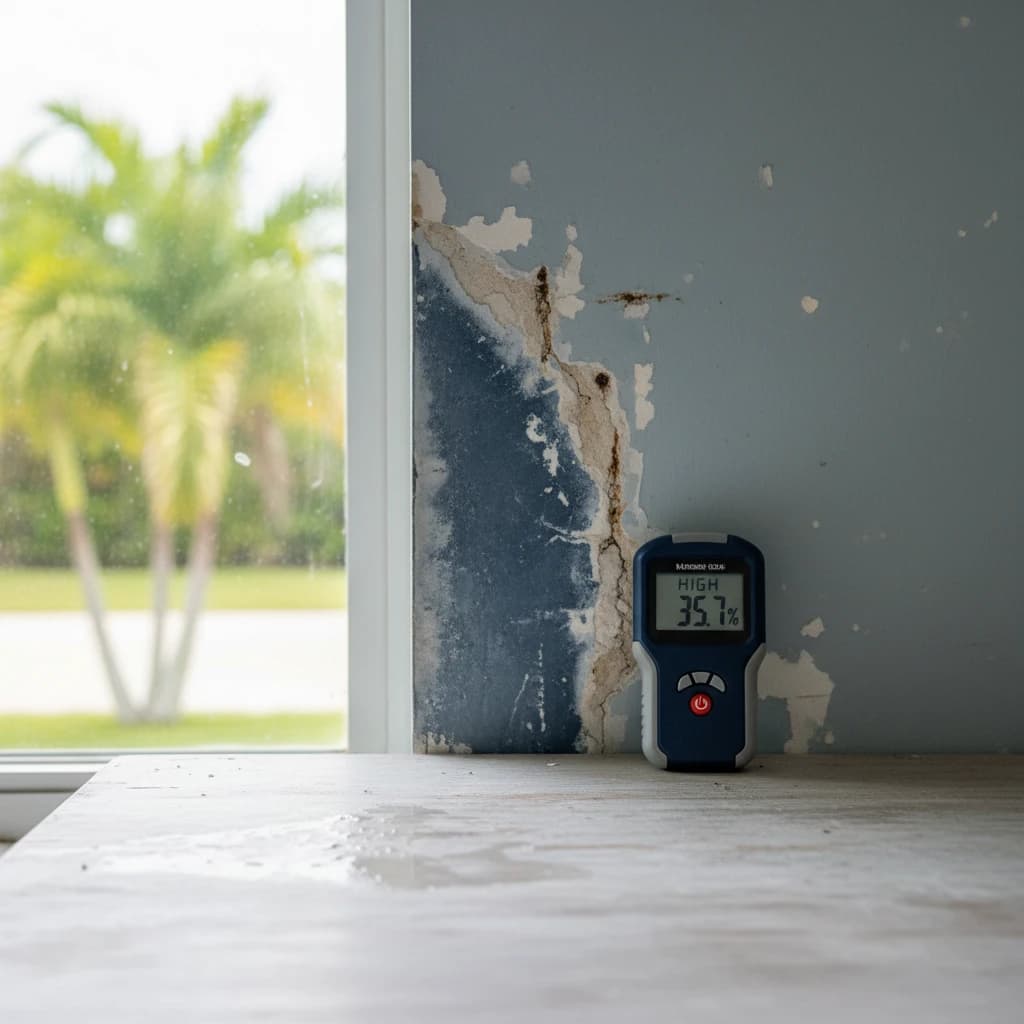
Short answer: Florida homeowner policies generally cover sudden-and-accidental water damage. Carriers commonly underpay these claims by classifying scope too narrowly, calling sudden losses "wear and tear," or applying a $10,000 limited-water cap where the underlying peril isn’t limited. A licensed public adjuster documents cause, peril, and scope to recover the full loss.
What we handle
- Pipe bursts: copper, PEX, CPVC, galvanized
- Slab leaks: sub-slab plumbing failures requiring targeted excavation
- Cast iron and polybutylene pipe claims: a South Florida specialty
- Supply-line failures: washing machine, dishwasher, ice maker, toilet
- Appliance leaks and overflows
- Roof leaks causing interior water intrusion (storm-driven)
- AC condensate line overflows
- Water heater ruptures
- Secondary mold and structural damage following water loss
Why Florida water claims get denied or underpaid
The most common pitfalls we address:
- Sudden-and-accidental vs. long-term seepage. Carriers try to recharacterize a sudden pipe burst as gradual to deny coverage. Documentation matters.
- Cause-of-loss disputes. Is the water from a covered peril (windstorm roof leak) or from an excluded source (flood)? Fla. Stat. and ISO policy language both apply.
- Limited-water endorsement caps. Many Florida policies cap "limited water coverage" at $10,000. These caps apply narrowly: the underlying peril often isn’t capped.
- Scope reduction. Carriers routinely underestimate drying, reconstruction, and contents scope. Our Xactimate re-estimate captures the full reasonable cost.
- 14-day mitigation window. Most policies require reasonable steps to prevent further damage within a short window after discovery. Failure to mitigate can support a denial: we document that you met the obligation.
Florida water damage claim dispute guides
Deep-dive guides on the specific scope, coverage, and documentation fights that decide water claims:
- Category 1 vs. 2 vs. 3 Water Losses
- Long-Term Moisture Intrusion Disputes
- Water Mitigation vs. Carrier Conflicts
- Improper Dry-Out Procedures
- Secondary Damage from Delayed Mitigation
- Tear-Out Coverage Refusals
- Plumbing Access Coverage Disputes
- Water Damage Behind Walls and Cabinets
- Flooring Removal Disputes in Water Claims
- Subfloor and Structural Moisture Damage
- Water Damage to Electrical Systems
- HVAC Contamination from Water Losses
- Repeated Water Loss Limitations
- Water vs. Flood Misclassification
- Multi-Unit Water Claim Conflicts
What a water claim should actually pay for
Carriers tend to settle the visible drywall and stop there. A complete water loss usually has five distinct cost categories, and each is a place the claim gets shorted:
- Emergency mitigation and drying. Water extraction, structural drying, dehumidification, and antimicrobial treatment. Carriers often cap or question mitigation invoices: the work is covered when it was reasonable and necessary to prevent further damage.
- Tear-out and access. Removing wet flooring, baseboards, lower cabinets, and drywall, plus the demolition needed to reach failed plumbing. Tear-out is frequently omitted from the carrier estimate even when reconstruction is allowed.
- Reconstruction. Rebuilding to pre-loss condition, including matching of flooring, cabinetry, and finishes. Florida’s matching considerations apply when a damaged material can no longer be matched to undamaged adjacent areas.
- Contents. Damaged personal property and, for businesses, inventory and equipment. Contents are valued and depreciated separately and are easy for a carrier to undercount.
- Loss of use / ALE. If the home is uninhabitable during repairs, additional living expense covers the cost of staying elsewhere. Commercial losses may carry business-interruption coverage instead.
The deadlines on a Florida water claim
Water claims are time-sensitive on both sides of the file:
- Your notice deadline. Most new property claims must be reported within one year of the date of loss, and supplemental claims within 18 months, under Fla. Stat. 627.70132. The date you first reported the loss controls, so document it.
- The carrier’s response deadlines. Florida insurers must acknowledge, investigate, inspect, and pay or deny within the windows set by Fla. Stat. 627.70131, with statutory interest accruing on late payment.
- Your mitigation window. Most policies require reasonable steps to prevent further damage promptly after discovery. We document that you met that obligation so the carrier cannot use it as a denial.
How we document a water loss
Documentation is what separates a paid water claim from a denied one. On every water file we capture the cause, the category and class of water, and the full extent of intrusion: moisture mapping and meter readings, thermal imaging behind walls and cabinets, photographs of the failed component and the path of the water, and a line-item Xactimate estimate built to current Florida pricing. That record both establishes the sudden-and-accidental cause the policy requires and pins the carrier to the full reasonable scope of repair.