
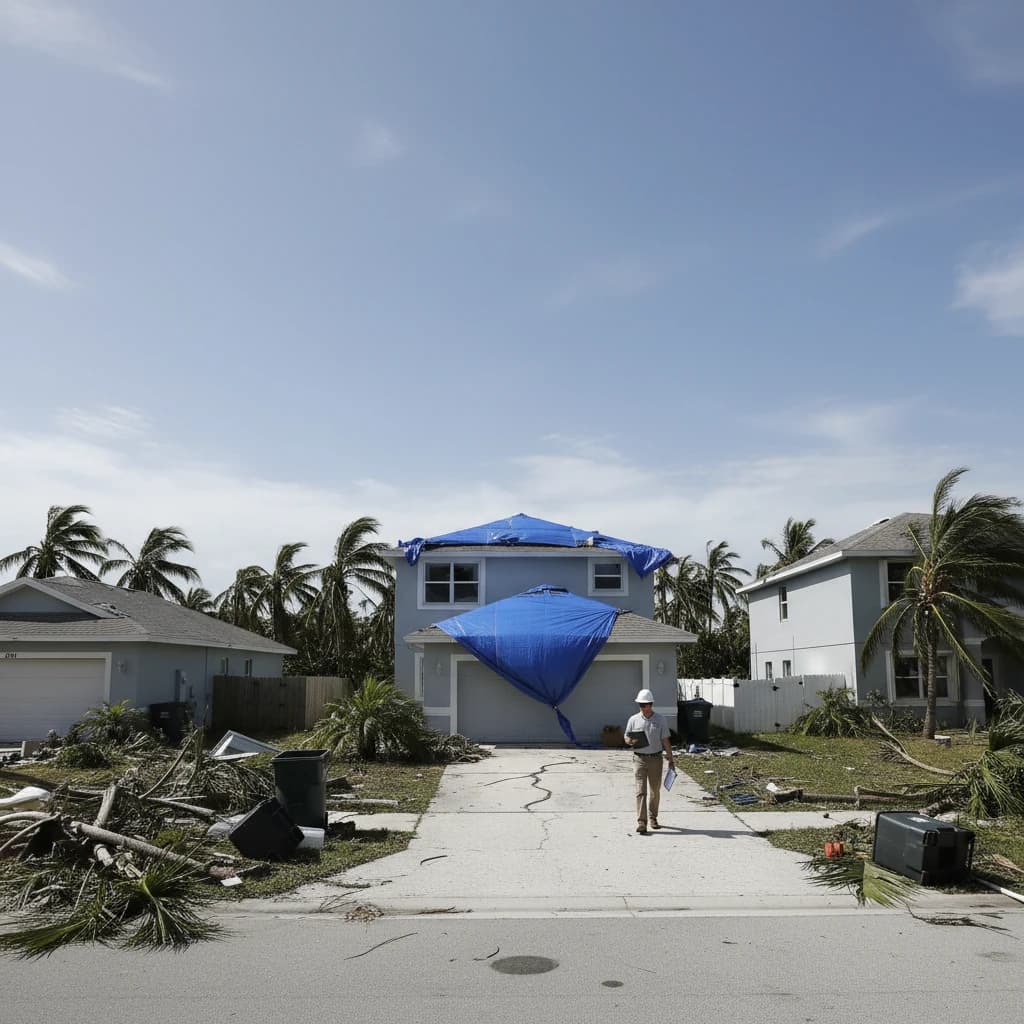
Short answer: We represent Florida policyholders on hurricane damage claims, from named-storm deductible disputes to wind-versus-flood causation and post-storm underpayment. Most policies carry a separate hurricane deductible set as a percentage of dwelling coverage, so scope and causation decide what gets paid. Your carrier must acknowledge within 7 days and pay or deny within 60 under [Fla. Stat. 627.70131](/resources/florida-statutes/627-70131-claim-response-deadlines/), and you can still file a supplemental within 18 months under [627.70132](/resources/florida-statutes/627-70132-roof-claim-deadlines/).
What we handle
- Residential hurricane claims (single-family, condo, townhome, HOA)
- Commercial hurricane claims (retail, office, industrial, hospitality)
- Wind, wind-driven rain, and roof damage
- Interior water intrusion from windstorm
- Structural damage from wind and debris
- Loss of use / ALE for displacement periods
- Business interruption for commercial properties
- Supplemental and reopened hurricane claims (within 18 months of loss per Fla. Stat. 627.70132)
A hurricane claim is rarely one peril. A single named storm can drive wind uplift on the roof, rain through the resulting openings, debris impact, and contents loss, all at once. We document each cause separately so coverage that applies is not absorbed into a peril the carrier wants to limit.
Public adjusters near the Isaias impact zone
Hurricane Isaias made landfall near Destin on October 9, 2026. Our Panhandle location pages for the impact zone: Destin, Panama City, Pensacola, Fort Walton Beach, Escambia County, Santa Rosa County, and the Florida Panhandle. Intake starts by phone for every one of them.
Named-storm and hurricane deductibles
The deductible is the first place Florida hurricane claims are decided. Most Florida policies carry a separate hurricane (or named-storm) deductible, typically 2-5% of dwelling coverage, instead of the flat all-perils deductible used for ordinary losses. On a home insured for several hundred thousand dollars, that percentage deductible can be tens of thousands of dollars, so whether the carrier classifies your loss as hurricane damage or routine wind damage changes the math dramatically.
Two errors recur. First, carriers sometimes apply the hurricane deductible to events that do not trigger it under the policy and Florida law. Second, when the documented scope sits close to the deductible, an under-scoped estimate can push the whole loss "below deductible" so nothing is paid. We read the deductible trigger language against the actual event and the actual scope before accepting either result.
Why hurricane claims are commonly underpaid
- Causation disputes. Wind vs flood allocation, the most consequential question on most hurricane claims. Wind-driven rain vs. gradual water intrusion. Pre-existing vs. event damage.
- Deductible mis-application. Hurricane deductibles invoked for non-hurricane events.
- Post-event scope pressure. Carriers processing thousands of claims produce rushed, under-scoped estimates.
- Code upgrades missing. Law and ordinance coverage frequently not included.
- Matching ignored. Fla. Stat. 626.9744 requires matching; carriers often pay partial replacement only.
Under-scoping is the quiet driver. After a major storm, a field adjuster may inspect dozens of properties in a compressed window, and the resulting estimate often misses interior intrusion behind finishes, undervalues code-required upgrades, and pays to patch a roof that needs full replacement. The matching statute and law-and-ordinance coverage frequently turn a partial repair into a code-compliant restoration once properly argued.
What Florida OIR data shows
Per Florida Office of Insurance Regulation reporting:
- Hurricane Helene (2024): 33% of closed claims without payment were denied as below-deductible; 20% on flood-coverage grounds
- Hurricane Milton (2024): 41% of closed claims without payment were denied as below-deductible
Many of these denials are defensible; many are not. A public adjuster's re-estimate often establishes damage above the deductible threshold.
Florida statutory context
- Fla. Stat. 627.70131: carrier response deadlines (7-day ack, 30-day inspection, 60-day pay/deny)
- Fla. Stat. 627.70132: 1-year new-claim deadline, 18-month supplemental deadline
- Fla. Stat. 626.9744: matching statute
- Fla. Stat. 624.155: bad faith and Civil Remedy Notice
These deadlines run from the date of loss, not the date you notice the damage, so a hurricane claim that surfaces months later through a slow interior leak can still be time-barred if it is not filed promptly. Roof-related timing carries its own rules under 627.70132. We calendar every statutory date at intake.
What to do immediately after the storm
- Make the property safe and prevent further damage. Tarp the roof, board openings, and stop active water intrusion. Florida policies require reasonable mitigation, and unmitigated follow-on damage is a common basis for partial denial.
- Keep every mitigation receipt. Tarps, board-up, water extraction, and temporary repairs are typically reimbursable.
- Photograph and video everything before cleanup, including standing water lines, roof condition, and damaged contents.
- Report the claim promptly and in writing, then keep a log of every adjuster contact, inspection, and payment.
- Do not sign a scope, proof of loss, or release you do not understand. Once accepted, those documents are hard to reopen.
Documentation that wins hurricane claims
Hurricane files are won on evidence, not argument. We assemble:
- Dated pre-loss and post-loss photos showing the property's condition before the storm where available
- A measured, line-by-line Xactimate estimate that reflects current Florida repair pricing
- Roof and envelope analysis distinguishing storm-created openings from wear
- Weather and wind data tying the damage to the specific named event
- Interior moisture mapping and contents inventories for personal property and additional living expense
This is the same record that supports a later underpaid-claim challenge if the first payment falls short.
Supplemental and reopened hurricane claims
Hurricane damage hides. Wind-driven moisture migrates inside walls, roof decking degrades after the visible repair, and code issues surface only when work begins. Florida law preserves your right to pursue a supplemental or reopened claim within 18 months of the date of loss under 627.70132 when the original payment did not cover the full damage. If your first settlement felt rushed or was paid below deductible, a fresh inspection before that window closes is often worthwhile.
Appraisal versus litigation
When the carrier acknowledges coverage but disputes the amount, appraisal is frequently the faster path to a fair number: each side names an appraiser, a neutral umpire resolves differences, and the result is binding on amount. When the dispute is about coverage itself, or the carrier's conduct crosses into bad faith, a Civil Remedy Notice and coordination with counsel may be the right route. We help you choose the path that fits the actual dispute.
Is it too late if my hurricane claim was already paid?
Often no. If the payment was below deductible or under-scoped, a re-inspection within the statutory supplemental window can establish additional covered damage.
Do I pay anything up front?
No. Ocean Point works on a no recovery, no fee basis; our fee is a percentage of what we recover, capped under Florida's public-adjuster rules.
How Ocean Point handles your hurricane claim
- Free claim review: at no cost, we assess the claim's recovery potential
- On-site inspection: licensed adjuster documents the full scope
- Policy review: every coverage, endorsement, and exclusion identified
- Xactimate re-estimate: reflecting actual repair cost
- Submission and negotiation: line-by-line with the carrier
- Escalation if needed: appraisal, mediation, CRN, or coordination with counsel
A documented result
- $194,000 the carrier's initial offer
- $740,553 what Ocean Point recovered
- +281.7% increase over the offer
Read the full case: Carl and Suzie's Sanibel Hurricane Milton claim