
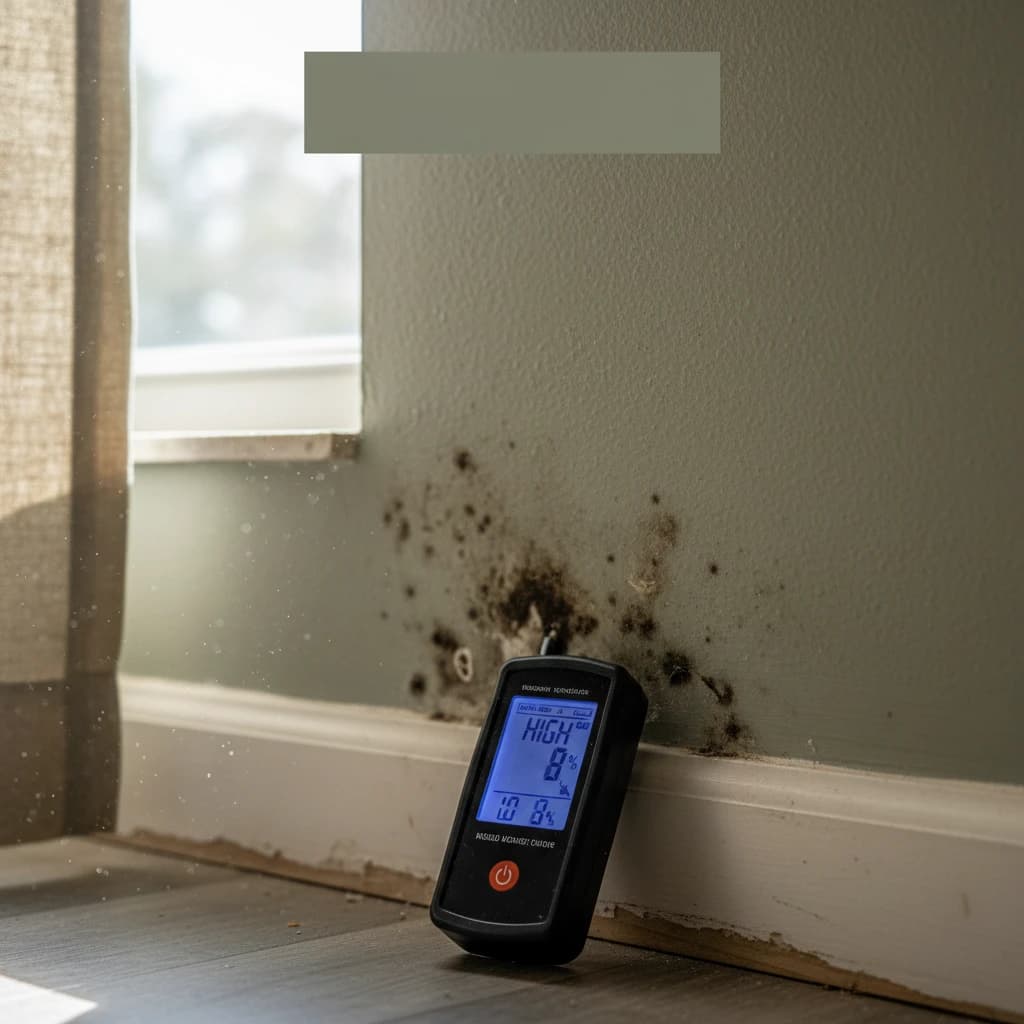
Short answer: A Florida mold loss is usually two claims in one: the mold remediation sits under a policy sublimit, but the underlying covered water event that caused it keeps full policy limits. Under Fla. Stat. 626.9744, if remediation forces removal of part of a contiguous run of flooring or drywall, the insurer must pay to restore a reasonably continuous area. Separating mold-specific costs from the water loss is what changes the recovery.
What does Florida mold coverage actually look like?
Most Florida homeowner policies include a mold sublimit: typically $10,000: that applies to the mold remediation and any mold-related damage. But:
- The sublimit applies only to mold-specific costs. The underlying covered peril (water damage from a pipe burst, for example) retains full policy limits.
- The sublimit does not apply to structural damage caused by the underlying event, even if mold is present.
- Florida courts have repeatedly distinguished mold-caused damage from water-caused damage with mold as a byproduct.
| Cost category | Coverage that pays | Subject to the mold sublimit? |
|---|---|---|
| Mold remediation: containment, removal, clearance testing | Mold sublimit | Yes |
| Drywall, flooring, cabinetry damaged by the water event | Underlying covered peril, full policy limits | No |
| Structural damage from the water before spores appeared | Underlying covered peril, full policy limits | No |
| Contents contaminated by spores that cannot be cleaned | Contents / underlying loss | Depends on policy language |
Key takeaway: only mold-specific costs hit the sublimit, so separating the estimate is what protects the full-limit water loss underneath.
That distinction is where most mold claims get underpaid. Nearly every Florida policy also contains a mold exclusion, and carriers lean on it hard, but the exclusion is rarely the end of the story. Most policies still cover the water event that caused the mold and the structural damage the water did before any spores appeared. The fight is one of characterization: the carrier wants the whole loss treated as "mold," when the real picture is a covered water loss that left mold behind. We break the loss into its true components and price each under the correct coverage, the approach behind every water damage claim we handle. For the wording arguments, see our Florida mold claim guides, including mold exclusion loopholes and resulting vs. excluded damage.
Why are mold claims commonly underpaid?
- Everything lumped under the mold sublimit. The carrier applies the $10,000 cap to drywall, flooring, cabinetry, and contents that were damaged by water, not by mold. A careful breakdown frequently doubles or triples the recovery.
- Sudden-vs-gradual recharacterization. Carriers argue the water loss was "long-term seepage" (excluded) rather than sudden and accidental (covered). Plumber statements, neighbor testimony, and appliance records counter this, and the carrier's wear-and-tear defense is often weaker than it first appears.
- Industrial-hygiene report missing. Proper mold claims require an IH report identifying species, affected materials, and remediation protocol. Carriers use a missing or weak IH report to cap the claim.
- Contents undervalued. Soft goods (mattresses, upholstery, clothing) contaminated by mold spores often cannot be remediated; they must be replaced.
- Code-upgrade scope missing. Remediation to current Florida Building Code standards (HVAC containment, negative air, clearance testing) is a legitimate scope item.
These patterns are why so many mold files land in the underpaid claim category.
How do hidden mold, clearance testing, and containment affect the claim?
The most expensive mold is the mold no one can see. Spores travel through wall cavities, under cabinets, behind baseboards, and into the HVAC return long before a stain appears on a surface. A carrier inspector who looks only at visible drywall scopes a fraction of the real loss. We document the full migration path with moisture mapping, cavity inspection, and the hygienist's findings, because hidden mold behind walls routinely turns a cosmetic repair into a full-cavity remediation.
Testing is the other recurring fight. Carriers dispute whether the air-quality sampling was valid, whether the protocol matched the conditions, and whether the post-remediation clearance test actually clears the job. A challenged clearance test stalls the rebuild. Containment matters just as much: if negative air is not established or a crew tracks spores into clean rooms, the contamination spreads and the carrier blames the policyholder for the expanded scope. We hold the carrier to a defensible standard at each step. See air quality testing validity, mold clearance testing disputes, and remediation containment failures.
What should you do first when you find mold?
Act in this order: stop the water, document everything, then report the claim.
- Stop the water source. Mold is a symptom; the covered peril is the leak, burst, or overflow underneath it. Shut it off and, if safe, photograph it before anything is moved.
- Document before cleanup. Photograph and video the visible mold, the water source, and the damaged materials and contents. This evidence anchors the resulting-damage argument later.
- Report the claim promptly. Florida law requires timely notice of a property loss, and late notice is one of the first defenses a carrier raises. Notify the insurer and keep a written record of the date.
- Use an independent hygienist. Retain your own industrial hygienist so the scope is built on neutral findings, not a number the carrier prefers.
- Keep every receipt. Emergency mitigation, drying, and temporary relocation costs are often recoverable.
Which Florida deadlines and statutes apply to mold claims?
Mold claims run on the same statutory clock as any Florida property claim, and missing a deadline can sink an otherwise valid loss.
- Prompt notice. Florida law sets a firm window to report a property claim. Reporting early preserves the sudden and accidental characterization and removes the carrier's late-notice argument.
- The insurer's response duties under Fla. Stat. 627.70131. The statute obligates the carrier to acknowledge, investigate, and then pay or deny the claim within 60 days of notice absent factors beyond its control. When a carrier sits on a mold file, that deadline is leverage.
- The matching requirement under Fla. Stat. 626.9744. When remediation forces removal of part of a contiguous run of flooring, drywall, or cabinetry, matching the remaining area can require replacing the full continuous area. See the matching statute.
What documents does a mold claim need?
A defensible mold claim rests on the following records.
- The independent industrial-hygiene report: species, affected materials, moisture readings, and a written remediation protocol.
- Photographs and video of the water source, visible mold, and cavity findings.
- An itemized estimate that separates mold-specific costs from underlying-water-loss costs.
- A contents inventory flagging soft goods that cannot be remediated and must be replaced.
- Proof of the covered peril: plumber invoice, appliance record, or roof-repair documentation showing a sudden event.
- Pre- and post-remediation testing results to defend the clearance and the rebuild.
How does Ocean Point handle mold claims?
Our workflow separates the mold sublimit from the underlying water loss at every step.
- Identify the underlying covered peril and document it explicitly.
- Retain a licensed industrial hygienist to produce a scope-of-remediation report.
- Prepare the Xactimate estimate separating mold-specific costs from underlying-water-loss costs.
- Submit with a policy-cited letter distinguishing the two coverage categories.
- Escalate through appraisal or Civil Remedy Notice if the carrier will not honor the distinction.
Should you use appraisal or a Civil Remedy Notice?
When the carrier acknowledges coverage but undervalues the loss, the dispute is about amount, and appraisal is often the fastest path: each side names an appraiser, an umpire resolves the gap, and the result is binding on amount. When the carrier wrongly denies the resulting damage or drags the file past its statutory deadlines, a Civil Remedy Notice puts the bad-faith conduct on the record and starts a cure period. We pick the path that fits the specific failure in your file, and we work on a no recovery, no fee basis under Florida's public-adjuster rules.
Who leads mold claims at Ocean Point?
Anthony Barber (FL DFS #W101847) leads water-related losses including mold-secondary claims.
Who is this for, and should you handle a mold claim yourself?
If the mold is small, fully visible, clearly inside the sublimit, and the carrier already agrees the water cause is covered, you may be able to handle it yourself. Hire a public adjuster when the sublimit is being applied to water-caused damage, when the carrier calls the loss long-term seepage, when hidden or cavity mold is involved, or when the underlying water loss is large. Public adjuster fees in Florida are capped by law (Fla. Stat. 626.854(11)) at 20% (10% for declared-emergency claims in the first year), so representation stays proportional to the recovery. Bottom line: the wider the gap between the sublimit and the true water loss, the more representation pays for itself.
Florida mold claim dispute guides
The specific coverage, sublimit, testing, and remediation fights that decide mold claims:
- Mold Exclusion Loopholes
- Resulting vs. Excluded Damage
- Mold Testing Protocol Disputes
- Air Quality Testing Validity
- Remediation Containment Failures
- Cross-Contamination During Remediation
- Mold Coverage Caps
- Hidden Mold Behind Walls and Cabinets
- Mold from Delayed Claim Handling
- Mold Clearance Testing Disputes
- Rebuild After Mold Remediation
- Health-Related Mold Claim Arguments