
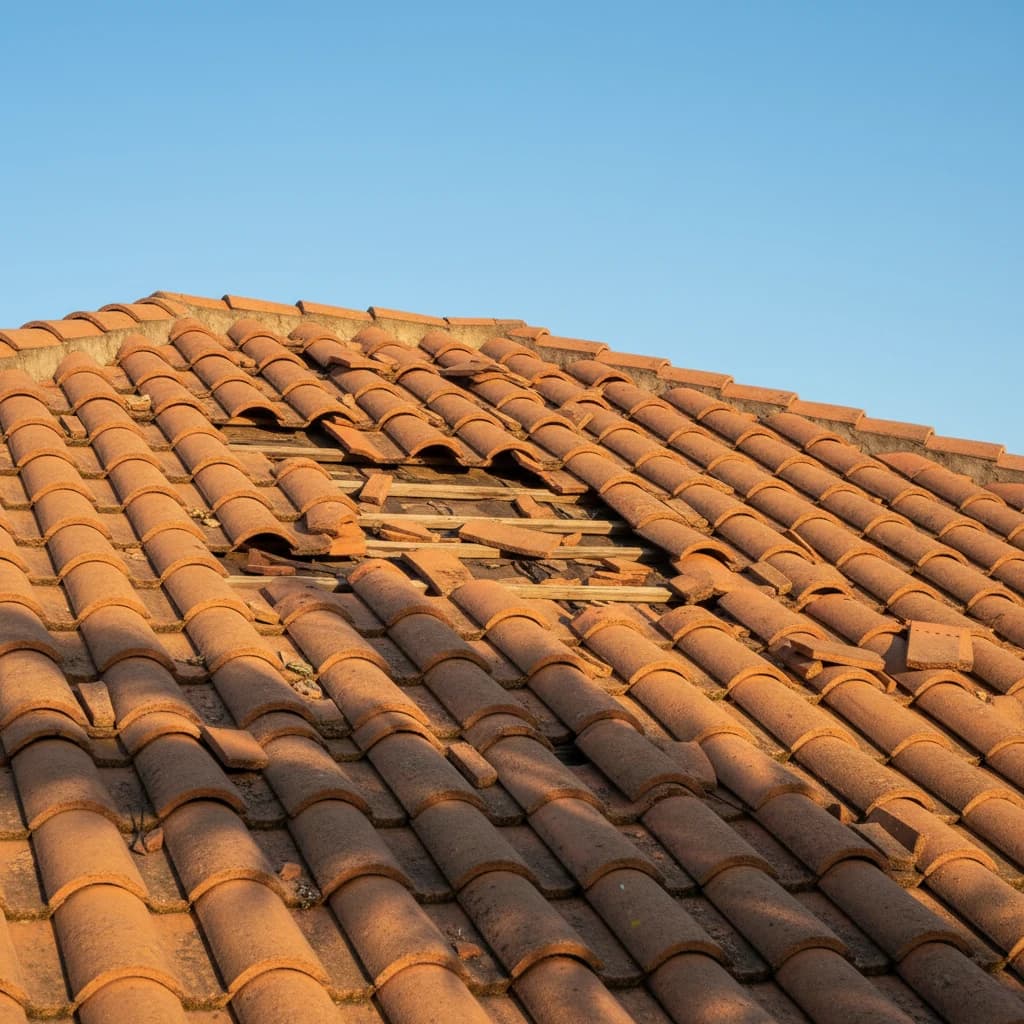
Short answer: According to Fla. Stat. 626.9744, when roof material is discontinued or cannot be reasonably matched, the insurer must pay to replace a reasonably continuous area, which often means a full slope or full roof. Fla. Stat. 627.70131 (2022) then gives the carrier 60 days to pay or deny, and you generally have 1 year from the date of loss to report the claim.
Which roof types do we handle?
We handle every roof system common on Florida homes and buildings.
- Asphalt 3-tab and architectural shingle
- Concrete and clay barrel tile
- Standing-seam and exposed-fastener metal
- Low-slope modified bitumen, TPO, EPDM (residential and commercial)
- Slate and composite slate
- Green / vegetated roofs (commercial)
No matter the system, the dispute is rarely about whether the roof is damaged. It is about cause, scope, and how much the carrier is willing to depreciate.
Why are Florida roof claims routinely underpaid?
- Causation disputes. The single most common issue: the carrier engineer attributes damage to wear-and-tear when the storm correlation is clear. Forensic analysis (debris strike, uniform uplift, timeline) often flips the finding. When a carrier leans on a wear-and-tear defense or a biased report, we answer it with our own documentation.
- Scope reduction. Carriers pay for the damaged slope when full-roof replacement is warranted. Fla. Stat. 626.9744 (matching statute) applies when the material is discontinued or no longer a reasonable match: often forcing full-roof replacement.
- ACV payout on RCV policy. Carrier pays Actual Cash Value (depreciated) when the policy is Replacement Cost Value. The RCV holdback must be released when repairs are complete.
- Law and ordinance omitted. Truss tie-downs, impact-rated underlayment, secondary water barrier, and Florida Building Code upgrades add to the reroof cost. Law and ordinance endorsement pays the delta.
- Labor, mobilization, and overhead missing. Per-slope estimates routinely omit tear-off, disposal, and multi-story mobilization. Overhead and profit (10-and-10) often omitted on jobs that qualify.
How do carrier roof-age denials work?
Many roof denials hinge on age, not damage. The carrier argues the roof was already near the end of its service life, so any failure is "expected deterioration" rather than a covered sudden event. Tile and metal systems often last far longer than the carrier's assumed schedule, and a roof's age does not erase storm damage layered on top of normal aging. We separate the two: pre-existing condition versus the discrete event that caused the loss. When an engineer's conclusion is doing the heavy lifting for a denial, we examine the methodology behind it, because engineer-report bias and conclusory wear-and-tear findings are among the most common reasons a legitimate roof claim is underpaid or denied.
How does the matching statute help your claim?
Fla. Stat. 626.9744 requires replacement of a "reasonably continuous area" when the damaged material is no longer available to match. For Florida homes with:
- Discontinued tile product lines (extremely common for tile built pre-2010)
- Discontinued shingle color/profile combinations
- Non-standard metal panel systems
...the statute often forces a full-slope or full-roof replacement even when only part of the roof is damaged. We cite the statute explicitly and submit matching documentation with every claim that qualifies.
What are ACV, depreciation, and the RCV holdback?
If your policy is Replacement Cost Value, the carrier may still issue the first payment on an Actual Cash Value basis: the depreciated value, with the remaining "recoverable depreciation" held back until repairs are done. That is not the carrier keeping the money. It is a holdback you are entitled to recover once the work is complete and documented. Two things go wrong here. First, carriers sometimes apply excessive depreciation to inflate the holdback and shrink the first check. Second, the recoverable depreciation is forfeited if the homeowner never completes the repair or never submits the completed-work documentation. We scrutinize the depreciation schedule, push back on aggressive write-downs, and make sure every recoverable dollar is released.
Repair or replacement: which scope is correct?
Carriers prefer a repair, because replacement costs far more. So the estimate often calls for patching a slope, swapping a few courses of tile, or "spot" repairs the manufacturer would never warranty. The fight turns on whether a partial repair is even feasible given matching, code, and the condition of the surrounding field. When discontinued material, brittle aged tile, or Florida Building Code triggers make a clean repair impossible, replacement is the correct scope, and the matching statute frequently backs that position.
What are the Florida roof-claim deadlines?
Roof claims are time-sensitive in a way many homeowners do not realize. Fla. Stat. 627.70132 governs the deadline to give notice of a roof claim, and Florida's recent insurance reforms have shortened the windows for both initial and supplemental or reopened roof claims. Miss the statutory deadline and the carrier can deny on timing alone, regardless of how strong the damage evidence is. Because the exact window depends on your date of loss and the statute version in effect, treat any roof loss as urgent. See our breakdown of 627.70132 roof-claim deadlines for the current framework.
| Statutory duty | Deadline (post-SB 2A, 2022) | Statute |
|---|---|---|
| Insurer acknowledges the claim | 7 days | Fla. Stat. 627.70131 |
| Insurer begins investigation | 7 business days of proof of loss | Fla. Stat. 627.70131 |
| Insurer completes any physical inspection | 30 days | Fla. Stat. 627.70131 |
| Insurer pays or denies the claim | 60 days | Fla. Stat. 627.70131 |
| You report a new or reopened claim | 1 year from date of loss | Fla. Stat. 627.70132 |
| You file a supplemental claim | 18 months | Fla. Stat. 627.70132 |
Key takeaway: a roof claim runs on two clocks, the carrier's 60-day pay-or-deny window and your 1-year notice deadline, and missing either one can end an otherwise valid claim.
What should you do first after roof damage?
Move in this order to protect both the roof and the claim.
- Document the roof and interior immediately: photos and video of the roof surface, soft metals, and any interior staining or leaks.
- Make reasonable temporary repairs (tarp, dry-in) to prevent further damage, and keep every receipt.
- Do not throw away damaged tile, shingles, or debris before it is photographed and, where possible, identified by product line.
- Report the loss to your carrier promptly to protect your position under the roof-claim deadline.
- Get an independent assessment before you accept the carrier's scope or sign anything.
How does Ocean Point handle roof claims?
Our roof workflow builds the causation and scope record the carrier cannot easily dismiss.
- On-site inspection with drone + ground-level documentation.
- Damage pattern analysis correlating the specific event (date, wind speed, hail size from NOAA).
- Xactimate estimate including tear-off, code upgrades, matching, and per-Florida labor rates.
- Matching documentation from manufacturers when material is discontinued.
- Independent engineering report when the carrier has retained an engineer to deny or reduce.
- Escalation: appraisal, CRN, or DFS mediation as appropriate.
For second opinions on a carrier's scope, our roof consulting service supports homeowners and contractors throughout the claim.
Roof claim questions we hear often
My roof is old. Can I still file?
Often, yes. Age alone does not bar a claim. The question is whether a covered event caused the damage, not how many years the roof has been up. Carrier age-based denials are challengeable when storm damage is documented.
The carrier only wants to pay for one slope. Is that right?
Frequently not. If the damaged material is discontinued or cannot be reasonably matched, Fla. Stat. 626.9744 can require replacement of a continuous area, which may mean a full roof.
Why is my first check so small?
On a Replacement Cost Value policy, the first payment is often Actual Cash Value with depreciation held back. That holdback is recoverable once repairs are completed and documented.
Who this is for, and should you handle a roof claim yourself?
A small, single-slope repair on a current-production shingle, where the carrier already accepts the storm cause and pays Replacement Cost Value, is one you can often handle yourself. Bring in a public adjuster when the carrier blames wear-and-tear or roof age, when it pays only Actual Cash Value on a Replacement Cost Value policy, when discontinued tile or shingle triggers matching under Fla. Stat. 626.9744, or when an engineer report drives the denial. Public adjuster fees in Florida are capped by law (Fla. Stat. 626.854(11)) at 20% (10% for declared-emergency claims in the first year), so representation stays proportional to what it recovers. Bottom line: the more the fight turns on causation, matching, or depreciation, the more an adjuster earns its fee.