
By Anthony Barber · FL DFS #W101847 · Reviewed: · 1 min read
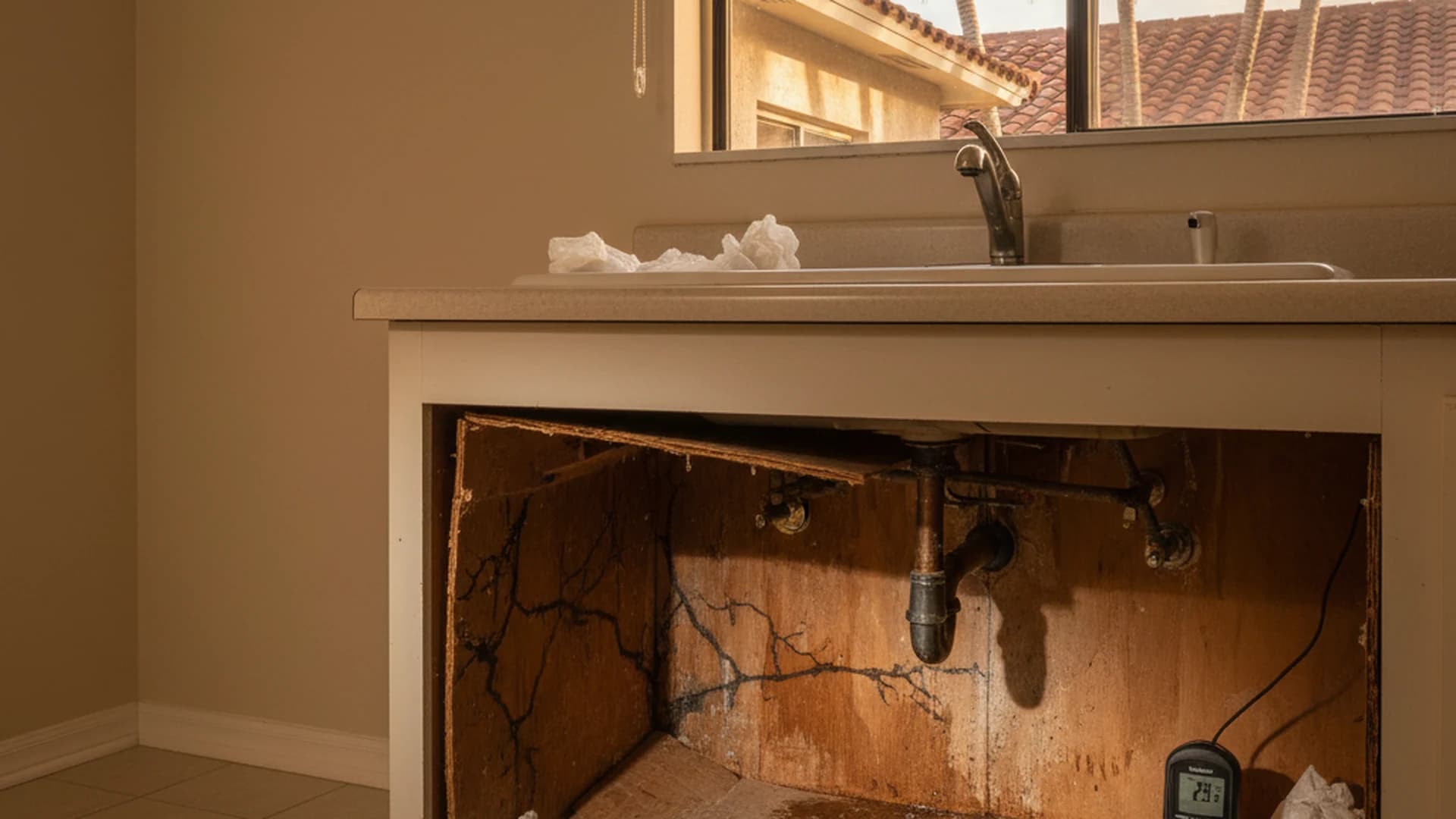
Where water hides
- Wall cavities: water wicks up drywall and stays in stud bays
- Behind cabinets: especially base kitchen cabinets
- Under flooring: subfloor moisture not visible from above
- Inside wall insulation: absorbs and retains moisture
- Behind built-ins: bookshelves, vanities, entertainment centers
- In HVAC ducts: migrates through return chases
- Under tile: mortar bed holds moisture even when grout looks fine
Detection methods
- Moisture meter (pin or pinless) on walls and floors
- Thermal imaging identifying cooler (wet) areas
- Borescope into wall cavities through small inspection holes
- Hygrometer for ambient humidity trending
- Drying log showing cavities that remain wet
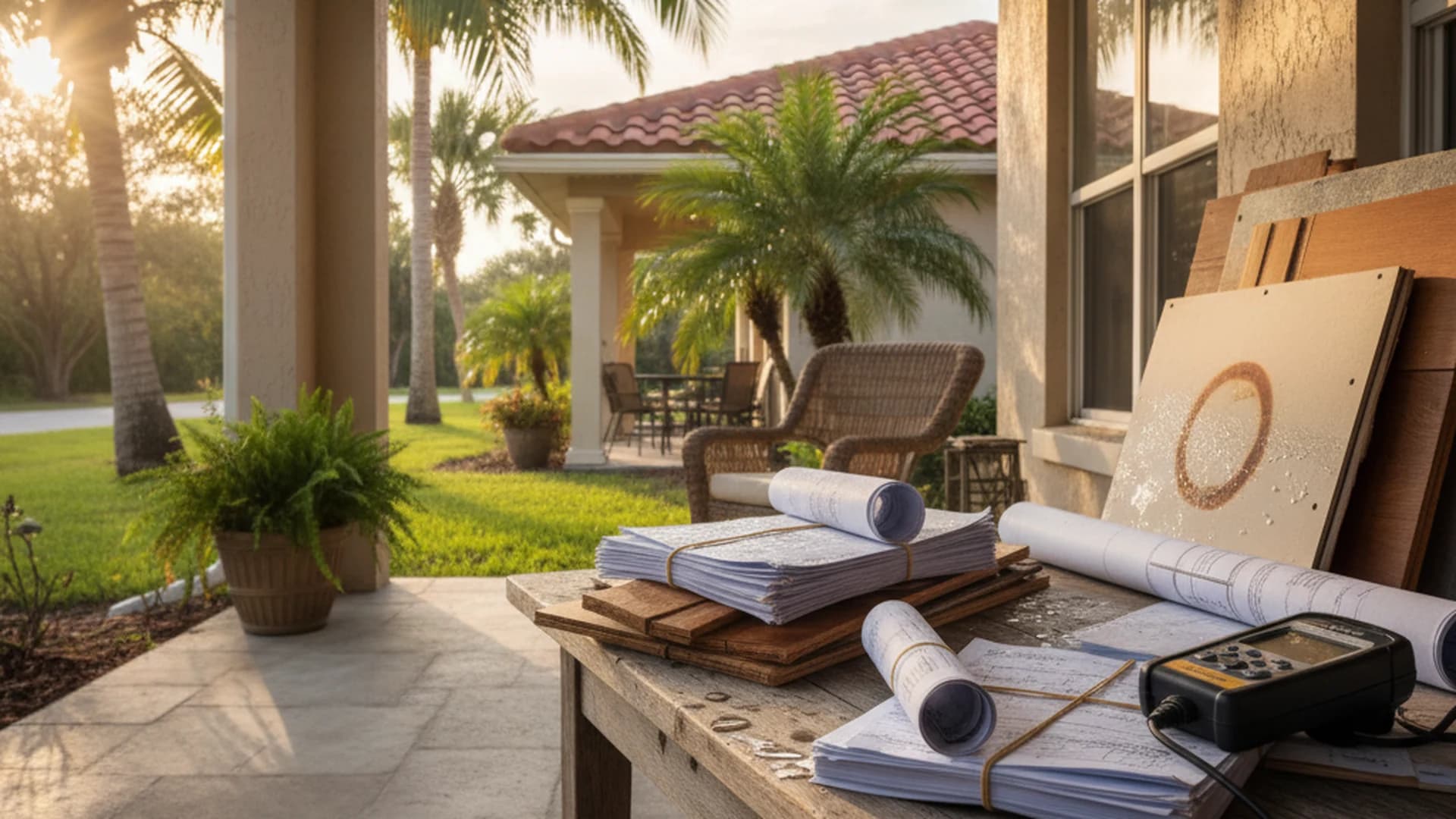
Why carriers scope too narrowly
- Field adjuster doesn't open walls
- Surface-only assessment misses wicking
- No thermal imaging on the visit
- No moisture readings post-remediation
- Relies on contractor to flag hidden damage (and contractor is silenced by AOB)
How to force hidden-damage documentation
- Retain IH or moisture-mapping specialist to produce a written assessment
- Open small inspection holes in key areas and photograph
- Document moisture readings with meter and photos: ideally time-stamped
- Request thermal imaging scan from the mitigation contractor
- Supplement the claim within the 18-month window when hidden damage surfaces
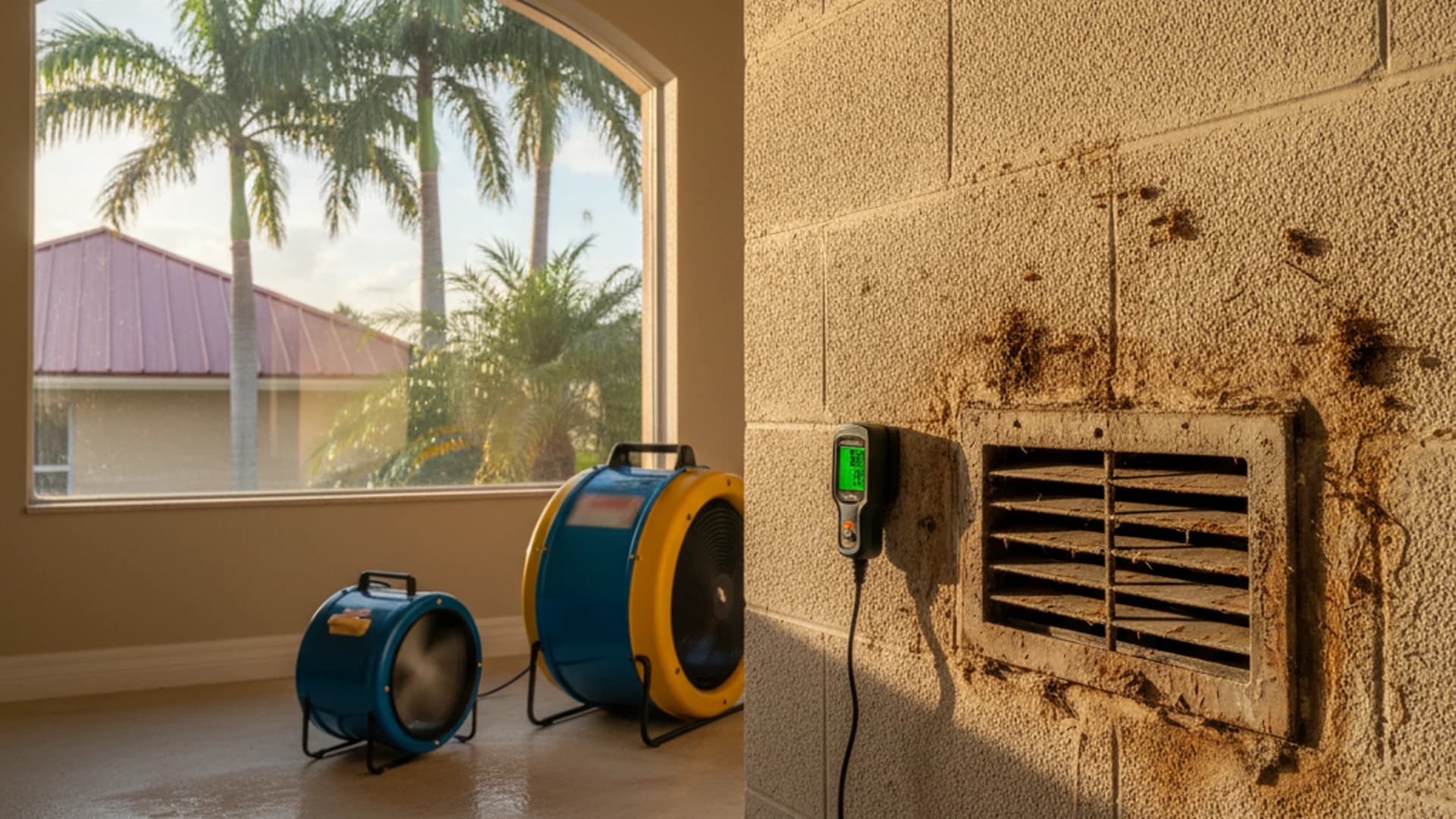
What's typically recoverable behind walls
- Wet insulation (full bay removal)
- Wet drywall (sheet-by-sheet removal)
- Wet framing (drying, treatment, or replacement if damaged)
- Wet cabinet backs (cabinet often requires replacement)
- Wet subfloor (cut-and-patch or full replacement)
- Hidden mold in cavities (subject to sublimit)
Practical tip
If the carrier's adjuster didn't open any walls on the inspection, the scope is almost certainly undercounted. Request a re-inspection with explicit scope of hidden-area documentation.