
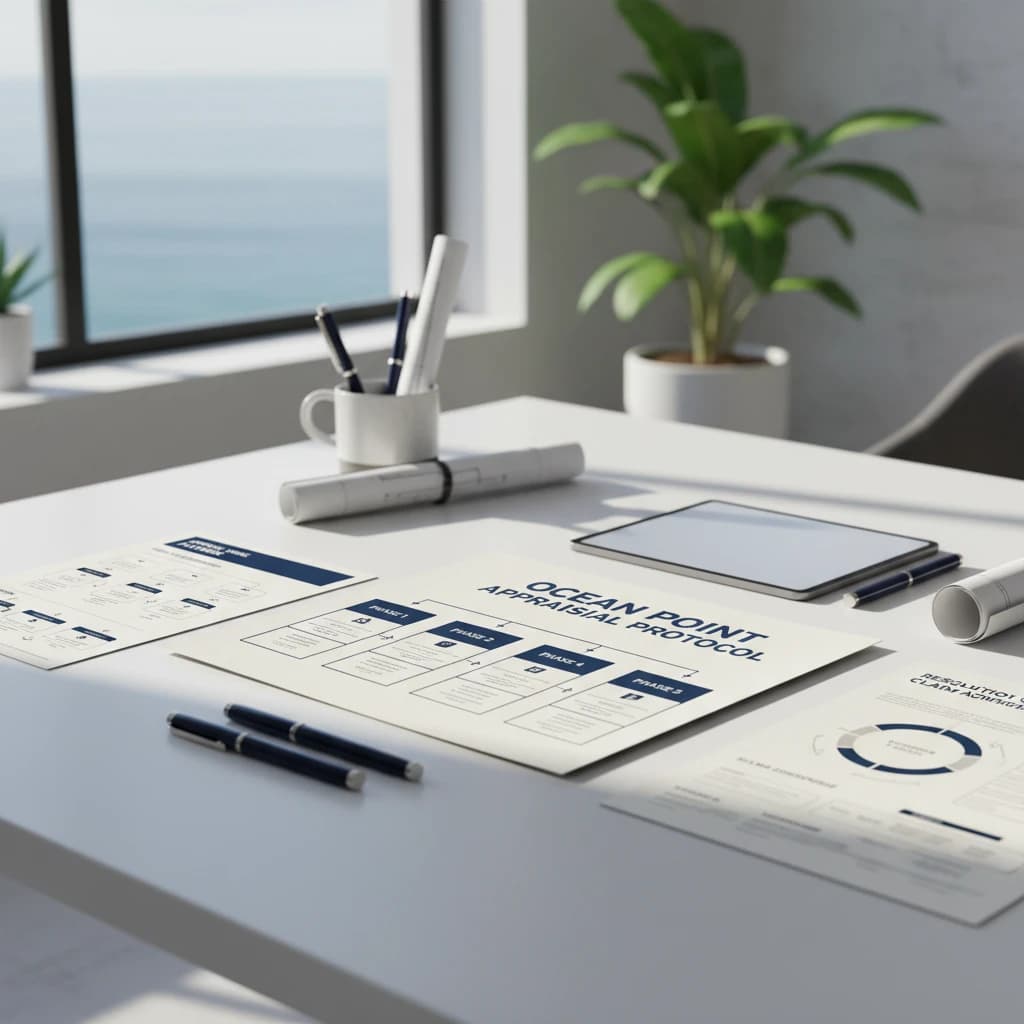
By Eli Goins · FL DFS #P159790 · Reviewed: · 2 min read
When to use this framework
Use the Appraisal Protocol™ when:
- Your Florida insurance claim is in amount-of-loss dispute
- The carrier has issued a settlement offer substantially below your documented scope
- You have comprehensive damage documentation
- Coverage is not disputed (appraisal doesn't resolve coverage)
Phase 1: Qualification Review
Before invoking appraisal, determine whether it's the right tool.
Invoke appraisal if:
- Dispute is about amount only
- Documentation supports your position
- Carrier won't move meaningfully in direct negotiation
- Upside likely exceeds appraisal costs ($3,000-10,000 policyholder-side)
Don't invoke appraisal if:
- Dispute is about coverage
- Documentation is incomplete
- Claim is small (<$25,000 gap)
- Alternative paths (DFS mediation, CRN) are more effective for this claim
Phase 2: Appraiser Selection
The single most important decision in the process.
What to look for
- Experience in your specific claim type
- Prior appraisal work
- Independent judgment (not reflexively favorable to either side)
- Availability
- Fee structure clarity
Red flags
- Appraiser who only works for policyholders (may be too partisan for mediator appointment)
- Appraiser who won't disclose prior work
- Unusually low fee (may indicate minimal time investment)
Where to find appraisers
- Public adjuster associations (FAPIA, NAPIA)
- Engineering consulting firms
- Experienced contractors with claim-scoping background
- Florida Supreme Court umpire list
Phase 3: Documentation Preparation
Everything supporting your amount-of-loss position.
The core package
- Complete Xactimate estimate
- Damage photographs (date-stamped, systematic)
- Expert reports (engineer, contractor, industry specialist)
- Policy declarations and form
- Prior correspondence with carrier
- Timeline of events
Specialty documentation per claim type
- Hurricane: weather data, neighborhood damage patterns
- Water: plumber diagnosis, dry-out contractor logs
- Fire: fire department report, cause analysis
- Mold: indoor air quality testing, moisture mapping
- Matching: manufacturer unavailability confirmation
Phase 4: The Proceeding
The actual appraisal process.
Inspection
- Appraisers conduct joint or separate inspections
- Inspection notes are shared between appraisers
- Evidence is exchanged
Valuation
- Each appraiser develops an independent valuation
- Valuations are submitted for comparison
- Negotiation between appraisers
Umpire involvement
- Only if appraisers can't agree
- Umpire reviews both positions
- Umpire decides contested items
- Any two of three signatures produce binding award
Phase 5: Award Implementation
After the award is signed.
Carrier payment
- Typically 60 days (per Fla. Stat. 627.70131)
- Interest accrues on late payments
Post-award disputes
- Limited grounds for vacating (fraud, procedural error, improper conduct)
- If vacatur is warranted, litigation typically follows
Policyholder file closure
- Documentation archived
- Tax implications reviewed where applicable
- Any remaining coverage pursued (if award resolved only part of total claim)
The 500-mediation basis
Eli Goins has represented policyholders through 500+ mediations and a substantial subset of those escalated to appraisal. Each appraisal refined the Protocol: new tactics, new tradeoffs, new evidence approaches.
What makes the Protocol effective
- Qualification first. Don't invoke appraisal for the wrong reasons.
- Appraiser selection rigor. The wrong appraiser can sink your position regardless of case strength.
- Documentation discipline. Every position backed by evidence.
- Specialty matching. Appraiser and your PA match the specific claim type.
- Post-award follow-through. Payment on time, issues resolved.