
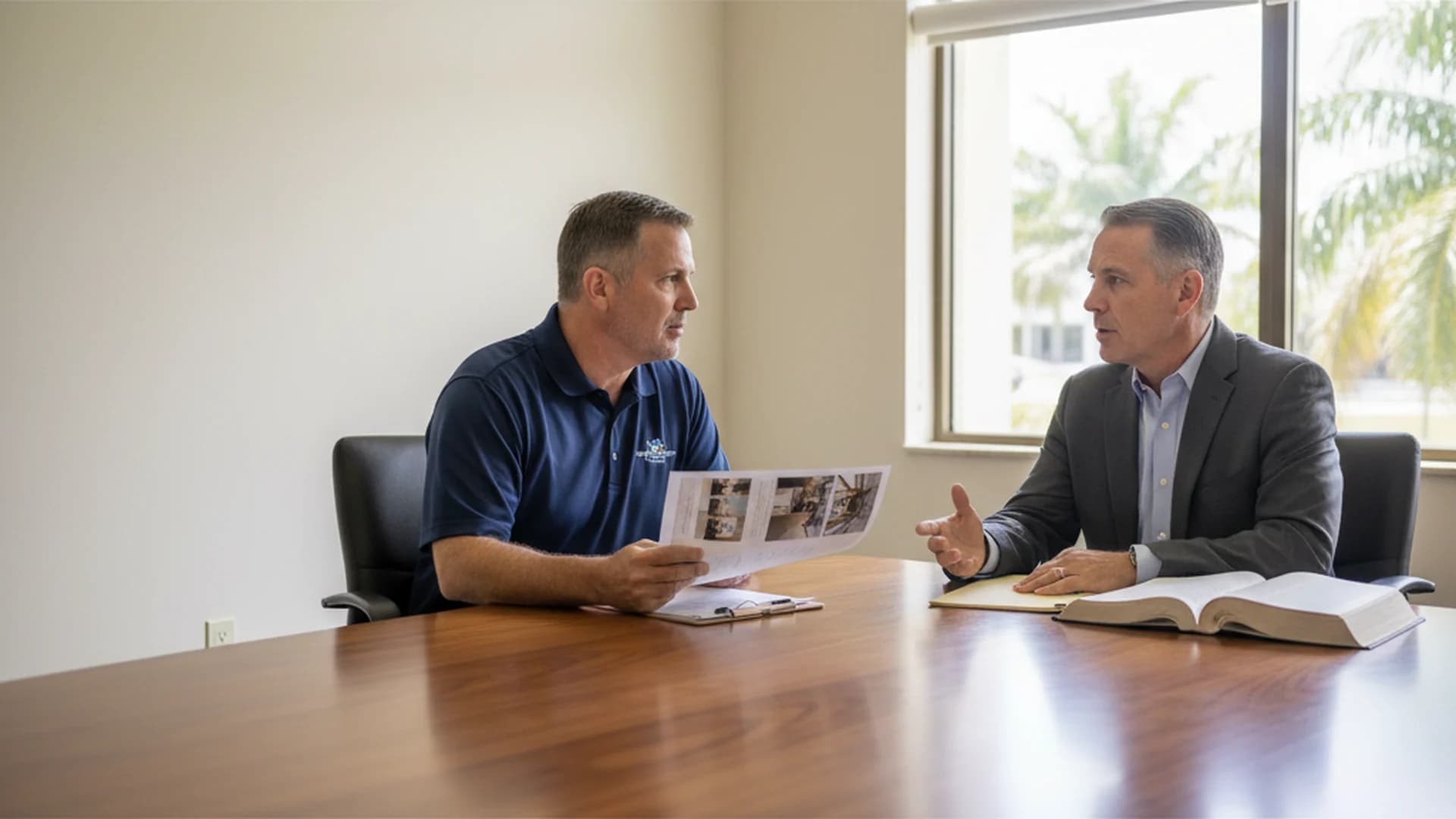
Short answer: A Florida public adjuster represents you on the claim itself: scope, documentation, estimate, negotiation, and appraisal. An attorney represents you in litigation or when bad-faith damages are at issue. They are not interchangeable, and on most Florida property claims you do not have to choose only one. The right fit depends on your dispute and your stage in the claim.
Short answer
A Florida-licensed public adjuster is your representative for the claim itself: scope, documentation, estimate, negotiation, appraisal, mediation, and supplemental claims. A first-party insurance attorney is your representative when the dispute requires litigation, statutory bad-faith damages, or the carrier has refused to engage on a clearly covered claim. The two roles overlap on Civil Remedy Notice work and frequently coordinate; they rarely substitute for each other.
Side-by-side comparison
| Public Adjuster | First-Party Insurance Attorney | |
|---|---|---|
| What they do | Document, estimate, negotiate the claim | Litigate the claim or related disputes |
| When you'd hire one | At FNOL, after a denial, after underpayment, before appraisal | After exhausting non-litigation paths, or when bad-faith damages are at issue |
| Florida licensing | Fla. Stat. 626.854 (DFS-licensed) | Florida Bar |
| Fee structure | Contingency, capped by Fla. Stat. 626.854 (10% emergency-period; 20% standard) | Contingency on litigation recovery (typically 33⅓% pre-suit, 40% post-suit) plus costs |
| Up-front cost | None | None for contingency arrangements; case costs may be advanced |
| Authority | Negotiate scope, pricing, and settlement; demand appraisal; file CRN | Sue, conduct discovery, take depositions, try the case |
| Best for | Amount-of-loss disputes, scope gaps, supplemental work | Coverage disputes that won't resolve, bad-faith damages, declaratory actions |
| Time to resolution | Weeks to a few months on most claims | 6-24 months (or longer) for litigation |
| Continues if you switch? | Often handles claim through settlement, then steps aside if litigation begins | Takes the case from PA at the litigation handoff |
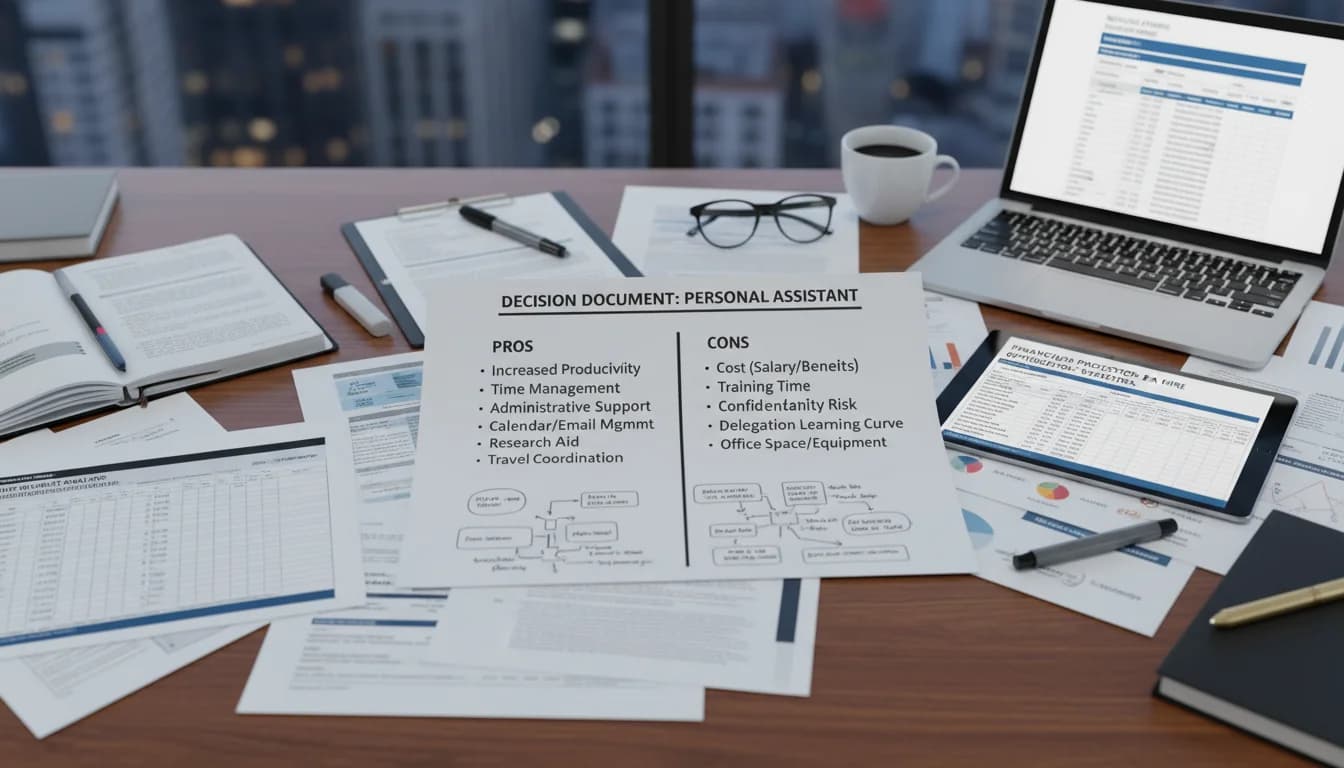
How to think about it
Use a public adjuster when
- Your claim has been denied or underpaid but the issues are documentation, scope, or pricing
- You have a coverage dispute that may resolve once you present a complete file
- You need an appraisal demanded under the policy's appraisal clause
- The claim is complex (large loss, multiple perils, commercial, condo/HOA, business interruption)
- You want a supplemental claim prepared within Florida's 18-month window (Fla. Stat. 627.70132)
- The deadline pressure is statutory response timing under Fla. Stat. 627.70131
Use an attorney when
- The carrier has acted in bad faith and you need statutory bad-faith damages beyond the policy limits
- A coverage decision is final and the only remaining path is litigation
- You need a declaratory action to interpret an ambiguous policy term
- You're at the discovery or trial phase of an existing lawsuit
- A CRN has been filed and not cured within 60 days under Fla. Stat. 624.155
Use both when
- You have a complex disputed claim that is heading toward both appraisal and potential litigation
- A bad-faith CRN is part of the strategy: the PA prepares and files; the attorney is positioned to pursue if the carrier doesn't cure
- The case starts as a claim and matures into litigation; the PA hands the documentation file to the attorney
Florida fee math
Public-adjuster fees are statutorily capped under Fla. Stat. 626.854:
- 10% of any claim payment for losses caused by a declared emergency, for the first 365 days after the declaration
- 20% of additional recovery in standard (non-emergency) circumstances
- No fee on amounts the carrier already offered before PA engagement
Attorney contingency fees on first-party insurance matters are typically 33⅓% of the recovery pre-suit and 40% post-suit, plus case costs (deposition transcripts, expert fees, court filing). Florida's one-way attorney-fee statute for insurance disputes was substantially modified in 2022; for most policies issued or renewed after 12/16/2022 there is no longer a one-way fee shift to the policyholder, which has materially changed the litigation economics.
For mid-size claims where amount-of-loss is the dispute, the contingency math typically favors PA representation; for catastrophic or coverage-denied claims that will require expert testimony, the attorney's litigation toolkit may be necessary regardless of fee load.

What about the Civil Remedy Notice?
A CRN under Fla. Stat. 624.155 is the bridge between the two roles. A licensed Florida public adjuster may prepare and file the notice; the 60-day cure window often produces settlement without litigation. If the carrier doesn't cure, an attorney must take over to pursue the bad-faith action. Ocean Point routinely files CRNs and coordinates the handoff to litigators when the carrier refuses to cure.
Who decides if you sue?
You do. A public adjuster cannot file or settle a lawsuit on your behalf, that's the unauthorized practice of law in Florida. An attorney handles the suit. If you're working with both, the attorney leads the litigation strategy and the PA continues to support documentation, scope, and damages quantification as needed.
What if you've already hired one and need the other?
- PA already engaged, now need attorney: the PA continues to handle the claim; you retain the attorney for the litigation track. The PA's documentation file becomes the attorney's evidentiary base.
- Attorney already engaged, now need PA: less common, but happens when litigation surfaces a scope or estimating gap. Some attorneys retain a PA as a loss consultant and expert witness rather than as a claim representative.
Common mistakes
- Hiring an attorney before exhausting non-litigation options. Many disputes resolve through documentation, appraisal, or CRN. Going straight to suit is slower and reduces your net recovery.
- Treating PA and attorney as substitutes. They are not. A PA will not litigate; an attorney typically will not handle the day-to-day claim management.
- Signing a litigation contingency before understanding the policy's appraisal clause. If amount-of-loss is the dispute and the policy contains an enforceable appraisal clause, that's often the faster path.
- Hiring an attorney from a TV ad without verifying first-party insurance experience. The plaintiff's bar is broad; first-party property insurance is a specialty.
How Ocean Point handles the choice
Ocean Point is a public-adjusting firm. We do not practice law. When a matter requires legal representation we coordinate handoff to Florida first-party insurance attorneys with whom we have working relationships. On every consultation we tell you whether your matter is best handled by us, by counsel, or by both, and we tell you when neither is the right answer.