
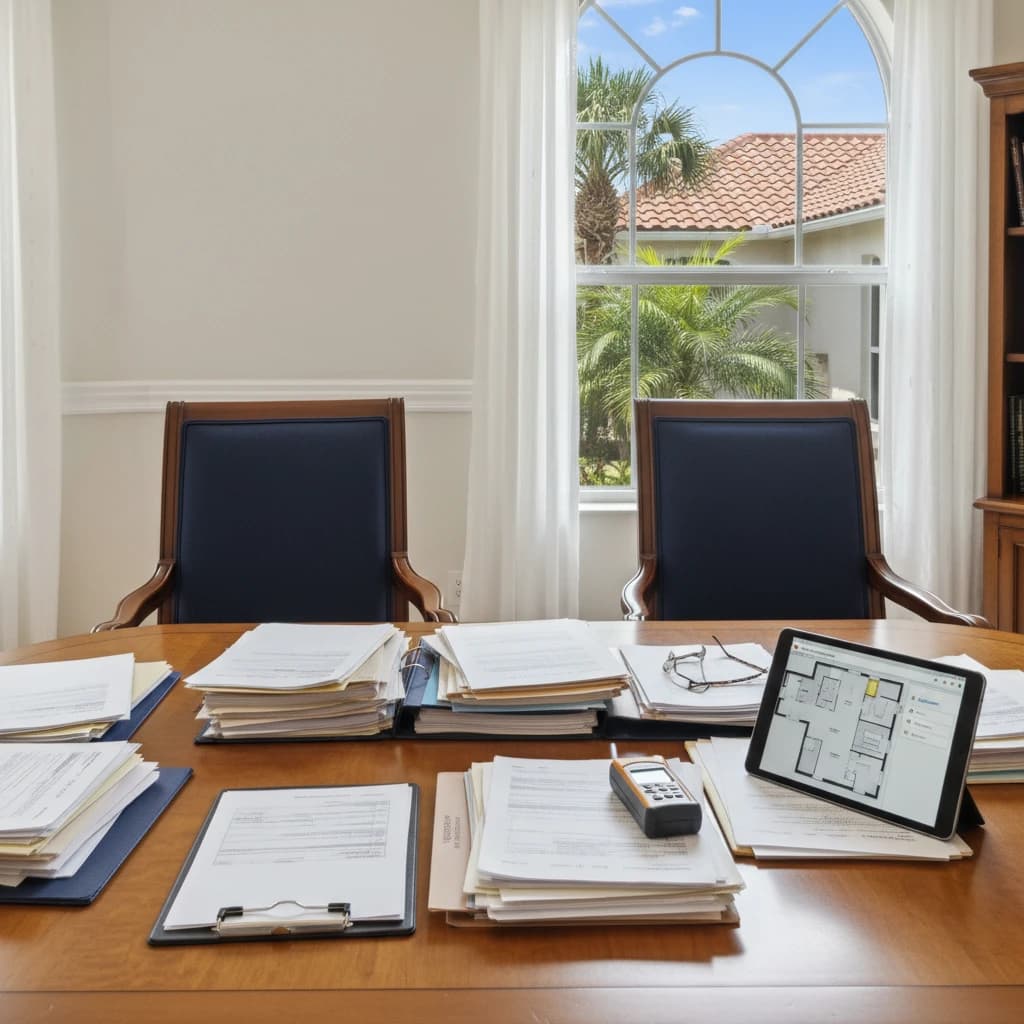
Short answer: According to most Florida HO-3 policies, when you and the carrier cannot agree on the amount of loss, either side may demand appraisal: each names a competent, disinterested appraiser within 20 days, the two choose an umpire, and a decision agreed to by any two of the three panelists is binding. Appraisal decides amount only, not coverage. Ocean Point represents policyholders on the panel and serves as umpire on qualifying matters.
How Florida appraisal works
Most Florida HO-3 and commercial property policies include an appraisal clause that looks substantially like this:
When appraisal helps
- The coverage is not in dispute (the carrier agrees the loss is covered)
- The dispute is about amount: scope, pricing, or depreciation
- Both parties have documentation
- Settlement range is apparent even if specific number isn't
- You want a binding resolution without litigation
When appraisal doesn't help (or may hurt)
- Coverage disputes (whether the loss is covered at all): appraisal only decides amount
- Bad-faith claims (belong in court)
- Claims already in litigation
- Claims where your appraiser selection puts you at a disadvantage
Ocean Point's appraisal role
We represent policyholders in three capacities:
- Policyholder's appraiser. Named to the panel by the insured. Advocates for the policyholder's loss documentation.
- Umpire. When selected by two party appraisers, renders independent decisions where the appraisers disagree. Ocean Point serves as umpire on claims where we have no prior involvement with either party.
- Appraisal consultant. Behind-the-scenes preparation of documentation, estimates, and strategy for the named appraiser.
Our appraisal process
- Pre-appraisal documentation push. Full scope, Xactimate pricing, expert reports, photo evidence: prepared to panel-grade standard.
- Appraiser selection. Competent (qualified in the specialty: roofing, water, fire, structural) and disinterested (no prior relationship with party).
- Panel management. Schedule, scope-review meetings, umpire coordination.
- Award drafting. Clear written award stating separately the ACV and loss to each item, signed by two of three panelists.
- Award enforcement. Carrier must pay per the award. If they don't, the award is enforceable in court.
Appraisal cost structure
- Each party pays their own appraiser (typically hourly, $200-$500/hr depending on specialty)
- Umpire cost is split 50/50 between party and insurer
- Ocean Point contingency applies to any recovery generated over the carrier's pre-appraisal offer
Going deeper on appraisal
For policyholders who want a focused, appraisal-only resource, our companion site AppraiseClaims.com is dedicated entirely to the appraisal-and-umpire process: panel selection, scope strategy, evidence preparation, and what to expect at each step.
A documented result
- $105,000 the carrier initial offer
- $255,150 what Ocean Point recovered through appraisal