
By Anthony Barber · FL DFS #W101847 · Reviewed: · 1 min read
When flooring must come out
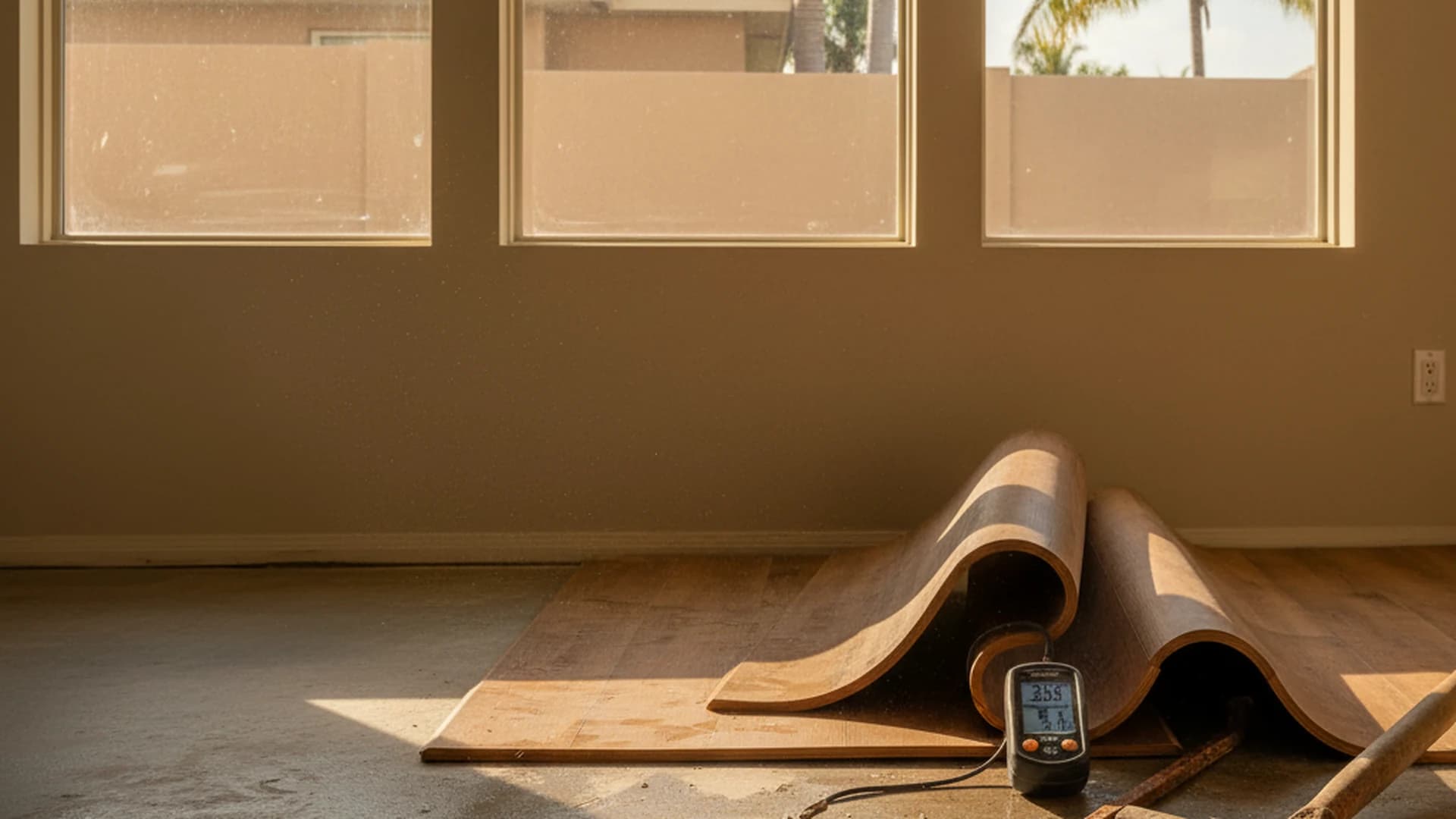
Laminate and engineered wood
- Swelling at joints = replace affected area
- Moisture under floor = replace the affected area + dry subfloor
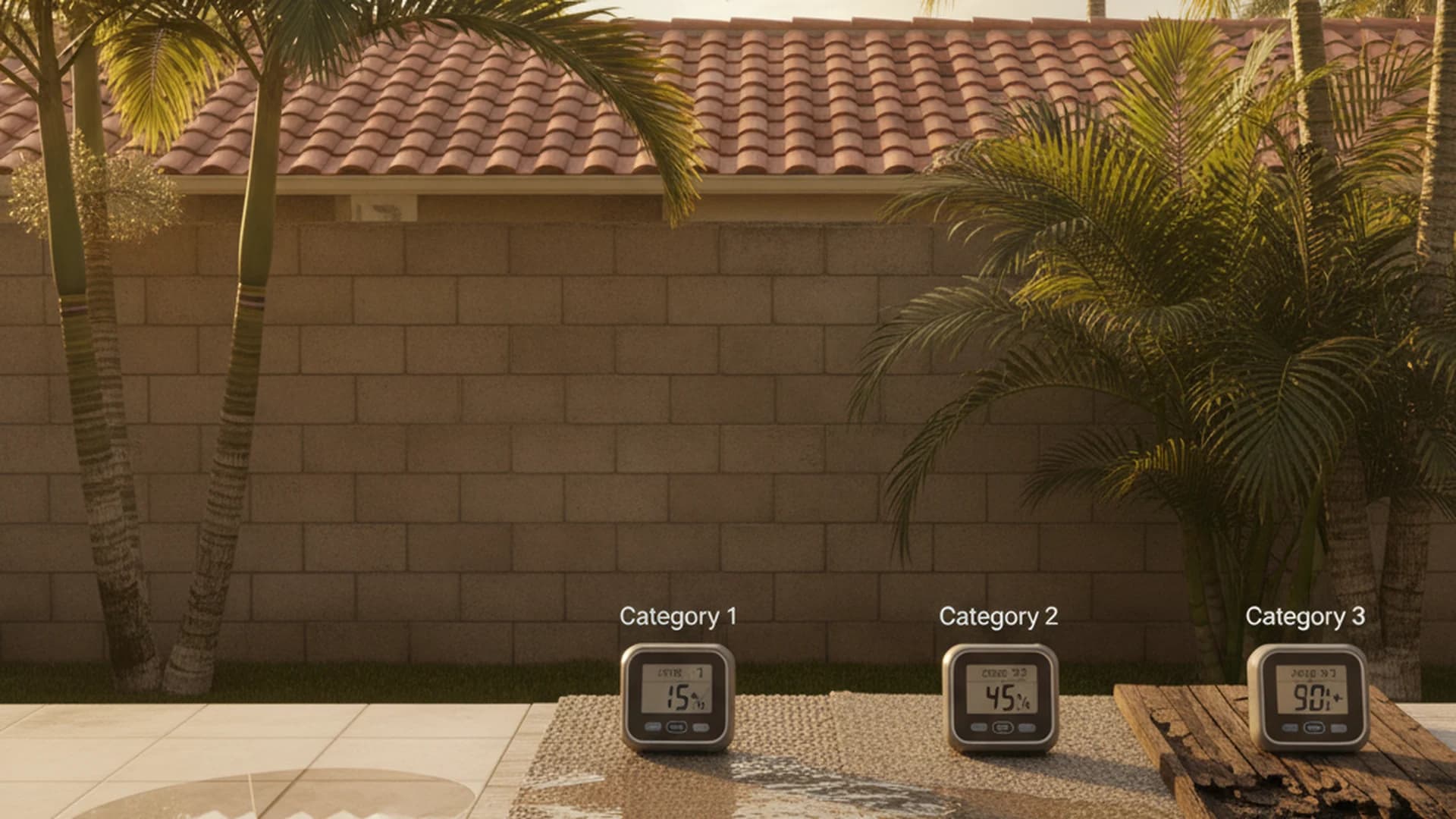
- Cat 2/3 water = full replacement (contamination)
Solid hardwood
- Cupping = often can be dried and refinished
- Crowning = more problematic; often replaced
- Prolonged saturation = replace
Tile
- Grout staining doesn't require replacement
- Loose tile (lippage, mortar bed failure) requires replacement
- Moisture in mortar bed requires removal to dry the substrate
Carpet
- Cat 1 + quick drying = often savable
- Cat 2/3 = replace; pad always replaced on water claims
Vinyl / LVP
- Usually savable at Cat 1
- Cat 2/3 = replace; adhesives contaminate
Why matching-statute applies
Florida's matching statute (Fla. Stat. 626.9744) requires continuous-area replacement when:
- Damaged product is discontinued
- Remaining product cannot reasonably match
- The continuous area is contiguous to the damage
Flooring is frequently discontinued within 2-3 years of original purchase. Partial replacement often produces a visible mismatch: triggering the statute.
How carriers push back
- "Only replace the damaged plank/tile"
- "Replacement material is available" (even when it's different dye lot / batch)
- "Boundary transitions can isolate the replacement area"
- Pay only the visible-damage square footage
How to document for full replacement
- Manufacturer discontinuation confirmation (letter or catalog)
- Dye lot / batch unavailability
- Visible mismatch sample (new next to old)
- Continuous-area analysis (same room? same sight line? same floor transition?)
The scope argument
When carriers approve only partial replacement, the resulting visible mismatch is not "matching": it's patching. The statute forces continuous replacement where reasonable matching fails.