
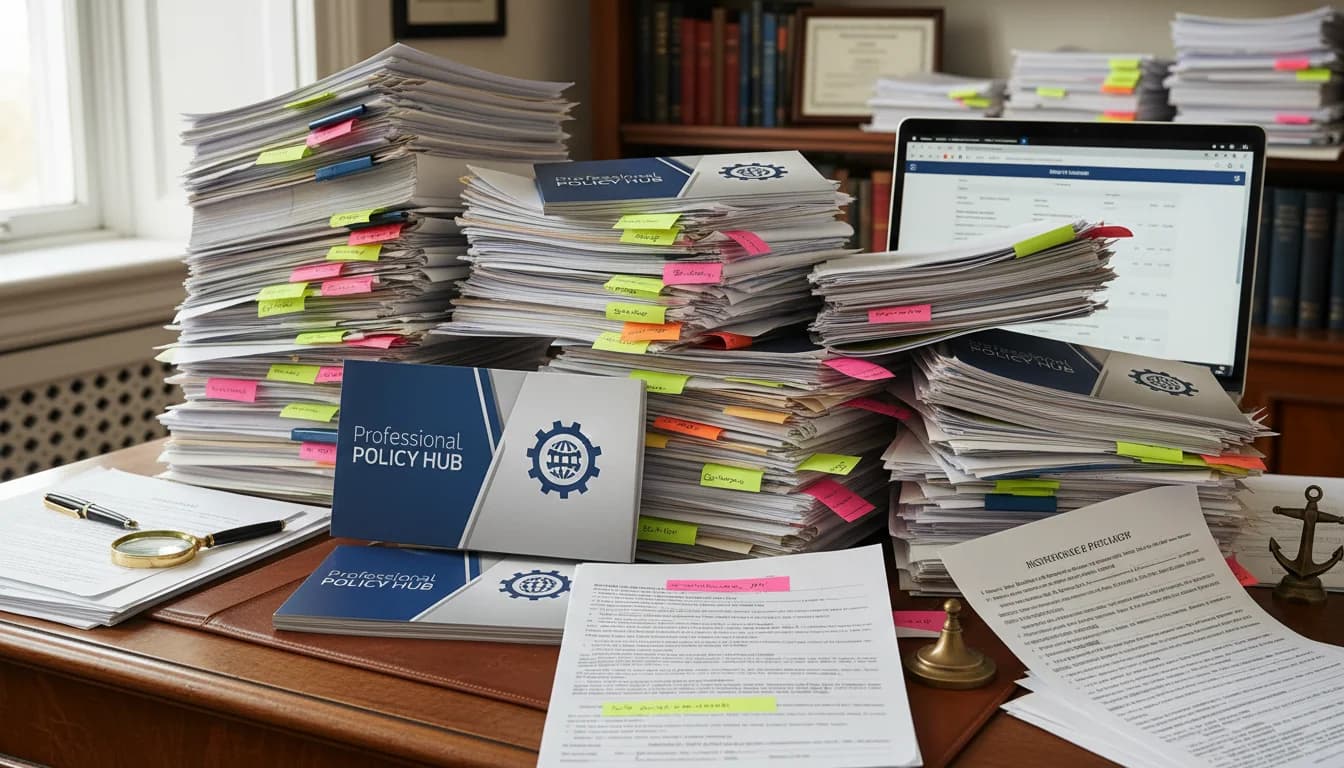
Florida insurance policy clauses explained
Short answer: Florida homeowners policy language is the set of clauses that decide whether a claim is paid and for how much. Terms like duties after loss, proof of loss, the appraisal clause, ordinance or law coverage, and anti-concurrent causation define your rights, your deadlines, and the insurer's payment obligations after property damage.
The exact wording of your Florida homeowners policy, not the size of the damage, usually decides how much you recover. Insurers read these documents narrowly, and a single clause can separate a full payment from a denial. The declarations page lists your limits and deductibles, but the real coverage fight happens in the body of the policy: the insuring agreement, the exclusions, the conditions, and the endorsements. This hub breaks down the terms that control Florida property claims so you can read your own policy with a clearer eye.
The clauses that set your obligations
Some provisions decide what you must do to keep a claim alive. Duties after loss and proof of loss create deadlines and documentation requirements, and missing them can hand the insurer grounds to delay or deny. Other provisions decide what the carrier owes and how a dispute gets resolved, including the appraisal clause, which gives both sides a path to settle a disagreement over the amount of loss without going to court.
The clauses that shape your payout
Coverage breadth lives in the policy form itself. A named perils form pays only for the causes it lists, while an all-risk (open peril) form covers anything not excluded, which changes who has to prove what. Anti-concurrent causation language can reduce or eliminate payment when a covered cause and an excluded cause, such as wind and flood, combine to produce damage. Ordinance or law coverage decides whether your insurer pays the added cost of rebuilding to current Florida building code. Additional living expense covers reasonable costs while your home is uninhabitable, and matching questions, where repaired sections no longer match undamaged ones, often turn on a few words in the policy and the estimate. Endorsements and riders modify all of this, so two policies that look alike can perform very differently after a hurricane or water loss.
Review your policy before you accept an offer
If your claim was underpaid, delayed, or denied, the answer is almost always in the language. Ocean Point Claims reviews Florida policies and claims on a no recovery, no fee basis and represents policyholders only. Pull your full policy, compare the carrier's estimate against what your coverage actually promises, and get a professional review before you sign or accept a final payment.
- PolicyProof of Loss RequirementsWhen carriers demand a Proof of Loss, the requirements are specific. How to submit, what to include, and what to avoid.Read more
- PolicyLoss Settlement ProvisionsLoss settlement provisions govern ACV vs. RCV payout. The mechanics and how they affect claim recovery.Read more
- PolicyCoverage Triggers and ThresholdsFlorida policies have specific triggers that activate coverage: sudden events, threshold damage levels, time windows. Understanding triggers.Read more
Frequently asked questions
What is the appraisal clause in a Florida homeowners policy?
What does duties after loss mean, and what are my deadlines?
What is ordinance or law coverage and why does it matter in Florida?
What is anti-concurrent causation and how can it limit my claim?
What is the difference between named perils and all-risk coverage?
Ready to talk to a licensed Florida public adjuster?
☎ (888) 824-1306Free claim review. No recovery, no fee. Answered 24/7.
Get a free claim review- License
- FL DFS #W829547
- Experience
- 21 years · 500+ mediations
- Rating
- 4.9★ (89 Google reviews)
- Fee
- No recovery, no fee