
By Anthony Barber · FL DFS #W101847 · Reviewed: · 1 min read
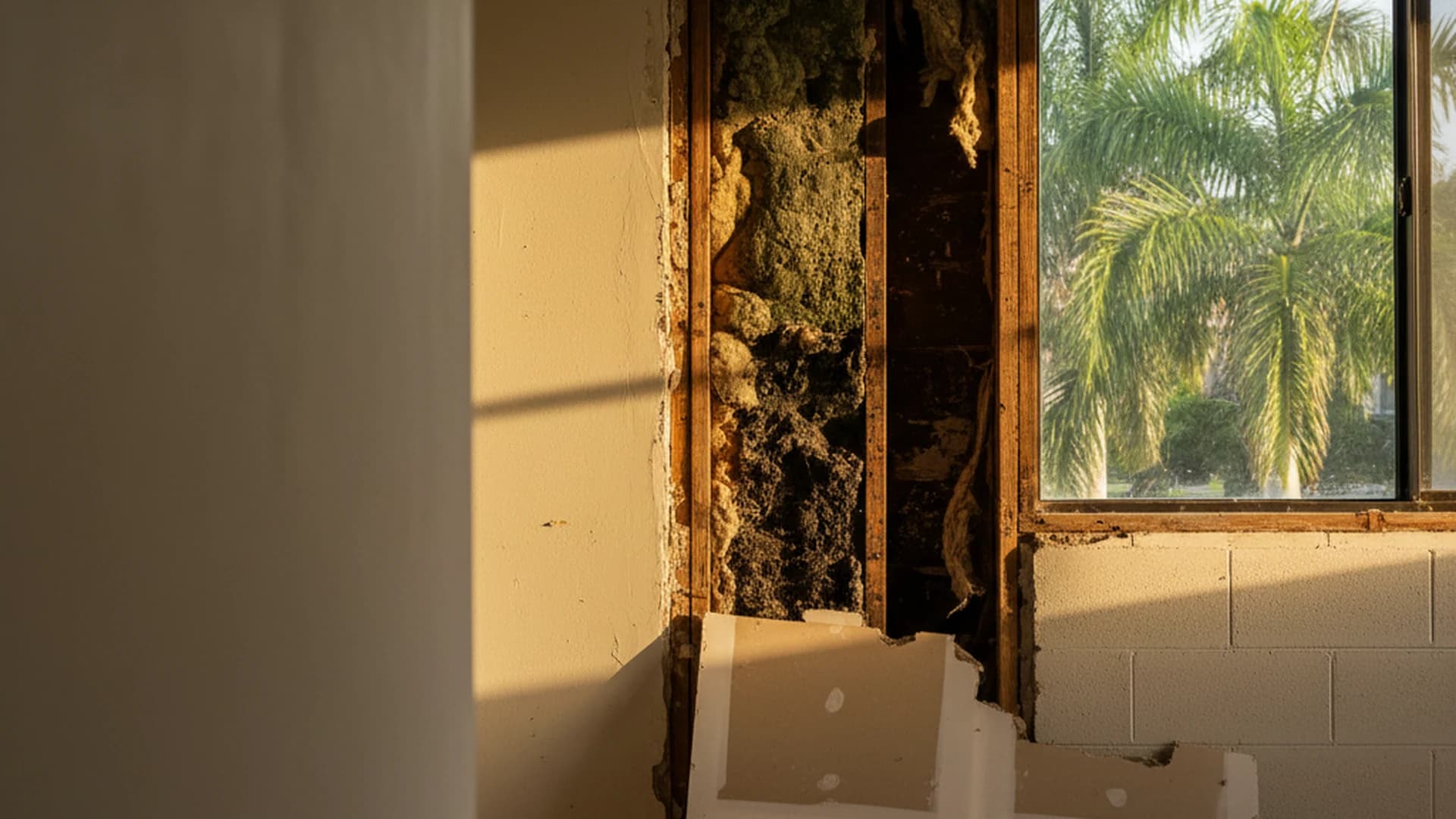
Where mold hides
- Wall cavities behind drywall
- Under base cabinets in kitchens and baths
- Behind built-ins (vanities, bookshelves)
- Inside wall insulation (batt or blown)
- HVAC components (coil, ducts, drain pan)
- Attic insulation after roof leaks
- Crawlspace framing
- Under flooring (subfloor to finish floor interface)
- Inside plumbing chases
Detection methods
Non-destructive
- Thermal imaging (moisture = temperature difference)
- Moisture meters (pin and pinless)
- Borescope through small inspection holes
- Air sampling in suspected spaces
Destructive (last resort)
- Small inspection cuts
- Cabinet pull to expose back walls
- Wall-cavity opening for visual
When detection matters
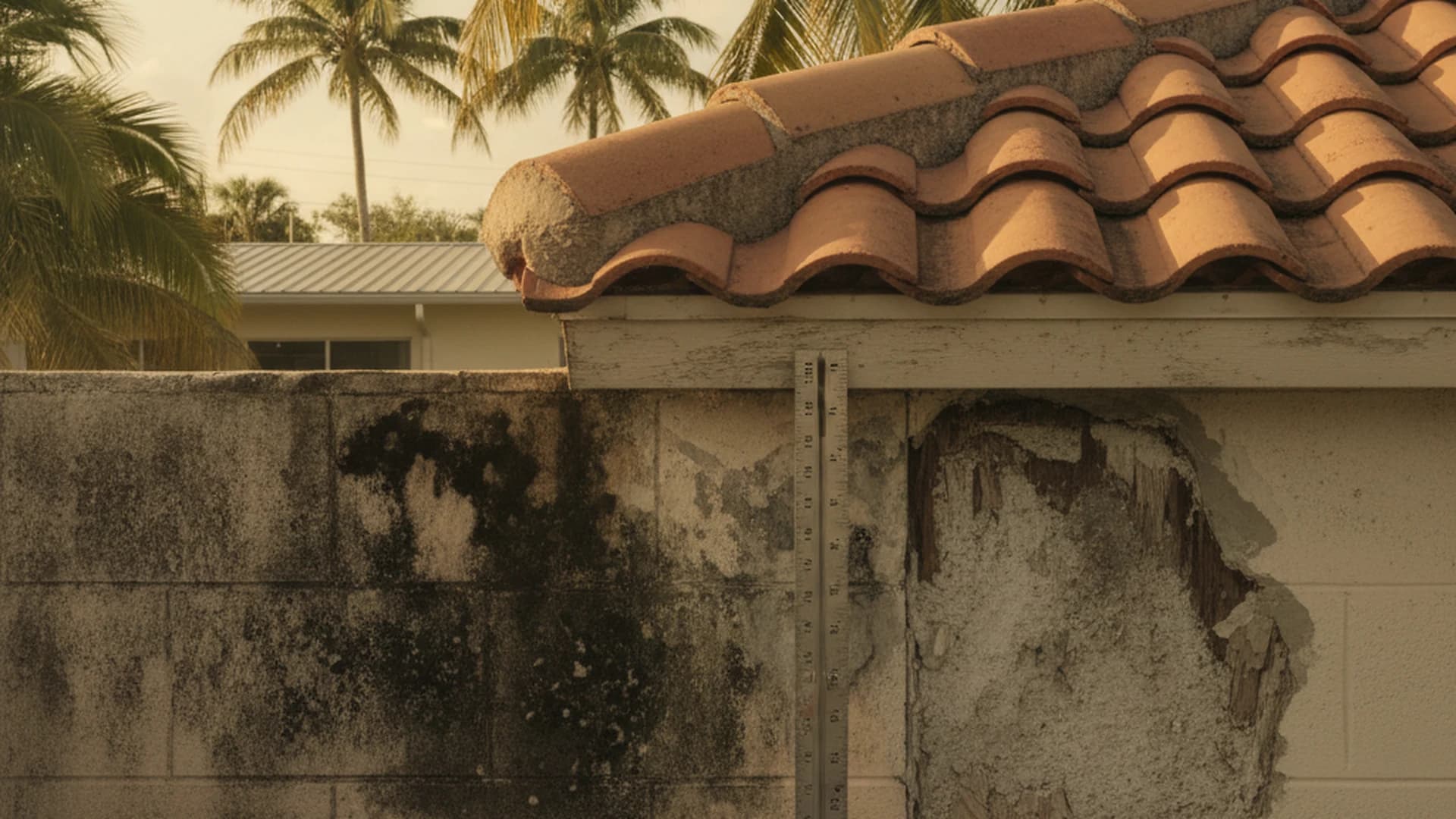
- Water event has occurred and damage extent unclear
- Visible staining suggests hidden issue
- Prior water claim with suspect remediation
- New purchase with water history
- Persistent odor without visible source
Documenting hidden scope
- Thermal image with moisture correlation
- Moisture meter readings by location
- Borescope photos
- Air samples showing elevated spore counts
- IH report documenting suspected hidden growth
Tear-out considerations
- Access required for confirmation
- Continuous-area removal typically follows
- Substrate assessment during opening
- Full remediation scope documented after access
Common mistakes
- Assuming no visible mold = no mold
- Not testing wall cavities after water event
- Trusting surface-only remediation for hidden damage
- Not running post-remediation verification testing