
By Anthony Barber · FL DFS #W101847 · Reviewed: · 1 min read
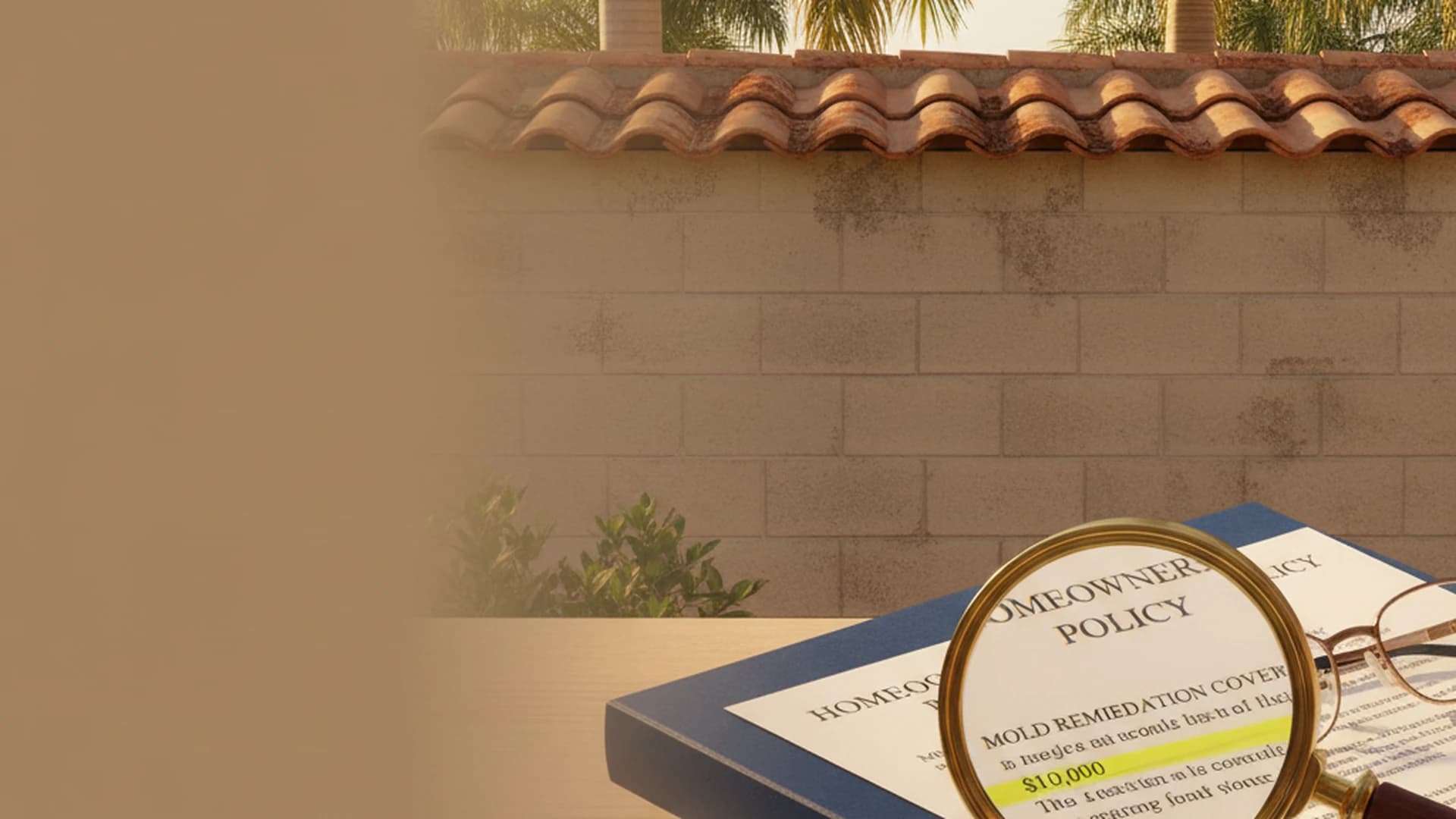
Typical sublimit structure
$10,000
standard: common cap on ISO HO-3
$50,000
upgraded: with specific endorsement
$25,000
mid-tier: some carrier-specific policies
What counts against the mold cap
- Mold remediation contractor fees
- Industrial hygienist testing
- HEPA filtration during remediation
- Antimicrobial treatments specific to mold
- PPE for mold-remediation workers
- Clearance testing
What does NOT count against the mold cap
- Underlying water loss (full Coverage A / C)
- Drywall, flooring, cabinetry replacement caused by water (full limits)
- Mitigation (drying) of water damage (full limits)
- Structural repair of water-damaged framing (full limits)
- Contents damaged by water but not by mold
- ALE related to water-damage repair
- HVAC cleaning (arguable; depends on peril)
How to separate the scope
Every line item in the claim gets attributed to:
- Water damage (full policy limits apply)
- Mold remediation specifically (subject to sublimit)
- Structural / contents replacement (full policy limits)
Maximum recovery approach
- Document the water event thoroughly (full limits available)
- Separate the mold scope cleanly (minimizes what hits the sublimit)
- Don't lump everything under "mold" (carrier will cap)
- Use industrial hygienist report to delineate
Example math
Total loss: $75,000
- Water damage (cleaning, tear-out, replacement): $55,000 (full limits)
- Mold-specific remediation: $9,000 (under sublimit)
- Structural framing replacement: $11,000 (full limits)
Policyholder recovers $75,000 (not $10,000).
Carrier's first offer often lumps everything → $10,000 cap → $65,000 gap to negotiate.