
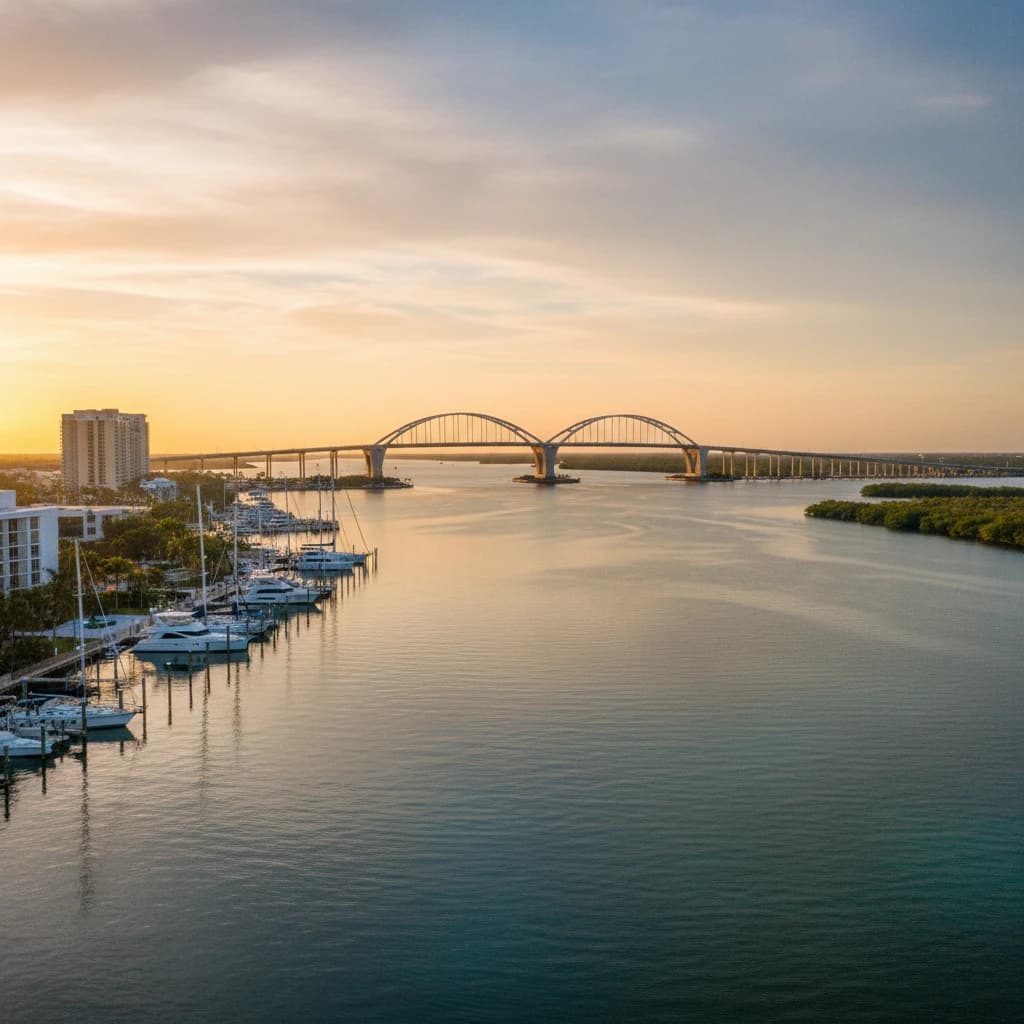
Short answer: A Fort Myers public adjuster represents you, not your insurer, on Lee County property claims, and under Fla. Stat. 626.854 the fee is capped and contingent. In a post-Ian market the payout usually turns on causation, so Ocean Point Claims (FL DFS #W829547) documents wind, surge, and wind-driven-rain damage separately. Under Fla. Stat. 627.70132 you generally have one year to report a hurricane loss and 18 months to file a supplemental.
What a Fort Myers Claim Actually Looks Like
Fort Myers sits where the Caloosahatchee River opens into the Gulf, and that geography decides how losses happen here. On September 28, 2022, Hurricane Ian came ashore as a Category 4 storm near Fort Myers Beach and Sanibel, pushing a surge that reached roughly 13 to 15 feet in spots along Estero Island, the highest ever recorded in Southwest Florida. Water reached homes miles inland from the beach. That single event reshaped tens of thousands of policies across Lee County, and the long tail of it, supplemental demands and reopened files, is still moving through statutory windows today.
Ian is not the only storm that built the local claims landscape. Hurricane Charley raked the metro as a Category 4 in 2004, and Hurricane Irma in 2017 layered tropical surge on top of historic rainfall, with parts of the county taking more than 20 inches and neighborhoods like Dunbar and Island Park flooding from freshwater that overwhelmed canals and drainage. So a Fort Myers loss is rarely one clean peril. It is wind versus surge versus rising freshwater, and the line between them is exactly where carriers cut payouts. Surge is excluded from most homeowners policies and pushed to flood coverage; wind-driven rain is covered. Getting that causation right, street by street, is the whole game in this market.
McGregor Boulevard to San Carlos Park: Building Stock Drives the File
The neighborhoods here do not share a construction era, and that matters more than people expect. Along McGregor Boulevard and Old Fort Myers you have 1920s-era estates, Mediterranean Revival villas, and frame Florida bungalows under those royal palms, older roof systems, plaster, and original materials that trigger matching and code-upgrade questions the moment they are touched. The downtown River District runs to early-1900s masonry, brick facades, and vintage condos. Then you move south and west to Iona, Cypress Lake, and San Carlos Park, where the stock is post-war and modern coastal, and out to Fort Myers Beach, where Ian simply removed roughly 900 buildings and damaged thousands more.
That spread means no two Fort Myers claims scope the same way. A surge-soaked ground floor in a Beach duplex raises elevation and substantial-damage issues; a wind-lifted tile roof on a historic McGregor home raises matching under Florida Statute 626.9744, because you cannot blend new tile into a discontinued 1990s run and call the elevation uniform. Carriers love to depreciate and patch. We document why the building stock will not allow it.
Claims We Handle Here
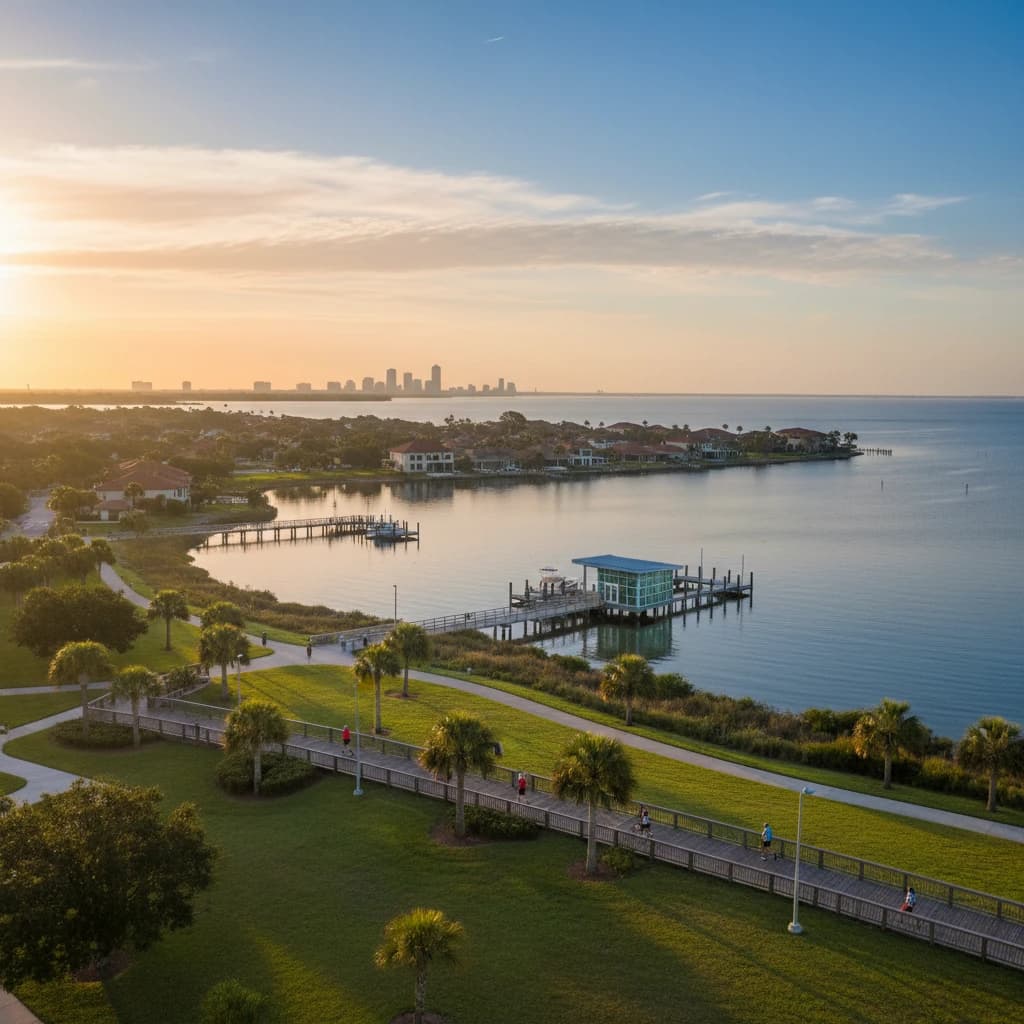
Most Fort Myers files we take run through hurricane and windstorm damage, but the work fans out from there: roof damage from uplift and missing tile, water damage from wind-driven rain through compromised envelopes, and the mold that follows in this humidity when drying stalls. We handle HOA and condo association claims common along the river and the beach corridor, commercial and business-interruption losses in the River District, and denied, underpaid, or lowballed claims that need a second, documented look.
Why Fort Myers Claims Get Underpaid
After a regional event like Ian, carriers process Lee County by volume, and volume is where money goes missing. Out-of-state desk adjusters who never walked Estero Island default to wind-versus-flood splits that under-credit covered wind damage. Estimates lean on cosmetic patching instead of full replacement on aging McGregor and River District roofs. Matching gets ignored. Hidden surge intrusion behind newer drywall in San Carlos Park rebuilds goes unscoped. None of that is your fault, and most of it is correctable through supplemental claims within the deadlines, which is most of what we do here now.
How Ocean Point Works Your Claim
We start with an independent inspection of your Fort Myers property, build an itemized scope priced to local rebuild costs, and pull policy language, weather data, and photos to tie each line to a covered cause. Then we present and negotiate the claim directly with your carrier and, under Florida Statute 627.70131, hold them to their response and payment deadlines. Lead adjuster Eli Goins and the Ocean Point team work the file so you are not arguing causation alone. We are a licensed Florida public adjusting firm (FL DFS #W829547) serving all of Lee County and the wider state, and you can read more about our public adjusting service.
Fees, Timing, and the Clock
We work on contingency: no recovery, no fee, with our percentage capped by Florida Statute 626.854. Timing is the part people underestimate. Under Florida Statute 627.70132, you generally have one year from the date of loss to file a new windstorm or hurricane claim and 18 months for a supplemental, so an Ian-related reopen has a hard horizon. If your carrier is stalling or has acted in bad faith, Florida Statute 624.155 may apply.
Talk to a Fort Myers Public Adjuster
If a storm hit your home or business anywhere from the beach to downtown, call (888) 824-1306 or reach us through our contact page. Talk to a Fort Myers public adjuster before you accept a number that does not fit the loss.