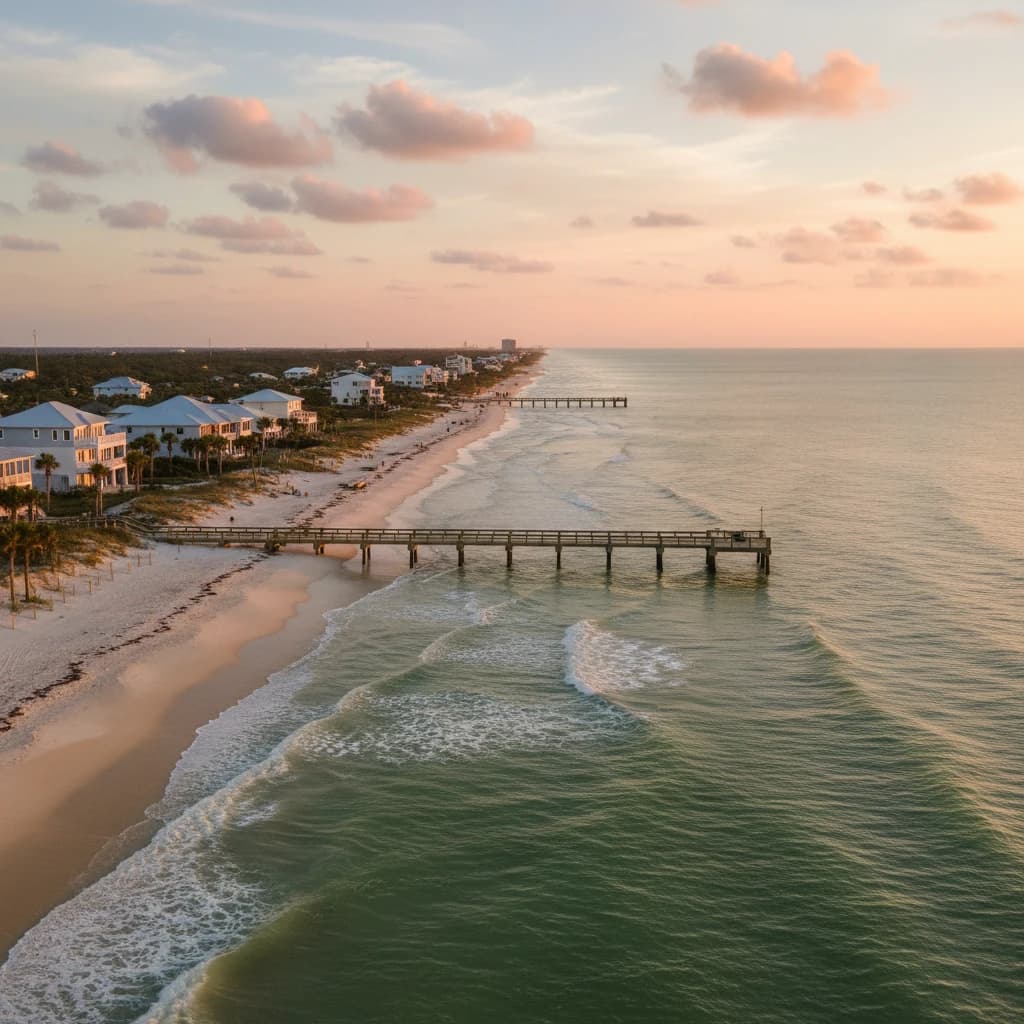
Counties and cities in the Gulf Coast region
The Gulf Coast region spans eight counties along Florida's western shoreline, from Lee County in the southwest up through the Tampa Bay metropolitan area. Ocean Point Claims serves policyholders across the full stretch:
- Lee County (Lee County hub): Fort Myers, Cape Coral, Bonita Springs, and Captiva
- Collier County: Naples and Marco Island
- Charlotte County: Port Charlotte and Punta Gorda
- Sarasota County: Sarasota and Venice
- Manatee County: Bradenton
- Pinellas County: Clearwater, St. Petersburg, and Oldsmar
- Hillsborough County: Tampa
- Pasco County: New Port Richey
Gulf Coast peril profile
The Gulf Coast is the most concentrated recent catastrophe zone in Florida. The southwest counties absorbed the direct force of Hurricane Ian (2022), which brought catastrophic storm surge and damaging wind across Lee, Collier, and Charlotte counties. Two years later, Hurricane Helene (2024) and Hurricane Milton (2024) struck the central Gulf coast, pushing surge and wind through Sarasota, Manatee, Pinellas, Hillsborough, and Pasco within weeks of each other.
That sequence produced several recurring claim problems. Surge-versus-flood causation is the dominant dispute: carriers frequently attribute damage to flood or surge excluded under a standard property policy when wind, wind-driven rain, or pressure failure was the operative or concurrent cause. The distinction matters because surge and flood losses are typically handled under a separate flood policy with its own limits, while wind losses fall under the property policy, and the allocation between them decides how much a policyholder actually recovers. Salt-air corrosion along the barrier islands and bayfront accelerates damage to roofing fasteners, HVAC condensers, electrical components, and metal finishes, and that deterioration is often used to discount otherwise covered storm damage. The region also carries a heavy supplemental and reopened-claim load, because initial payments on Ian, Helene, and Milton claims commonly fell short of the full scope of repair once hidden damage, structural movement, and interior water intrusion surfaced during reconstruction. If your Gulf Coast claim was underpaid, delayed, or closed too soon, call (888) 824-1306.
Claim types we handle across the Gulf Coast
Ocean Point Claims handles the full range of Gulf Coast property losses:
- Hurricane and storm damage, the dominant peril across all eight counties
- Roof damage, including wind-lifted shingles, tile breakage, and fastener failure
- Water damage from wind-driven rain, plumbing, and post-storm intrusion
- Fire and smoke damage
- Mold damage, common after delayed water remediation in the Gulf humidity
- Denied or underpaid claims
- Supplemental claims on losses where the first payment did not cover the full scope
- HOA and condo association claims, heavily represented in the coastal condo stock
- Business interruption and loss of use for commercial property owners
Why Gulf Coast claims are commonly underpaid
Several patterns drive low Gulf Coast payments. Scope reduction is the most frequent: a carrier estimate omits or downsizes line items, undervalues coastal labor and materials, or treats a full roof replacement as a partial repair. Causation disputes follow close behind, because the wind-versus-flood and surge-versus-wind questions decide whether a loss falls under the property policy or is pushed onto a separate flood policy with different limits. Matching is a third recurring issue: when a damaged roof, tile, or finish cannot be matched to undamaged sections, Fla. Stat. 626.9744 governs whether the carrier must address the resulting mismatch, and carriers routinely resist replacing adjacent undamaged materials. Salt-air corrosion and roof-age arguments are layered on top to characterize covered storm damage as pre-existing wear.
How Ocean Point works a Gulf Coast claim
Ocean Point starts with a free claim review of your policy and loss documents. We then conduct an on-site inspection, document the full scope of damage, and prepare a detailed Xactimate estimate that reflects current Gulf Coast repair costs. We track the carrier's statutory deadlines under Fla. Stat. 627.70131, including the requirement to acknowledge, investigate, and pay or deny within the statutory windows.
When a carrier undervalues or denies a covered loss, we pursue the available remedies: appraisal where the policy allows it, mediation through the state-administered process, and a Civil Remedy Notice under Fla. Stat. 624.155 when bad-faith conduct supports one. We handle the carrier correspondence, the proof-of-loss documentation, and the back-and-forth over scope and causation so you are not negotiating your own claim against an adjuster who works for the insurer. For losses that were closed too soon, we file supplemental and reopened claims under Fla. Stat. 627.70132, which sets the window for additional and reopened hurricane and windstorm claims. Many Ian, Helene, and Milton claims still fall inside that window and remain recoverable.
Fees and your rights
Ocean Point Claims works on a contingency basis under Fla. Stat. 626.854. There is no upfront cost; the fee is a percentage of what we recover for you, and if there is no recovery, there is no fee. Florida law gives you a 10-day right to cancel a public adjuster contract after signing, with no penalty. Ocean Point is a licensed Florida public adjuster, FL DFS #W829547, and represents policyholders only, never insurance companies. To talk through a Gulf Coast claim, call (888) 824-1306 or reach us through the contact page. You can also review the Florida statewide public adjuster page or browse all locations.