
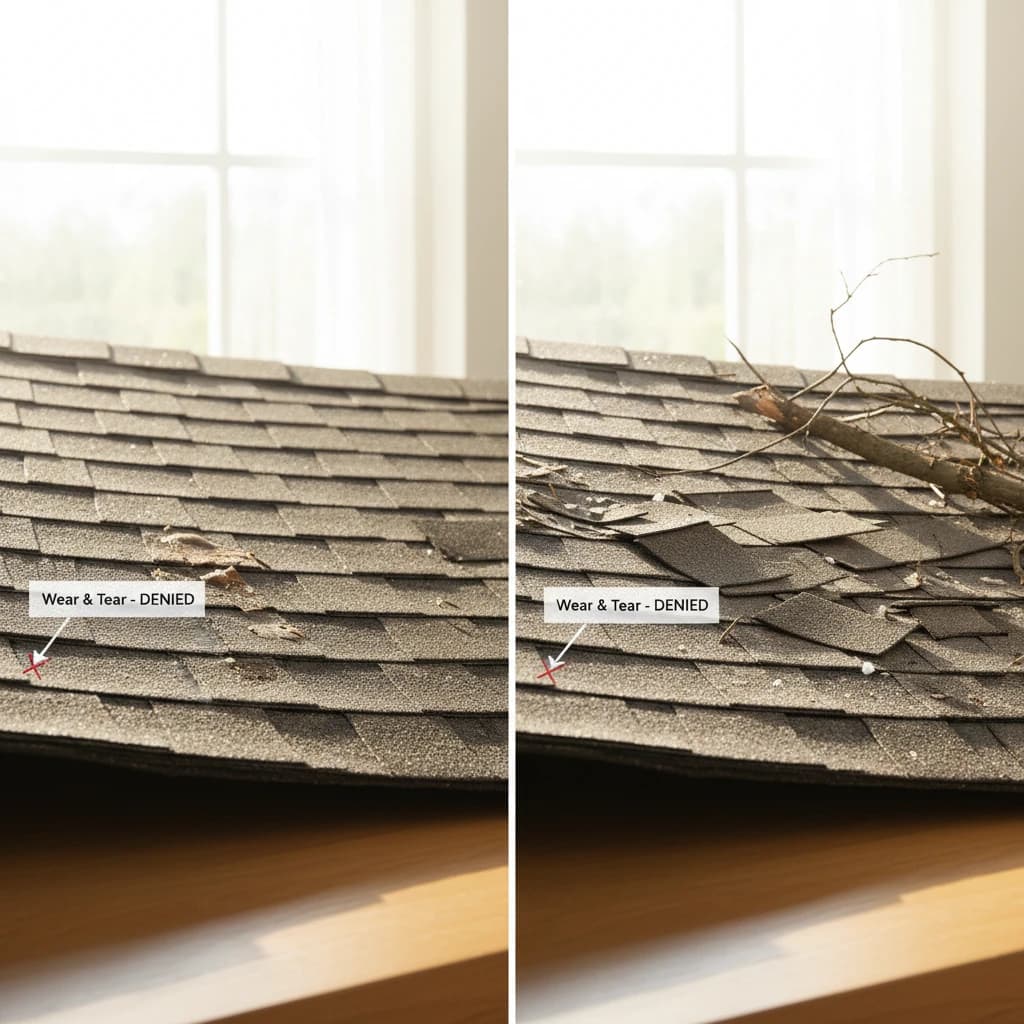
Short answer: FAPIA research and the 2010 Florida OPPAGA study have historically shown Florida policyholders with public adjuster representation receive materially higher settlements, particularly after hurricanes (individual results vary). A wear-and-tear denial claims your loss came from gradual aging rather than a covered event, so the carrier pays nothing. You defeat it with dated pre- and post-loss condition records, weather data, neighborhood damage patterns, and an independent expert, and note that Fla. Stat. 627.70131 deadlines keep running throughout.
How the defense works
Carrier argues: "This damage isn't from a covered event: it's the result of gradual deterioration, normal aging, or failure to maintain." The exclusion supports denial regardless of what actually happened.
Where it's commonly invoked
- Roof claims after named storms. Shingle damage attributed to age, not wind.
- Water damage from plumbing failures. Slow deterioration of pipes claimed.
- Siding and paint after hurricanes. Normal fade/wear cited as the cause.
- HVAC or appliance failures. Age-related, not covered peril.

How to counter
Establish timeline
- Pre-event condition documented (maintenance records, prior photos, inspection reports)
- Post-event condition documented immediately (same-day photos if possible)
- The gap between the two = damage attributable to the event
Establish the event
- Weather data for the specific date (NWS, NHC for storm events)
- Neighborhood damage patterns (did other homes experience similar damage?)
- Local news reports of the event
- Any first-notice documentation with the carrier
Establish the physical signature
- Wear-and-tear damage has specific patterns (uniform age-related wear)
- Event damage has specific patterns (directional wind damage, impact damage, water-flow patterns)
- An independent engineer or qualified contractor can distinguish
Rebut the carrier's report
- If an engineer report supports the carrier's wear-and-tear position, evaluate it critically (see Engineer Report Bias tactic)
- Counter with independent expert opinion