
Why wind-vs-flood matters more than the total damage figure
Most Florida homeowners policies are HO-3 forms that exclude flood entirely. Flood, including storm surge, wave wash, and tidal-driven inundation, is covered only under a separate NFIP policy or a private flood policy. After a major hurricane the same property may have:
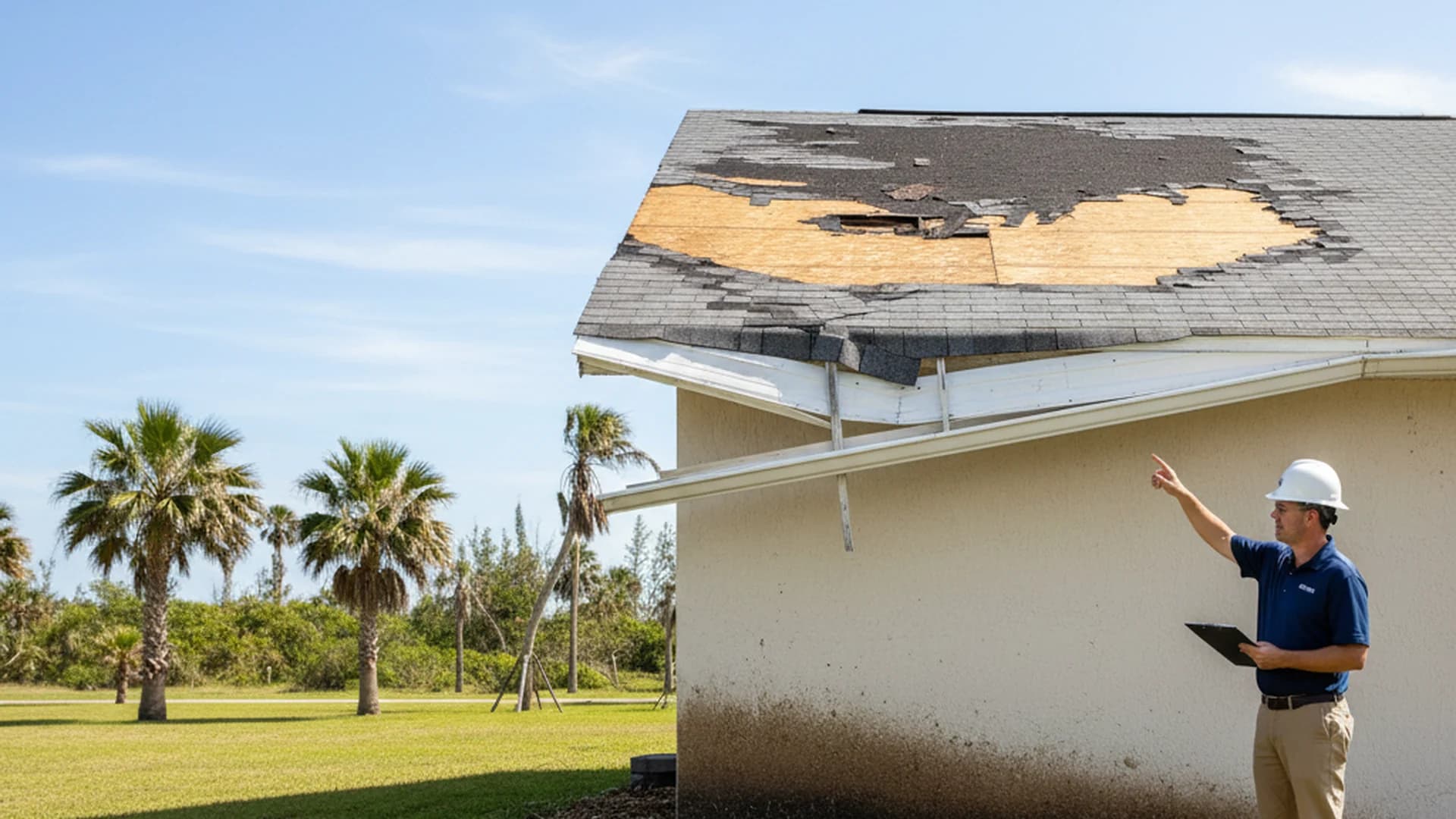
- A wind/HO-3 claim for roof, soffit, fascia, interior wind-driven rain, and structural wind damage
- A flood claim for everything below the high-water mark
- A causation dispute in the overlap zone: was that drywall ruined by wind-driven rain through the roof (covered by HO-3) or by rising surge water (covered by flood, not HO-3)?
If you have only an HO-3 and no flood policy, the allocation determines whether you recover anything at all on damage the carrier wants to call "flood."
The anti-concurrent causation (ACC) clause
Most Florida HO-3 forms contain an anti-concurrent causation clause. Typical wording:
In plain English: if any portion of a single damage event was caused by an excluded peril (flood/surge), the carrier may try to exclude the entire loss, even the wind portion. Florida case law has limited but not eliminated ACC enforcement. The leading principle: damage that is separately attributable to wind, occurring before flood reached that point, is covered. Damage that is concurrent or post-flood is more contested.
The NFIP "wind doesn't cover flood, flood doesn't cover wind" trap
If both a wind carrier and a flood carrier are on the claim:
- The wind carrier argues damage is flood (push to NFIP)
- The NFIP/flood carrier argues damage is wind (push to HO-3)
- Without aggressive documentation, both deny their share and you recover from neither
NFIP claims also have a strict 60-day Proof of Loss deadline and a much narrower coverage scope (no ALE under standard NFIP; building and contents are separate policies; basement coverage limited).
Florida-specific rules that affect the allocation
- Fla. Stat. 627.701(2): hurricane deductibles apply to "hurricane losses", but the statute's definition interacts with named-storm endorsements in carrier-specific ways
- Fla. Stat. 627.706 and 627.7065: surface-water exclusions and statute-of-limitations interplay with surge claims
- Fla. Admin. Code 69O-167.005: claim-handling standards for hurricane events
- Wind-only policies (Citizens, some private wind/coastal carriers): cover wind only and explicitly exclude flood/surge, the allocation fight is structurally identical
How the allocation is actually decided
In practice, the line between wind and flood is documented through:
- High-water mark photographic evidence. Where did surge waterline reach? Anything above the line and damaged is presumptively wind/wind-driven rain. Anything below is presumptively flood.
- Roof-down vs floor-up evidence. Roof breaches with downward-tracked damage signature (ceiling staining, insulation saturation, upper-wall damage) supports wind-driven rain. Floor-up saturation, mud lines, and exterior debris lines support flood.
- Timing evidence. Doppler radar showing wind onset hours before surge arrival supports wind-first damage. Meteorological reports establish event sequence.
- Engineer reports. Independent forensic engineers reconstruct causation. Carriers retain their own engineers; you have the right to bring yours.
- NWS/NHC post-event reports anchor the meteorological record.
Common carrier tactics in Florida wind/flood disputes
- Categorizing the entire loss as flood based on a surge-line photo, regardless of upper-floor wind damage
- Categorizing wind-driven rain as flood when it pooled at floor level after entering through a wind-breached envelope
- Using a single field adjuster who is not qualified on flood causation
- Citing the ACC clause to deny the whole claim instead of allocating
- Refusing to coordinate with the NFIP adjuster, leaving you to mediate between two carriers
What Ocean Point does on a wind/flood claim
- Independent re-inspection documenting all damage with elevation-aware photographs (height markers, scale references, GPS-tagged exterior)
- Meteorological reconstruction of wind arrival, peak gusts, surge timing for your specific address
- Forensic engineering retention when carrier engineers have categorically attributed damage
- Dual-policy coordination, NFIP claim parallel-tracked with HO-3 claim to prevent ping-pong denial
- Allocation memorandum submitted to both carriers identifying line-by-line scope attribution
- Civil Remedy Notice if either carrier breaches statutory response timing or refuses to engage on supportable allocation
Common mistakes by policyholders
- Letting the wind carrier inspect first and "do the allocation." Carrier-side allocation is typically the most flood-favorable interpretation
- Throwing away mud-line evidence during cleanup. Photograph everything before mitigation
- Missing the NFIP 60-day Proof of Loss deadline
- Signing a release that resolves the wind claim before the flood claim, releases interact across the two policies
- Assuming flood is excluded so the whole event is uncovered, substantial wind-portion recovery is often available even where flood damage is the dominant visual