
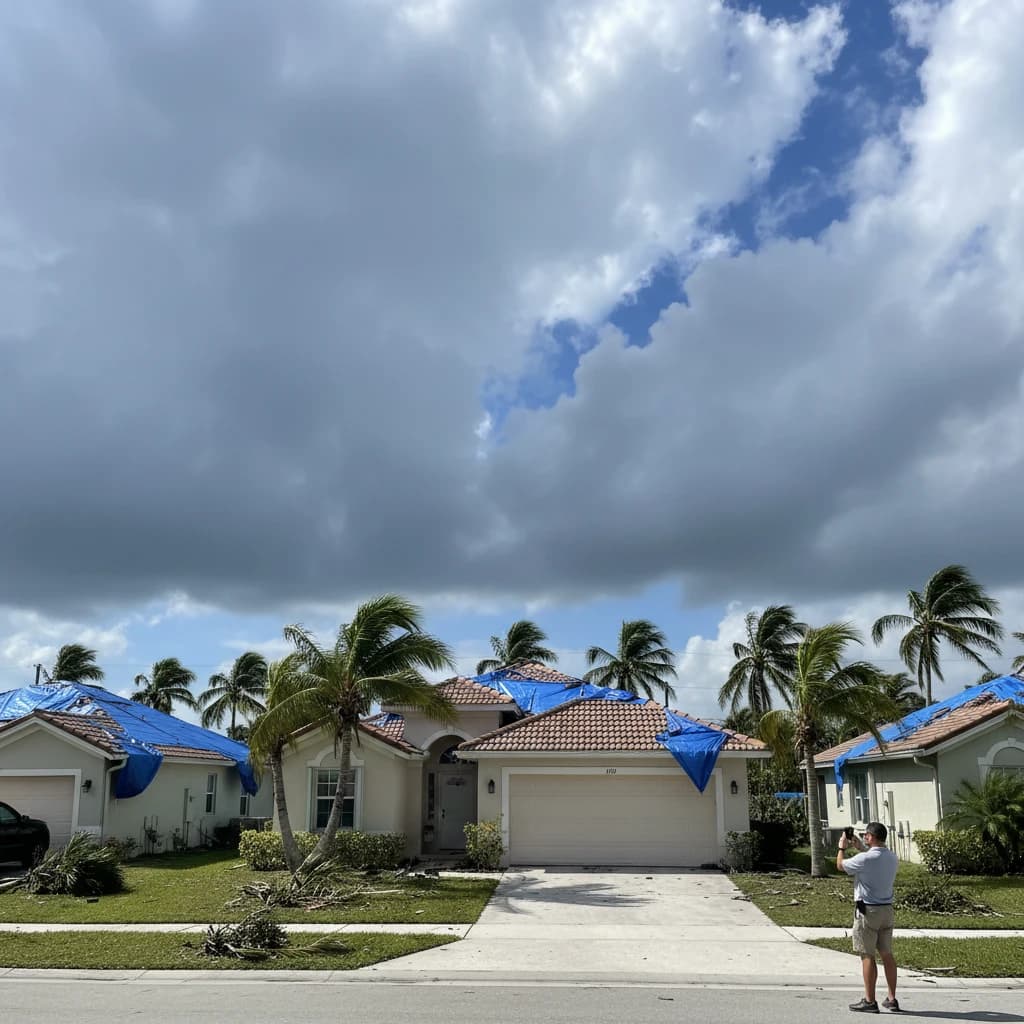
Short answer: A Florida storm claim covers wind, hail, tornado, and wind-driven-rain damage under a standard HO-3 policy, even when the carrier reclassifies it as wear and tear. Under [Fla. Stat. 627.70132](/resources/florida-statutes/627-70132-roof-claim-deadlines/) you have 1 year to report the loss, and under [Fla. Stat. 627.70131](/resources/florida-statutes/627-70131-claim-response-deadlines/) the insurer must pay or deny within 60 days. A separate hurricane deductible applies only to named-storm events, not ordinary severe weather. We document cause, wind speed, and full scope so the loss is paid rather than downgraded.
Storm events we handle
Florida gets hit by far more than named hurricanes. Most storm-damage claims we open stem from the severe weather that rolls through every season without a name attached, and those losses are just as real to the homeowner under a dripping ceiling. Hurricanes get their own pages; this one focuses on the everyday severe weather and general storm losses Florida owners face all year.
- Severe thunderstorms: straight-line winds, downbursts, and microbursts that peel shingles, lift roof decking, and snap soffit and fascia
- Hail: bruised shingles, dented metal, cracked tile, and damaged vents, often the focus of a dedicated hail damage claim
- Tornadoes and waterspouts: including the inland tornadoes systems spin up, covered on our tropical storm and tornado page
- Wind-driven rain: interior water intrusion through openings the wind created
- Tree, limb, and debris impact: collision damage to roofs, walls, and screens
Wind, hail, and wind-driven rain
Severe-weather damage is rarely as simple as the first adjuster makes it look. Wind breaks the seal strips that hold shingles down, so a roof can look intact from the ground while it has already lost its wind rating. Hail bruises the mat under the granules, damage a chalk-marked test square reveals but a rushed inspection misses. Wind-driven rain then enters through the openings the storm opened. Under most Florida HO-3 policies, water that enters because wind first created an opening is covered, even though carriers routinely reclassify it as long-term wear and tear.
Wind-borne debris and falling trees produce some of the most disputed losses we see. A limb that punches through the roof deck does visible damage at impact, but the real claim is often the structural movement, sheathing damage, and water intrusion that follow. Carriers pay for the obvious hole and ignore the cascade, and debris removal, tarping, and board-up are routinely underpaid.
Why storm claims are commonly underpaid
- Post-event volume pressure. After a regional storm, carriers process a wave of claims at once. Field adjusters spend less time per property, and scope gaps follow.
- Wind versus flood causation. The single biggest storm-claim battle. Wind damage is covered under the HO-3; surface flooding is not and needs separate NFIP or private flood coverage. We sort the two on our wind versus flood causation page.
- Wind-driven rain denied as intrusion. Interior water from a wind-created opening is covered, but often denied as "gradual" or "long-term."
- Cosmetic and partial scoping. Adjusters mark hail or wind damage as cosmetic, or approve a few slopes instead of the full roof.
- Matching ignored. When discontinued tile or shingle lines cannot be matched, Fla. Stat. 626.9744 can require replacement across the affected area for a uniform appearance. See our matching statute glossary and the statute breakdown.
A documented result
- $134,260 the carrier's initial offer
- $377,000 what Ocean Point recovered
- +180.7% increase over the offer
Read the full case: Chris and Keli's Stuart storm claim
Florida storm-claim deadlines that protect you
Florida law sets firm timelines on both sides of a storm claim, and missing them costs money.
- Notice deadline. Under Fla. Stat. 627.70132, a claim, supplemental claim, or reopened claim must be reported within the statutory window after the date of loss. File late and the carrier can deny on timeliness.
- Carrier response and payment. Under Fla. Stat. 627.70131, the insurer must acknowledge your claim promptly and, with limited exceptions, pay or deny it within 60 days of notice. A missed deadline builds the record we use to escalate.
- Roof claims. Fla. Stat. 627.70132 governs the roof claim reporting deadlines that often decide a wind or hail roof damage claim.
- Public-adjuster fees. Florida caps public-adjuster fees by statute under Fla. Stat. 626.854, and Ocean Point works on a no recovery, no fee basis.
Supplemental storm claims
Florida Statute 627.70132 also gives policyholders 18 months from date of loss to file a supplemental claim. After a storm, supplemental filings are where much of the real recovery happens: the initial payment covers the headline damage, the supplemental captures everything else.
Common supplemental scope:
- Scope the first adjuster missed
- Damage that emerged after temporary mitigation
- Code upgrades not captured in the initial estimate
- Matching recovery under 626.9744
- Extended ALE when restoration runs long
What to do first after a storm
- Make it safe. Tarp open roof sections and board up broken openings. Reasonable mitigation cost is usually reimbursable.
- Document before you clean up. Photograph and video every elevation, the roof, and interiors before anything is moved.
- Keep receipts for tarps, fans, dehumidifiers, lodging, and emergency repairs.
- Report the loss within the statutory window, but do not accept the first scope as final.
- Get an independent read. A low first offer is a starting point, not a verdict; our claim underpaid resource explains the options.
Evidence that wins a storm claim
The difference between a paid storm claim and a denied one is usually proof:
- Dated photos of every roof slope and elevation, plus interiors and moisture readings
- Close-up or chalk-test images of hail strikes on shingles, vents, and metal
- NOAA or weather-service data tying the wind speed or hail to your address and date of loss
- The complete policy with endorsements, deductibles, and storm deductible trigger language
Appraisal, mediation, or litigation
When the carrier acknowledges a covered storm loss but undervalues it, appraisal is often the fastest path: each side names an appraiser, and a neutral umpire resolves the difference. Our appraisal and umpire service prepares that demand. When coverage itself is disputed or bad faith is in play, litigation may fit better, and our public adjuster versus attorney breakdown helps you choose.
Does my hurricane deductible apply to a regular storm?
No. Named-storm and hurricane deductibles only trigger for the specific events defined in your policy. For an unnamed severe storm, the standard deductible applies, not the larger percentage.
How Ocean Point handles storm claims
- Rapid on-site documentation: drone, Matterport, and moisture readings before secondary damage obscures the event.
- Event correlation: NOAA wind speed, hail reports, and rainfall totals tied to the property's coordinates.
- Xactimate estimate with code upgrades, matching, and labor mobilization.
- Tracking Fla. Stat. 627.70131 deadlines and building the bad-faith record if the carrier breaches.
- Appraisal, mediation, or CRN when the carrier will not pay fairly.
Who leads storm claims at Ocean Point
Eli Goins (FL DFS #P159790) leads major-event coordination, hurricane-specific claims, and appraisal or CRN escalation when the carrier won't pay fairly.