
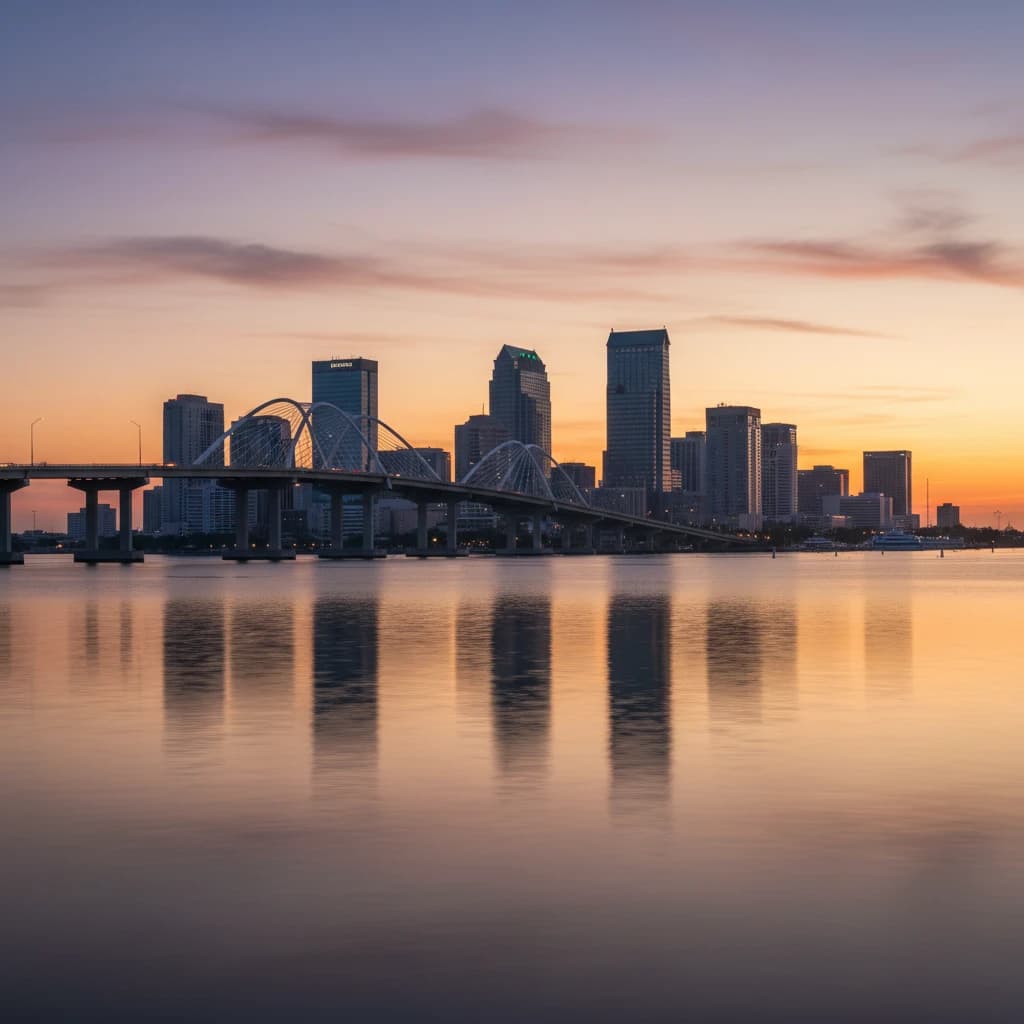
Short answer: A Tampa public adjuster represents you, not your insurer, on Hillsborough County property claims, and under Fla. Stat. 626.854 the fee is capped and contingent. Tampa Bay pairs surge-exposed low-lying neighborhoods with aging inland housing, so a single storm can stack wind, wind-driven rain, and flooding that carriers split to your disadvantage. Ocean Point Claims (FL DFS #W829547) documents causation and holds carriers to the deadlines in Fla. Stat. 627.70131.
Storms That Shape a Tampa Insurance Claim
Tampa goes decades being called "the city that hurricanes forget," and then a single season rewrites the record books. In 2024 that happened twice in two weeks. Hurricane Helene scraped past the coast in late September, its eye coming ashore in the Big Bend roughly 180 miles north, yet it still pushed the worst storm surge Pinellas had seen in about 80 years, with water near seven feet measured around Tampa and seawalls along Hillsborough Bay overtopped. Less than two weeks later Hurricane Milton made landfall at Siesta Key on October 9, raked the bay with gusts over 100 mph, tore the roof off Tropicana Field, dropped close to a foot of rain on Tampa during the city's wettest year on record, and spun up one of Florida's largest single-day tornado outbreaks in generations. The track that nudged Milton's center south of the bay spared Tampa the catastrophic surge and even produced a brief reverse surge, but wind, rain, and tornado damage were very real across Hillsborough County.
Those back-to-back events sit on top of a longer pattern. Hurricane Irma in September 2017 came in as a weakened Category 2 and was called a "glancing blow," but it still littered Tampa with downed lines and debris. Go back far enough and the 1921 Tampa Bay hurricane drove a 10 to 12 foot surge straight over Bayshore Boulevard and into Hyde Park. The lesson for property owners is consistent: a storm does not have to score a direct hit on Tampa to leave you with a covered loss, and adjusters who treat a "near miss" as a no-damage event are reading the map wrong.
Neighborhoods, Building Stock, and Why Tampa Losses Get Complicated
Damage in Tampa breaks down along geography and construction. South Tampa, including Hyde Park, Palma Ceia, Davis Islands, and the Bayshore corridor, is full of Craftsman bungalows, Colonial Revivals, and Mediterranean-style homes built roughly between the 1900s and 1930s. Many sit in or beside AE flood zones along Hillsborough Bay and the Hillsborough River, which means the same property can face surge, wind, and freshwater river flooding in one event. Older roofs, plaster walls, original wood windows, and discontinued tile profiles make these losses expensive to repair correctly and easy for a carrier to undervalue.
Other parts of the county carry their own profiles. Westshore mixes mid-century homes with dense commercial and office stock exposed to wind and roof loss. Seminole Heights has a deep inventory of historic bungalows vulnerable to wind-driven rain and aging-roof claims. New Tampa and the suburban north skew newer, with tile and shingle roofs that draw heavy scrutiny over hail, uplift, and matching. Channelside and the downtown core add high-rise condos and HOA-governed buildings where one storm touches dozens of units. Knowing which Tampa neighborhood a loss sits in changes how a claim should be documented and argued.
Claim Types We Handle Across Hillsborough County
Ocean Point Claims works the full range of Tampa property losses: hurricane and windstorm damage, roof damage from uplift and wind-driven rain, water damage from surge intrusion and burst supply lines, mold that follows humid post-storm conditions, and fire and smoke losses. We also take on HOA and condo association claims common in Channelside and downtown towers, commercial and business-interruption losses across Westshore, and supplemental claims when an original payout fell short. See the full list on our claim types page and our public adjusting service overview.
Why Tampa Claims Get Underpaid
The recurring Tampa problem is the "glancing blow" mindset. Because the metro keeps dodging worst-case landfalls, carriers and their field adjusters arrive primed to call damage cosmetic or pre-existing, especially on century-old South Tampa housing where wear and storm harm blur together. We see surge and wind-driven rain split apart to dodge coverage, discontinued bungalow tile dismissed instead of matched under 627.70132 and Florida's matching statute (626.9744), and estimates that ignore code-upgrade costs on older roofs. A denied, lowballed, or underpaid result is not the final word.
How Ocean Point Works Your Claim
We inspect the Tampa property ourselves, document the loss with photos and measurements, build an independent scope of repair, and present it to your carrier. We track the statutory deadlines that protect you, including the carrier response and payment timelines under 627.70131, the claim-filing limits under 627.70132, and bad-faith remedies under 624.155 when an insurer stalls. You stay informed at every step.
Fees, Timing, and Talking to a Tampa Public Adjuster
We work on contingency under Florida's public adjuster law (626.854), which caps fees, including a reduced cap on declared-emergency claims, and ties our compensation to what we recover, not your deductible. Timing depends on the loss and the carrier, and we push every statutory deadline in your favor.
Talk to a Tampa public adjuster today. Call (888) 824-1306 or reach us through our contact page. Serving all of Hillsborough County and Florida statewide; see every area we cover on our locations page.