
Skip to content
Ocean Point Claims Company
Burst pipe insurance claim Florida

Pipe Burst Insurance Claims in Florida

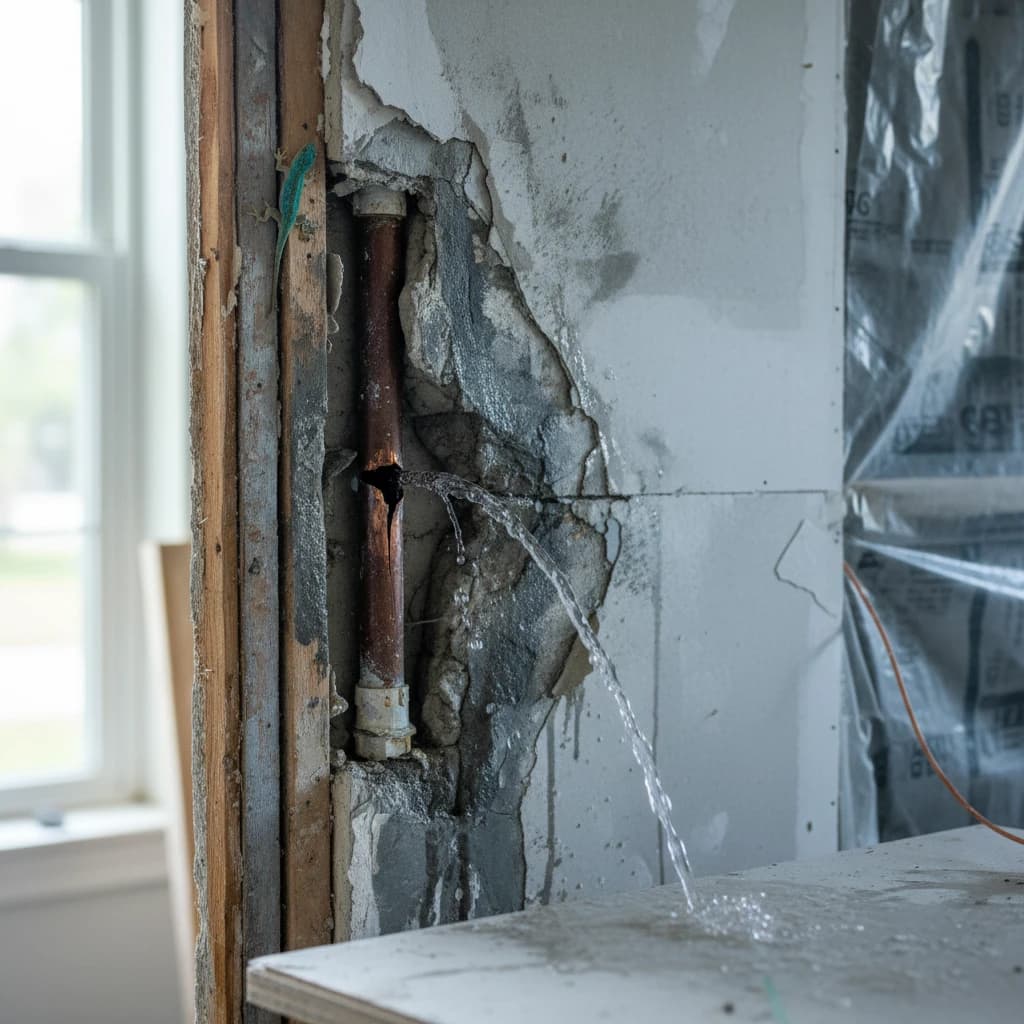
A burst pipe is the textbook sudden-and-accidental water loss, exactly what homeowner policies are designed to cover. When pipe burst claims get denied or underpaid in Florida, the dispute is usually about scope, classification, or deductible, not whether the loss is covered in principle.
Reviewed by Anthony Barber, FL DFS License #W101847 · Last updated
By Anthony Barber · FL DFS #W101847 · Reviewed: · 1 min read

Short answer: Yes. A burst pipe is a sudden-and-accidental water discharge, which standard Florida homeowner policies cover, so carriers rarely deny outright; they underpay on scope, drying hours, contents, or deductible. Your policy pays the ensuing damage to drywall, flooring, cabinets, and belongings, though the pipe repair itself may be excluded. Under [Fla. Stat. 627.70131](/resources/florida-statutes/627-70131-claim-response-deadlines/) the insurer must acknowledge within 7 days and pay or deny within 60.

What we handle

  • Copper pipe failures
  • PEX and CPVC pipe bursts
  • Galvanized and older metal pipe failures
  • Supply-line failures (washer, dishwasher, ice maker, toilet)
  • Main-line bursts
  • Pressure-spike failures

Coverage basics

Most Florida homeowner policies cover sudden-and-accidental water discharge from plumbing systems. Coverage typically pays for:

  • Repair of the damaged pipe
  • Dry-out and mitigation (drying equipment, containment)
  • Repair of water-damaged materials (drywall, flooring, insulation, cabinets)
  • Contents damaged by the water
  • Additional living expense if the home becomes uninhabitable

Coverage typically excludes:

  • The cost of repairing the pipe itself (the "ensuing loss" is covered; the pipe replacement sometimes isn't)
  • Damage from seepage, slow leaks, or long-term water intrusion
  • Mold beyond any mold sublimit

Common carrier disputes

  1. Sudden vs. gradual: carrier recharacterizes burst as slow leak
  2. Scope of drying: insufficient equipment hours scheduled
  3. Contents: personal property under-valued or un-claimed
  4. Mold: subject to sublimit even when consequential to covered water loss

Documentation that supports the claim

  • Photo or video of the burst pipe immediately after discovery
  • Date and time of discovery
  • Dry-out contractor's written scope and equipment log
  • Independent photographs of water-damaged materials
  • Receipts for emergency repairs and mitigation
  • Sworn statement of the event (when requested)

Time limits

Report the claim immediately. Florida's 1-year notice deadline under Fla. Stat. 627.70132 applies, but carriers routinely argue untimely notice for reports more than a few weeks after loss. Same-day reporting is best practice.


A documented result

  • $53,000 the carrier's initial offer
  • $126,000 what Ocean Point recovered

Read the full case: Richard and Patrice's Stuart plumbing-loss claim

Frequently asked questions

My insurer says the burst was a slow leak, not sudden. Can it deny the claim on that basis?
This is the most common recharacterization we see. A pipe that bursts is a sudden-and-accidental discharge, and the resulting water damage is an [ensuing loss](/resources/glossary/ensuing-loss/) most Florida policies cover, while long-term seepage is a different, often-excluded cause. The distinction is factual, so we document the discovery date, the failure point, and the drying contractor's findings to rebut a gradual-leak label. A carrier that denies without a reasonable investigation of that evidence may be committing an unfair claim settlement practice under [Fla. Stat. 626.9541](/resources/florida-statutes/626-9541-unfair-claim-settlement-practices/).
Will my policy pay to replace the pipe that failed, or only the water damage?
Usually the water damage, not the pipe itself. The [ensuing loss](/resources/glossary/ensuing-loss/), meaning your drywall, flooring, insulation, cabinets, and contents, is generally covered, while the cost of the failed pipe or fitting is often excluded as the part that wore out or broke. We scope the covered damage in full so the excluded pipe repair does not become an excuse to shrink the rest of the estimate. If you are dealing with recurring failures rather than one burst, our [plumbing leak](/claim-types/plumbing-leak-claims/) and [cast iron pipe](/claim-types/cast-iron-pipe-claims/) pages cover those coverage arguments.
The insurer paid actual cash value and held back depreciation on my burst-pipe repairs. Can I get the rest?
Yes, if you carry replacement cost coverage. Under [Fla. Stat. 627.7011](/resources/florida-statutes/627-7011-valued-policy-replacement-cost/) the carrier pays at least actual cash value less your deductible up front, then releases the held-back [depreciation](/resources/glossary/replacement-cost-holdback/) as you complete the repairs and submit proof. On a total loss the statute bars any depreciation holdback at all. If the numbers are not adding up, see our [depreciation and RCV holdback](/problems/depreciation-and-rcv-holdback/) page; we rebuild the estimate so the full recoverable depreciation comes back to you.
How long does my insurer have to respond to a burst-pipe claim in Florida?
[Fla. Stat. 627.70131](/resources/florida-statutes/627-70131-claim-response-deadlines/) gives your carrier four deadlines: acknowledge the claim within 7 days, begin investigating within 7 business days of your [proof of loss](/resources/glossary/proof-of-loss/), inspect within 30 days, and pay or deny within 60 days. If it misses the 60-day deadline, statutory interest accrues on the overdue amount. Because two of those clocks (investigation and inspection) start at proof of loss, we submit it in writing and confirm receipt so the trigger date is not in dispute. If the file stalls anyway, see [claim delayed](/problems/claim-delayed/).
The carrier limited my mold payment even though the mold grew from the burst pipe. Is that allowed?
Many Florida policies carry a separate [water damage or mold sublimit](/resources/glossary/water-damage-sublimit/), and carriers apply it even when the mold is a direct consequence of a covered water loss. The sublimit is real, but its scope and how the loss is classified are often arguable, so we press to keep the covered water damage separate from any mold cap rather than let the whole claim be squeezed into the sublimit. We document the moisture timeline to show the mold followed the sudden discharge.
What can I do if the insurer denies or underpays my burst-pipe claim?
Start by getting the carrier's basis in writing; a denial issued without a reasonable investigation or a proper written explanation can be an unfair claim settlement practice under [Fla. Stat. 626.9541](/resources/florida-statutes/626-9541-unfair-claim-settlement-practices/). We document the loss, build a line-item estimate, and escalate through the carrier, a DFS complaint, or the pre-suit notice process. Before any property lawsuit, [Fla. Stat. 627.70152](/resources/florida-statutes/627-70152-pre-suit-notice/) requires a written notice of intent filed with DFS at least 10 business days ahead, with an itemized settlement demand. See [claim underpaid](/problems/claim-underpaid/) and [claim denied](/problems/claim-denied/) for how we work these.

Related

Reviewed by Anthony Barber, FL DFS License #W101847 · Last updated

Ready to talk to a licensed Florida public adjuster?

(888) 824-1306

Free claim review. No recovery, no fee. Answered 24/7.

Get a free claim review
License
FL DFS #W829547
Experience
21 years · 500+ mediations
Rating
4.9★ (86 Google reviews)
Fee
No recovery, no fee
📞 (888) 824-1306Free Claim Review