

Short answer: To maximize a Florida property insurance claim, document the full scope before any repair, read your policy for every applicable coverage, build an independent line-item estimate, and claim matching and code-upgrade costs the carrier omits. Then enforce the carrier's 60-day pay-or-deny deadline under Fla. Stat. 627.70131.
Step 1: Document the full scope immediately
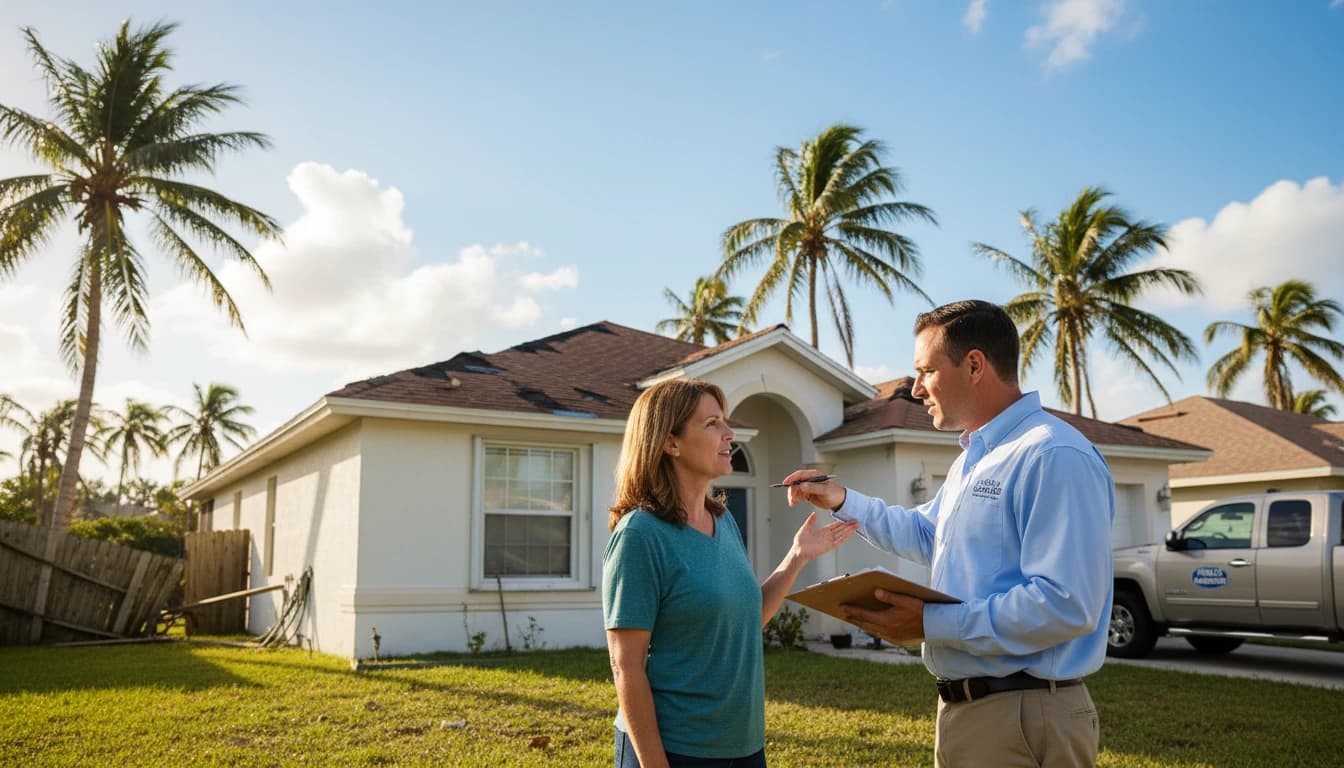
Maximizing a claim starts with proof. Before mitigation or repair, capture:
- Roof, attic, and every exterior elevation
- Interior water intrusion, stains, and warped flooring
- Damaged contents with model numbers
- All mitigation and repair receipts
A complete, timestamped record taken within the first 72 hours is what supports the full scope later, when the carrier's estimate comes in low.
Step 2: Read your policy for every coverage
Most homeowners claim the obvious damage and leave money on the table. Florida policies frequently include coverages people forget:
- Additional living expenses (ALE) while the home is uninhabitable
- Ordinance-or-law coverage for code upgrades
- Debris removal and tree removal sublimits
- Detached structures and contents
Read the declarations page and the endorsements, not just the summary.
Step 3: Build an independent estimate
The carrier prices the loss in Xactimate, and so should you. An independent line-item estimate with current Florida pricing is the only way to see what the carrier left out, typically overhead and profit, code upgrades, and matching.
Step 4: Claim matching and code upgrades
When repairs leave mismatched roofing, tile, or siding, Fla. Stat. 626.9744 can require a uniform appearance rather than a patch. If repairs trigger current building code, ordinance-or-law coverage pays the upgrade. On a partial roof claim, these two items alone can move a $9,000 offer toward full replacement.
Step 5: Enforce the carrier's deadlines
Leverage is statutory. Under Fla. Stat. 627.70131 the carrier must acknowledge within 7 days, inspect within 30, and pay or deny within 60 days of notice, with interest accruing on late payment. Document every missed deadline in writing.
Step 6: Don't overlook contents and ALE
Two coverages homeowners routinely under-claim:
- Contents (personal property). Build a room-by-room inventory with model numbers and approximate purchase dates. Replacement-cost policies pay the full replacement once you actually replace, so keep receipts.
- Additional living expenses. If the home is uninhabitable, ALE covers the reasonable cost of temporary housing, meals above your normal spend, and storage. On a multi-month displacement, ALE alone can run into five figures.
Step 7: Escalate the right way
If negotiation stalls, three formal paths move the claim:
- Appraisal resolves valuation disputes through independent appraisers and an umpire, without litigation.
- DFS mediation is a free, state-run program through the Florida Department of Financial Services for many residential claims.
- Civil Remedy Notice under Fla. Stat. 624.155 documents bad-faith handling and gives the carrier 60 days to cure.
Choosing the right one depends on whether the dispute is about amount, conduct, or coverage.
A quick example
Take a partial roof claim offered at $9,000. Add the missing matching for the rest of the slope under Fla. Stat. 626.9744, code-required underlayment and drip edge under ordinance-or-law, and overhead and profit, and the same loss can support a full replacement several times that figure. None of it is invented; it is scope the first estimate left off.
What to do next
A licensed public adjuster runs steps 3 through 6 as standard practice, on a fee capped by Fla. Stat. 626.854. Call (888) 824-1306 or request a free claim review.