
By Eli Goins · FL DFS #P159790 · Reviewed: · 1 min read
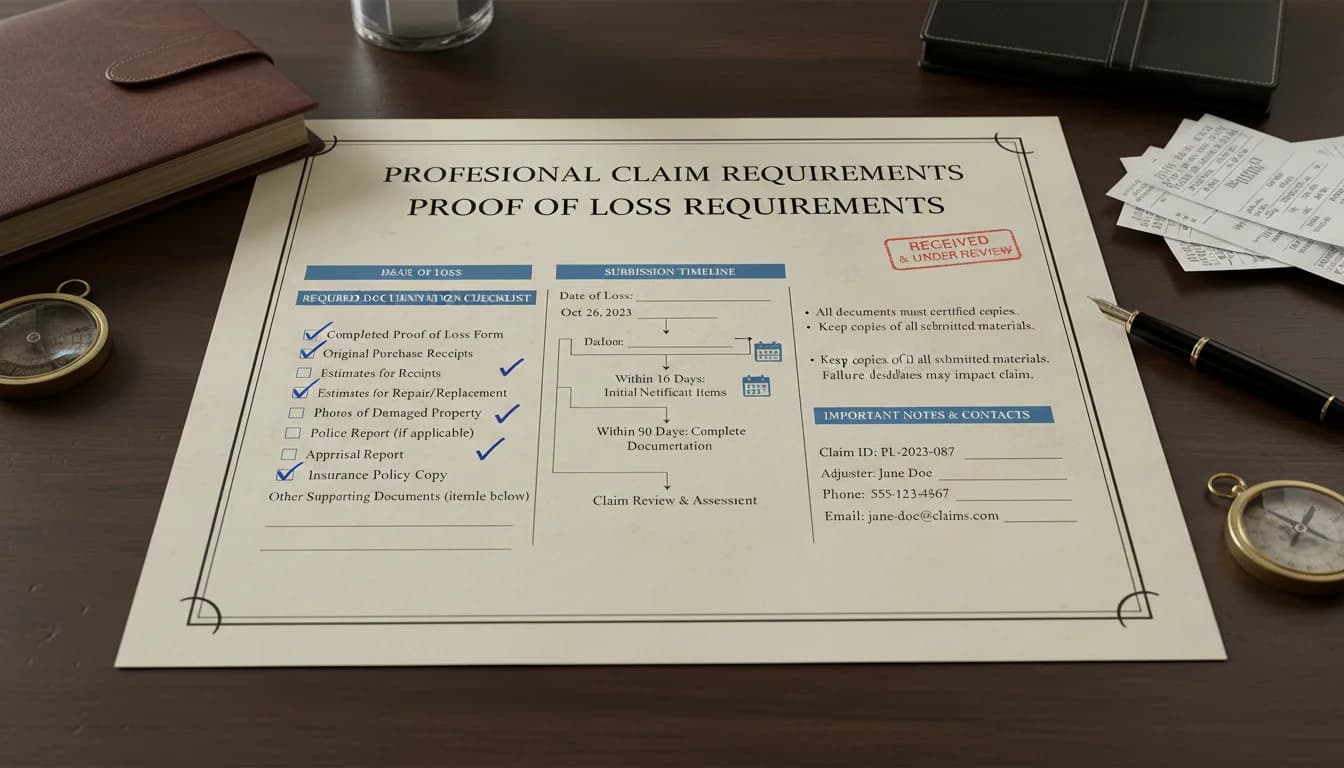
Short answer: A Proof of Loss is a sworn statement you sign under oath, usually on a carrier-provided form, listing your damages and the amount claimed. Carriers require it only when they demand it, typically giving you 60 days to respond. Include accurate loss facts, document everything carefully, and verify accuracy before signing.
What a Proof of Loss is
- Sworn statement of the insured
- Lists damages claimed
- Specifies amount claimed
- Typically carrier-provided form
- Signed under oath before notary
When required
- When carrier demands (not automatic)
- Specific policy provision activated
- Typically 60 days from demand to respond
What to include
Loss facts
- Date and time of loss
- Cause of loss
- Location of damage
- Parties at scene
Damages claimed
- Structural scope
- Contents inventory with values
- ALE calculated to date
- Mitigation costs
Amount claimed
- Total claimed amount
- Breakdown by coverage
- Depreciation noted
What to avoid
Admitting unfavorable facts
- Don't characterize gradualness
- Don't speculate about cause
- Facts only, no theory
Over-claiming
- Claim based on evidence
- Avoid inflated amounts
- Maintains credibility
Under-claiming
- Don't omit damages not fully documented yet
- Reserve rights for supplemental
- List-known-to-date
Inconsistencies
- Must align with prior statements
- Prior claim history consistent
- Policy coverage claimed must match
Working with counsel or PA
- Retained counsel or PA can prepare
- Insured signs under oath
- Attorney-client privilege on preparation notes
- Verify accuracy before signing