
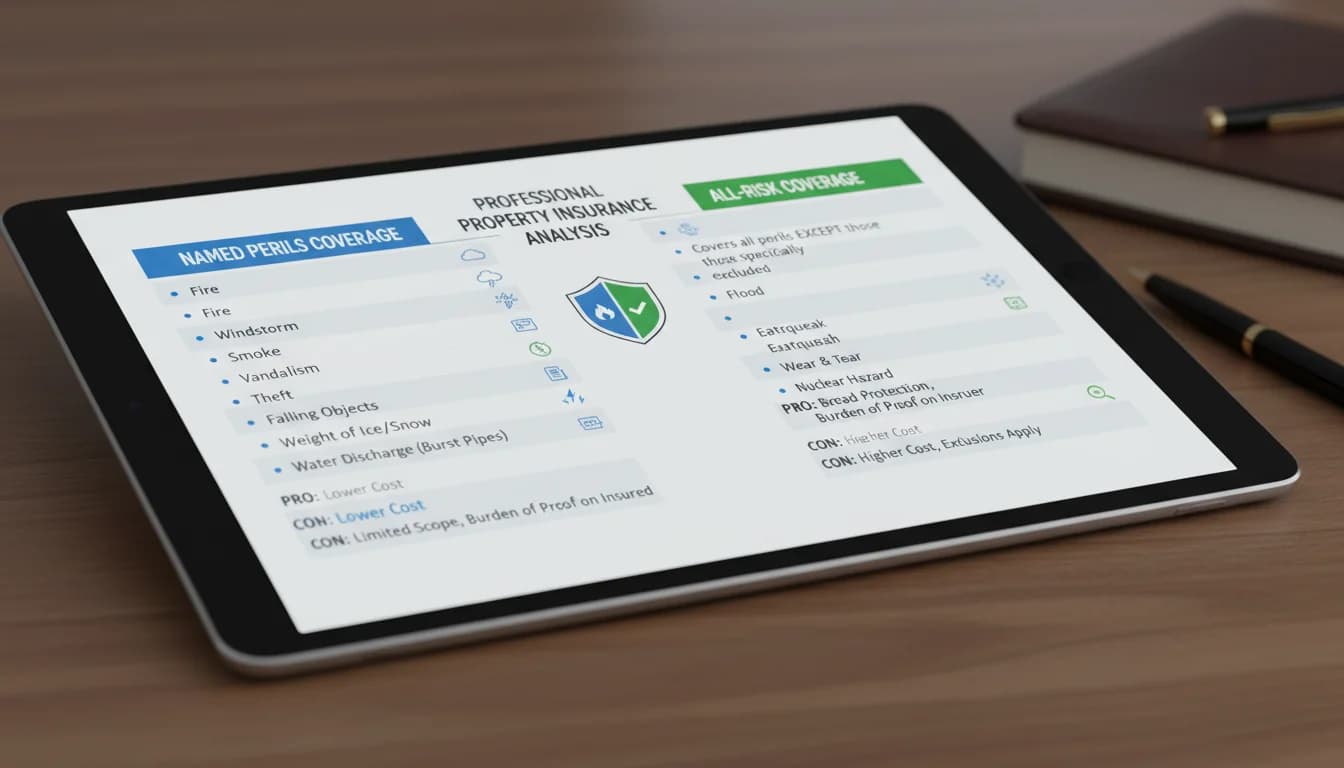
Named perils (HO-2 typical)
- Coverage only for listed perils
- Burden on insured to prove peril applies
- Common list: fire, lightning, windstorm, hail, explosion, vandalism, smoke, theft, freezing, falling objects
All-risk / open-peril (HO-3 typical for dwelling)
- Coverage for all perils except those excluded
- Burden on carrier to prove exclusion
- Broad coverage for dwelling
- Contents usually named-perils even in HO-3
Practical difference
On HO-2
- Must match damage to specific named peril
- "Other causes" not covered
- Gaps where peril isn't clearly listed
On HO-3 (dwelling)
- Default is coverage
- Carrier must find exclusion to deny
- Broader protection
Florida HO-3 dwelling coverage
Typical HO-3:
- Dwelling: all-risk (exclusions apply)
- Other structures: all-risk
- Contents: named-perils (16 typical)
- Loss of use: follows cause of loss
Why this matters
Coverage disputes shift burden
- HO-2: insured proves coverage
- HO-3: insurer proves exclusion
Damage documentation
- HO-2: must fit named-peril definition
- HO-3: must fit coverage grant generally