
Miami claims still live in Andrew's shadow
On August 24, 1992, Hurricane Andrew came ashore as a Category 5 storm in southern Miami-Dade, near Homestead and Florida City, with sustained winds around 165 mph. Andrew flattened entire subdivisions and rewrote how Florida builds. Within a few years the county had a rebuilt code that created the High Velocity Hurricane Zone (HVHZ), the strictest wind-design standard in the country. To this day, roofs, windows, doors, and shutters installed in Miami-Dade must carry a Miami-Dade Notice of Acceptance or Florida product approval proving they survive large-missile impact and thousands of pressure cycles. That history matters on a claim, because when a Miami roof or opening fails, the question is rarely "was it strong enough" but "what exactly did the wind do, and what does code now require to put it back."
Storms since Andrew keep that lesson current. Hurricane Wilma raked South Florida in October 2005 and knocked out power across most of Miami-Dade. On September 10, 2017, Hurricane Irma pushed tropical-storm to Category 1 winds across the county, surged along Biscayne Bay, flooded the streets of Brickell and downtown, and left roughly a thousand Miami-Dade homes with major damage. Each event produced the same disputes we still untangle: wind-driven rain into high-rise units, lifted roof systems, and damaged building envelopes that carriers want to call wear and tear.
Brickell towers, Coconut Grove bungalows, and everything between
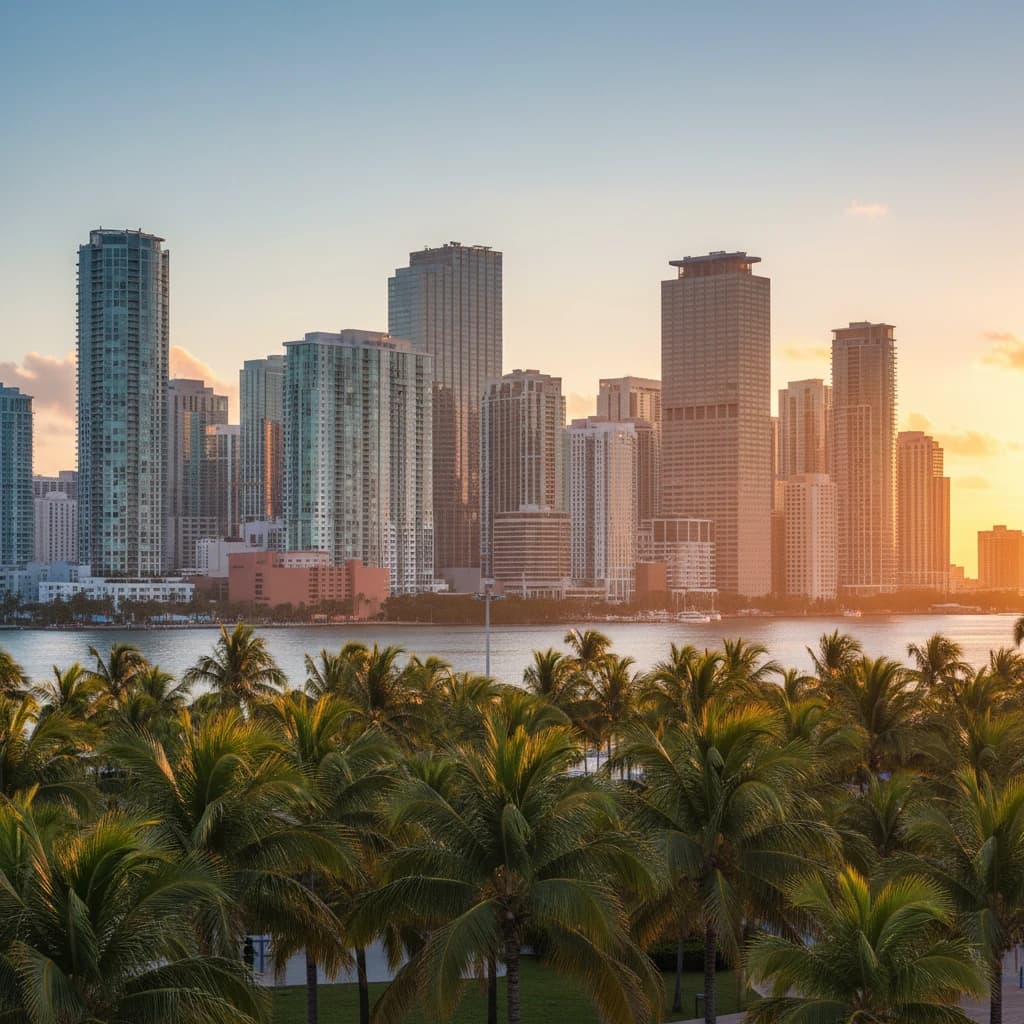
Miami's building stock is unusually split, and that drives how a claim plays out neighborhood by neighborhood. Brickell and Edgewater filled with glass condo towers during the boom that ran from the mid-1990s to 2008 and resumed in the mid-2010s, so a single wind event can stack facade, curtain-wall, and wind-driven-rain losses dozens of floors high. Coconut Grove and adjacent Coral Gables mix older masonry and wood-frame homes under a tree canopy that turns into windborne debris. Little Havana and parts of Kendall hold mid-century single-family housing where roof age is always contested. Wynwood's converted warehouses bring flat-roof and commercial exposure. Surge and freshwater flooding hug the bay and the low coastal edge, while most inland Miami damage is wind and water intrusion rather than storm surge, a distinction that decides which policy, and which deductible, actually responds.
For condo associations the ground shifted after the June 2021 Surfside collapse. Senate Bill 4-D (2022) now requires milestone structural inspections for buildings three stories and taller and bars associations from waiving structural reserves. Boards already stretched by reserve studies and special assessments cannot afford to leave master-policy money on the table after a storm, which is exactly where a public adjuster earns the engagement.
Claim types we handle here
We represent Miami policyholders across the full range of losses: hurricane and windstorm, roof damage, water damage from wind-driven rain and plumbing failures, fire, mold (a constant in this humidity), HOA and condo association master-policy claims, and commercial and business-interruption losses. If your insurer already paid, we also handle supplemental and denied, lowballed, or underpaid claims. See every claim type or our public adjusting service.
Why Miami claims get underpaid
The HVHZ that protects Miami also gives carriers room to argue. When impact glass or a specific facade panel fails, insurers often try to repair a fraction rather than replace, even though Florida's matching statute (626.9744) and code-required product approvals can make a partial fix impossible. High-rise water intrusion gets blamed on construction defect or deferred maintenance instead of a covered wind event. Condo claims fall into the gap between the association master policy and unit-owner HO-6 coverage. And adjusters flown in after a Miami storm rarely know the difference between Coral Gables masonry and a Brickell curtain wall. We document the loss to the standard Miami code actually demands.
How we work a Miami claim
We start by reading your policy and inspecting the property in person, on the roof and inside the units, then build a damage scope and estimate that reflects HVHZ replacement requirements, not a generic line-item guess. We file and quantify the claim, hold the carrier to the response deadlines in Florida Statute 627.70131, and pursue supplements where reinspection finds more damage. Where an insurer drags or denies in bad faith, statutes 624.155 and 626.854 frame the next step.
Fees, deadlines, and a Miami adjuster who answers
Florida caps public adjuster fees by statute (626.854), and we work on contingency, so there is no upfront cost. Mind the clock: Florida Statute 627.70132 generally allows one year to file a new hurricane claim and 18 months for a supplement. We serve all of Miami-Dade County and the rest of Florida; see every location we cover.
Talk to a Miami public adjuster: call (888) 824-1306 or contact us for a free policy review.