

Short answer: Hire a public adjuster if your Florida property claim is denied, underpaid, delayed, large, or complex, or if you cannot confidently document the loss. For small claims paid promptly and fairly, you may not need one. Ocean Point works on contingency, so there is no recovery, no fee.
What a public adjuster does, and who they work for
A public adjuster is a state-licensed claims professional who works only for you, the policyholder, never for the insurance company. The carrier's adjuster who inspects your home, including most catastrophe (cat) adjusters sent after a hurricane, is paid by the insurer and protects the insurer's interests. A public adjuster sits on the opposite side of that same claim. In Florida, public adjusters are licensed and regulated under Fla. Stat. 626.854. The work is hands-on: documenting damage with photos and evidence, reading and interpreting your policy, preparing the claim paperwork, coordinating inspections, building a detailed scope and valuation of the loss, and negotiating with the carrier's adjuster. The goal is a complete, well-supported claim that pays what your policy actually owes.
When hiring clearly helps
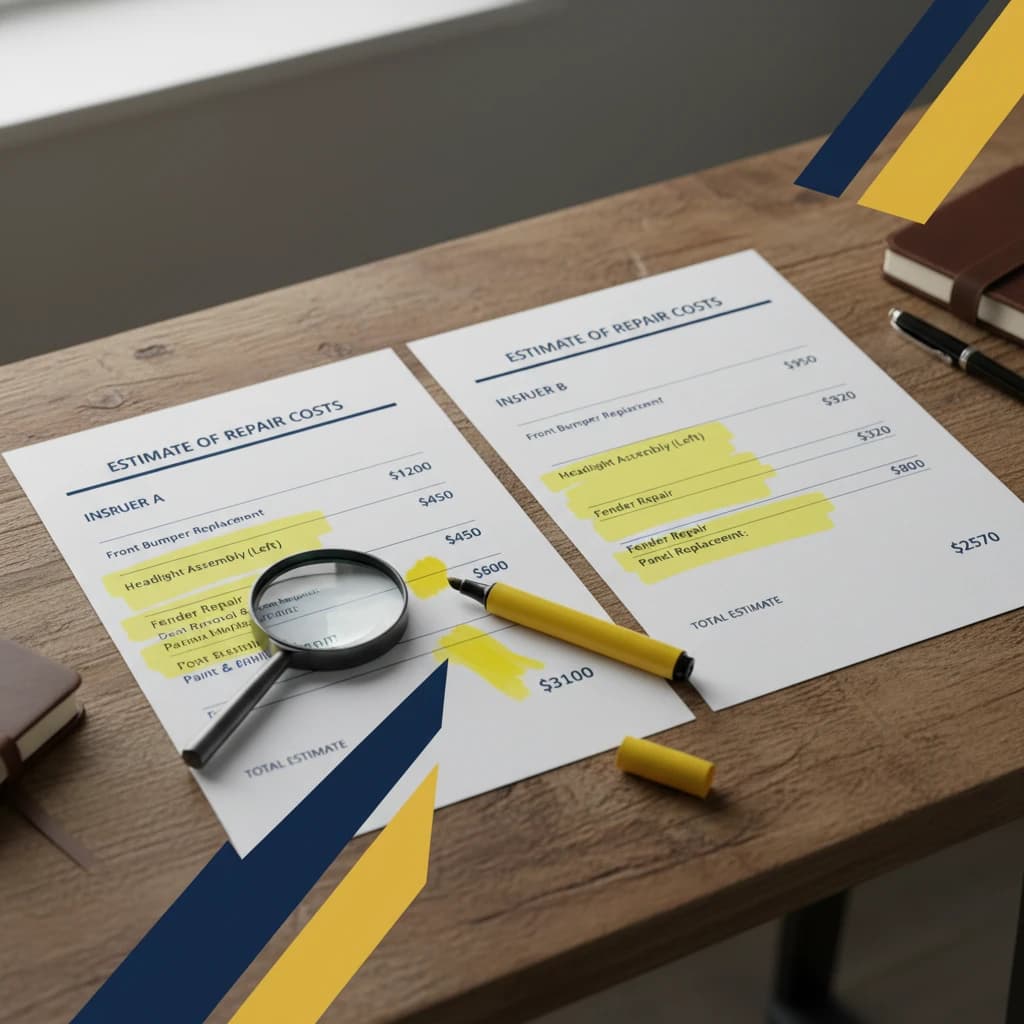
Representation tends to pay off most when a claim is contested or complex. Strong signals that hiring helps include a claim that was denied when you believe the loss is covered; an offer that is low, omits damage, or leans on heavy depreciation; a claim stalled past Florida's claim-handling deadlines under Fla. Stat. 627.70131; a large loss such as hurricane, fire, or major water damage; a claim with multiple coverage issues, code-upgrade questions, or disputes over scope and causation; or any loss you cannot confidently document and value yourself. In these situations the gap between a first offer and a fully documented claim is often wide, and professional documentation, accurate valuation, and negotiation can recover materially more, even after the fee. Florida research from OPPAGA and FAPIA, along with Ocean Point's own documented results, has shown policyholders with representation tend to recover more on property claims, especially after storms.

When you may not need one
Be honest with yourself: not every claim needs a public adjuster. If your loss is small and simple, the cause is obvious, and the carrier inspects promptly and pays a fair, complete amount, you can often handle it on your own. Because public adjusters charge a percentage of the recovery, a small claim that is already being paid fairly may not leave enough additional room to justify engagement. A reputable firm will tell you this. At Ocean Point, if representation is unlikely to improve your outcome, we say so during the free review.
How public adjusters get paid
In Florida, public adjusters work on contingency. You pay nothing up front and nothing out of pocket; the fee is a percentage of what is actually recovered, capped by Fla. Stat. 626.854. For claims arising from a declared state of emergency, the law sets a separate, lower cap during the first year after the declaration. If there is no recovery, there is no fee. Your written contract discloses the fee before any work begins, so there are no surprises. The practical question is not whether the fee is reasonable in the abstract, but whether representation produces a larger net recovery than handling the claim alone. On most denied or underpaid claims, it does.
Timing: when to bring one in
Earlier is usually better. Engaging a public adjuster before the carrier's first inspection lets the documentation and scope be built correctly from the start, which shapes the entire claim. That said, you are not locked out later. You can bring one in after a denial, a low offer, or a stalled claim, and often for reopened or supplemental claims too. Mind the clock: Florida law generally gives you 1 year to file a new or reopened claim and 18 months for a supplemental claim, so act before either deadline passes.
How to decide
Run a simple test. Is the claim denied, underpaid, delayed, large, or complex? Are there multiple coverage issues, or damage you cannot fully document? If yes to any, representation is worth a serious look. Is the claim small, clearly covered, and already being paid promptly and fairly? You may be fine handling it yourself. When in doubt, a free claim review costs nothing and tells you which situation you are actually in.
Ocean Point's free claim review
Ocean Point Claims is a Florida-licensed, policyholder-side public adjusting firm. Our claim review is free, our work is on contingency, and there is no fee if there is no recovery. We will look at your policy and your loss, tell you honestly whether representation is likely to help, and if it is not, we will say so. Reach out for a free review and decide from there.