
Storm history that shapes Sebring claims
Sebring sits inland in south-central Florida, the seat of Highlands County, far enough from the coast that some owners assume hurricanes are a coastal problem. The record says otherwise. When Hurricane Ian crossed close to Sebring in 2022, it produced extensive wind damage across the city, and the tornadoes that spin off tropical systems remain the dominant secondary driver of serious claims here. An inland track does not mean a weak storm. Ian arrived with enough force to peel roof coverings, drive water through compromised envelopes, and snap trees onto single-family homes throughout the area.
That history matters because carriers price and adjust inland claims as if the risk were minor. We build every Sebring file on the assumption that the damage is real, layered, and frequently worse than a first walkthrough suggests.
The building stock around Lake Jackson
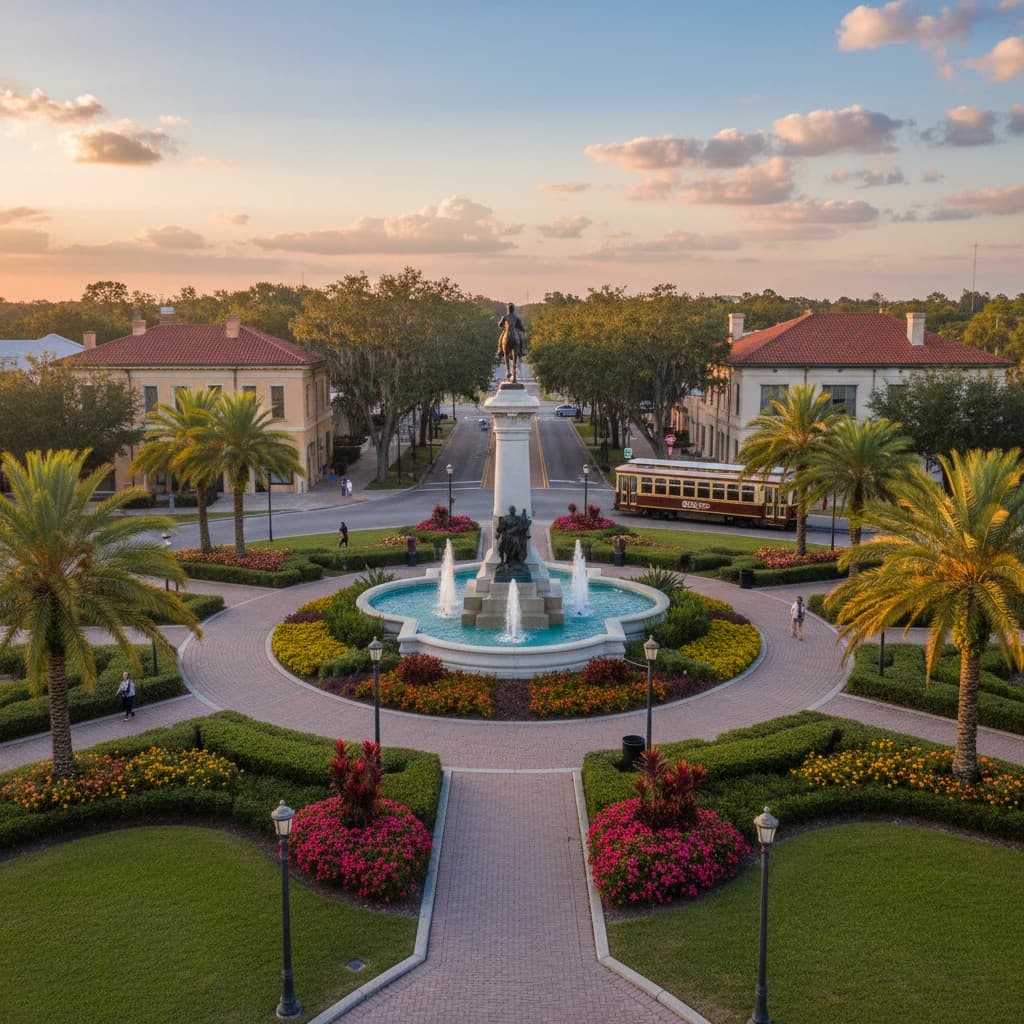
Sebring's housing is largely single-family residential, with lakefront homes ringing Lake Jackson and a historic downtown built around the original circular plan. Older lakefront and historic-district structures carry the exposures that insurers love to dispute: aging roof systems, original windows, additions framed in different eras, and interiors finished with materials that are no longer stocked. When wind lifts shingles or a tornado-spawned gust loads one elevation, water finds the weakest seam and travels.
Lakefront siting adds its own pressure. Open exposure across Lake Jackson means higher wind loads on the water-facing elevation, and the resulting damage often concentrates where it is easiest for a carrier to call it wear and tear. We inspect the whole structure, attic to foundation, because the visible damage is rarely the whole loss.
Claims we handle in Highlands County
Most Sebring work involves wind and storm damage to roofs, soffits, and exterior envelopes, along with the interior water intrusion that follows when the envelope is breached. Tornado damage from tropical systems brings sudden structural loss, debris impact, and total-section failures. We also handle sudden-discharge water losses, and we manage denials, underpayments, and lowball offers on claims homeowners filed themselves and saw shortchanged.
Florida's matching rule, statute 626.9744, often decides these files. When a tornado or wind event damages part of a roof slope or a run of siding, an insurer cannot force a homeowner to accept a mismatched patch where matching adjacent materials is not reasonably available. On older Sebring roofs and historic-district finishes, that single rule frequently separates a real repair from a cosmetic one.
Why Sebring settlements come up short
Underpayment here usually traces to three habits. Carriers categorize storm damage as long-term deterioration to dodge a covered peril. They scope only the obvious damage and ignore the connected interior, code-required upgrades, and concealed framing harm. And they lean on inland geography to argue a hurricane could not have done what it plainly did. None of those positions survive a documented counter-file.
Florida law gives the policyholder leverage. Statute 627.70131 sets the timeline insurers must follow when acknowledging and paying claims, 627.70132 governs the supplemental-claim window when new damage surfaces after the first payment, and 624.155 authorizes a Civil Remedy Notice when a carrier handles a claim in bad faith. We use these tools deliberately, not as threats.
How Ocean Point builds and pushes the claim
We start with a full inspection and a line-item estimate that reflects real Sebring repair costs, then assemble the proof: photographs, moisture readings, weather data tying the loss to the storm, and contractor input where structural questions arise. We file the claim or reopen an underpaid one, present the documentation, and handle every carrier exchange directly so you are not negotiating against a team that does this for a living.
When an insurer stalls or denies against the evidence, we escalate through the statutory timeline and, where warranted, a Civil Remedy Notice. Ocean Point is headquartered in Hobe Sound and licensed to work statewide, so Highlands County homeowners get the same disciplined process whether the loss is a single roof slope or a tornado-struck section of a lakefront home.
Fees, your rights, and how to reach us
We work on contingency under Florida statute 626.854, so our fee comes only from what we recover on your claim, never up front, and we never quote a fee number here. Florida law also gives you a 10-day right to cancel after signing. There is no risk in a conversation.
If your Sebring home took storm, wind, or tornado damage, or a claim came back lower than the loss, call Ocean Point Claims at (888) 824-1306 or reach us through our contact page. We are licensed under Florida DFS #W829547. See the communities we serve on our locations page and across Central Florida, and learn how we work as your Florida statewide public adjuster.