
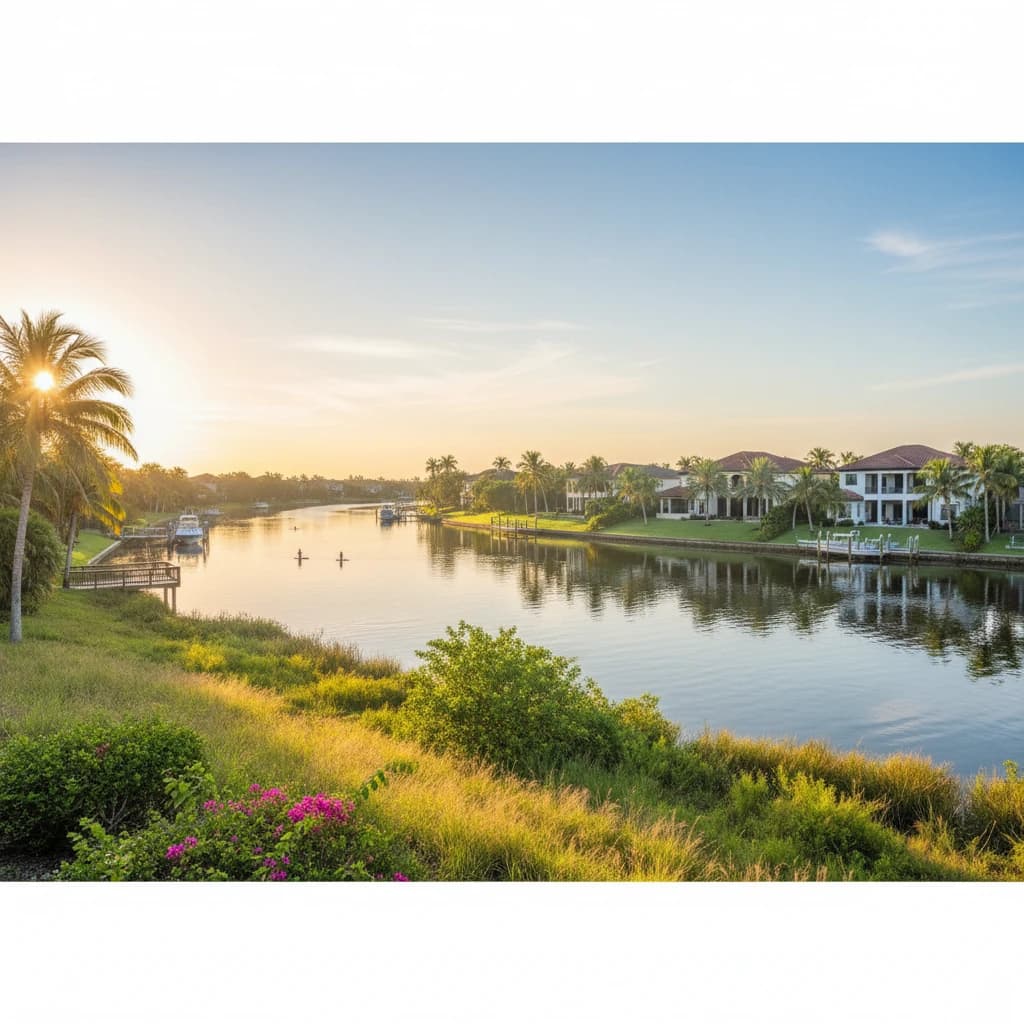
Short answer: A Palm City public adjuster represents you, not your insurer, on Martin County property claims, and under Fla. Stat. 626.854 the fee is capped and contingent. Palm City blends St. Lucie River waterfront homes, equestrian acreage, and gated golf communities, so screen enclosures, detached outbuildings, and discontinued tile are routinely underscoped. Ocean Point Claims (FL DFS #W829547) documents every structure on the parcel and holds carriers to the deadlines in Fla. Stat. 627.70131.
How Storms Have Shaped Palm City Claims
Palm City sits as an unincorporated community in Martin County, just west of Stuart along the St. Lucie River, and its claim history runs straight through the major storms of the last two decades. Hurricanes Frances and Jeanne, which both struck in 2004, produced major claim volumes across these neighborhoods, exposing how quickly wind and water can overwhelm waterfront and rural properties alike. More recently, Hurricane Nicole in 2022 and Hurricane Milton in 2024 drove additional waves of work, reopening questions about roofs, screen enclosures, and outbuildings that owners thought were long settled. Because Palm City blends riverfront homes, equestrian parcels, and gated golf-course communities, no two losses look the same, and the wider Treasure Coast pattern of underpaid claims shows up here in full. Ocean Point Claims works these losses for homeowners across Martin County, and we represent you, the policyholder, never the insurance company.
Why Palm City Property Complicates a Loss
The building stock here makes damage harder to scope than a carrier's first inspection suggests. Waterfront homes along the St. Lucie River carry pool cages and screen enclosures that take wind loads differently than the main structure, and aluminum framing can twist or pull free in ways that are easy to miss from the ground. Equestrian and rural neighborhoods add barns, stables, run-in sheds, and other detached outbuildings, each with its own coverage treatment under a policy. Many Palm City homes wear tile roofs, and when a discontinued tile profile is involved, a handful of broken pieces can turn into a full matching dispute. Golf-course and gated communities bring association rules and shared boundaries that complicate where one owner's responsibility ends. River-adjacent lots also face a wind and water mix that carriers love to argue over. Neighboring markets like Stuart and Port St. Lucie share these traits.
Claim Types We Handle in Palm City
We handle the full range of residential and commercial losses that Palm City property owners face. That includes hurricane and windstorm damage, roof damage on tile and shingle systems, water damage from wind-driven rain and plumbing failures, and damage to screen enclosures, pool cages, and lanais. We also handle losses to detached outbuildings on equestrian and rural parcels, fences, docks and seawalls along the St. Lucie River, interior damage from envelope breaches, and mold that follows untreated intrusion. Whether the loss is a fresh claim, a denial, an underpayment, or a claim closed too quickly, we evaluate it as we do for clients in Jupiter and Fort Pierce.
Where Palm City Settlements Fall Short
Underpayment in Palm City tends to follow a few predictable paths. Scope reduction is the most common, where a carrier acknowledges a loss but lists fewer damaged squares, fewer enclosure panels, or a smaller water-affected footprint than an on-site inspection supports. Causation is the next pressure point, with adjusters attributing tile or roof damage to age and wear rather than the named storm, which can mean whole structures left out. Matching is the third, and it carries real legal weight. Under Florida Statute 626.9744, when a repair to roofing, siding, or interior surfaces cannot reasonably be matched, the carrier must account for that, yet discontinued tile profiles common on Palm City homes are routinely ignored. Each of these gaps is contestable with the right documentation.
The Ocean Point Process
Our work starts with a free review of your policy and your loss, with no obligation. If we move forward, a licensed Florida public adjuster conducts an on-site inspection of the home, the roof, the enclosures, and any outbuildings, then completes a full policy review to confirm every coverage that applies. We document the damage and build a line-item Xactimate estimate that reflects the true scope, then negotiate with your carrier under the deadlines set by Florida Statute 627.70131. When a carrier will not move, we escalate through the tools the law provides: policy appraisal, state mediation through the Department of Financial Services, and, where bad faith is evident, a Civil Remedy Notice under Florida Statute 624.155. If new damage surfaces or a closed claim was underpaid, we pursue supplemental and reopened claims under Florida Statute 627.70132. We serve clients statewide and across our full list of locations.
Fees, Your Rights, and Next Steps
Ocean Point Claims works on a contingency basis under Florida Statute 626.854, which means our fee is a percentage of what we recover for you. If there is no recovery, there is no fee. Florida law also gives you a 10-day right to cancel your public adjuster contract after signing, with no penalty. Throughout the process we represent you, the policyholder, never the insurance company, and our role is to put your interests first at every step. If your Palm City home or business has storm, water, or roof damage, or a settlement that does not match what you lost, call Ocean Point Claims at (888) 824-1306 or reach us through our contact page. We are licensed in Florida, DFS #W829547, and ready to review your claim today.