Short answer: An Okeechobee public adjuster represents Okeechobee County policyholders, not the insurer, and under Fla. Stat. 626.854 the fee is capped and contingent. Inland losses like Hurricane Ian's are wind-and-rain events on rural homes, ranches, and metal outbuildings, and scattered damage that surfaces over days is exactly what carriers call old or wear-and-tear. Ocean Point Claims (FL DFS #W829547) ties each loss to the right storm and holds carriers to the deadlines in Fla. Stat. 627.70131.
How Hurricane Ian carried storm damage across the lake
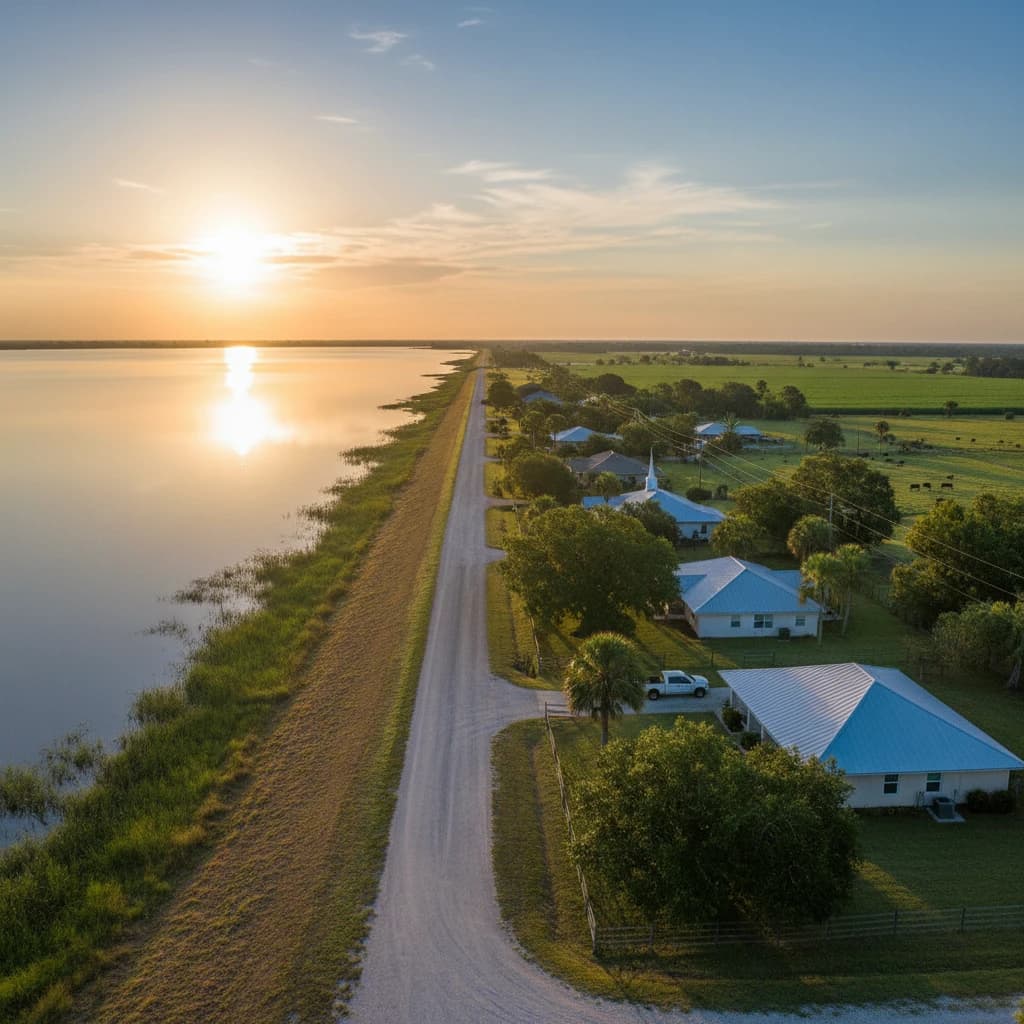
Okeechobee sits inland at the north end of Lake Okeechobee, and an inland town this far from the ocean can seem out of a hurricane's reach. The claim record says otherwise. When Hurricane Ian crossed central Florida in late September 2022, it tracked near Okeechobee and pushed damaging wind across the lake basin, with gusts near 74 miles per hour recorded at the Okeechobee Airport. That kind of wind lifts shingles, slips tile, peels metal roofing off ranch outbuildings, and drives rain through any opening it finds. Hurricane Irma raked the same inland corridor in 2017 on its way up the peninsula. The damage here is rarely the dramatic picture you see on the news; it is scattered wind and water intrusion that surfaces over days, exactly the pattern an insurer leans on to call a loss old, partial, or wear and tear.
Why Okeechobee's rural building stock complicates a loss
This is an agricultural and rural county, not a subdivision grid, and the building stock reflects it. Single-family homes sit alongside ranch operations, citrus acreage, cattle land, barns, equipment buildings, and commercial property tied to agriculture. Many structures carry older roofs and discontinued materials, and the metal roofing common on rural buildings fails in its own way under wind. Being inland keeps storm surge out of the conversation, but it does not keep wind and wind-driven rain out, and a single storm can open damage across a house, a barn, and an outbuilding. That variety is where claims quietly lose value. When wind strips part of a roof or wall surface, the original product is frequently out of production, and the fight becomes whether the carrier owes a uniform repair or a mismatched patch.
Claim types we handle across Okeechobee County
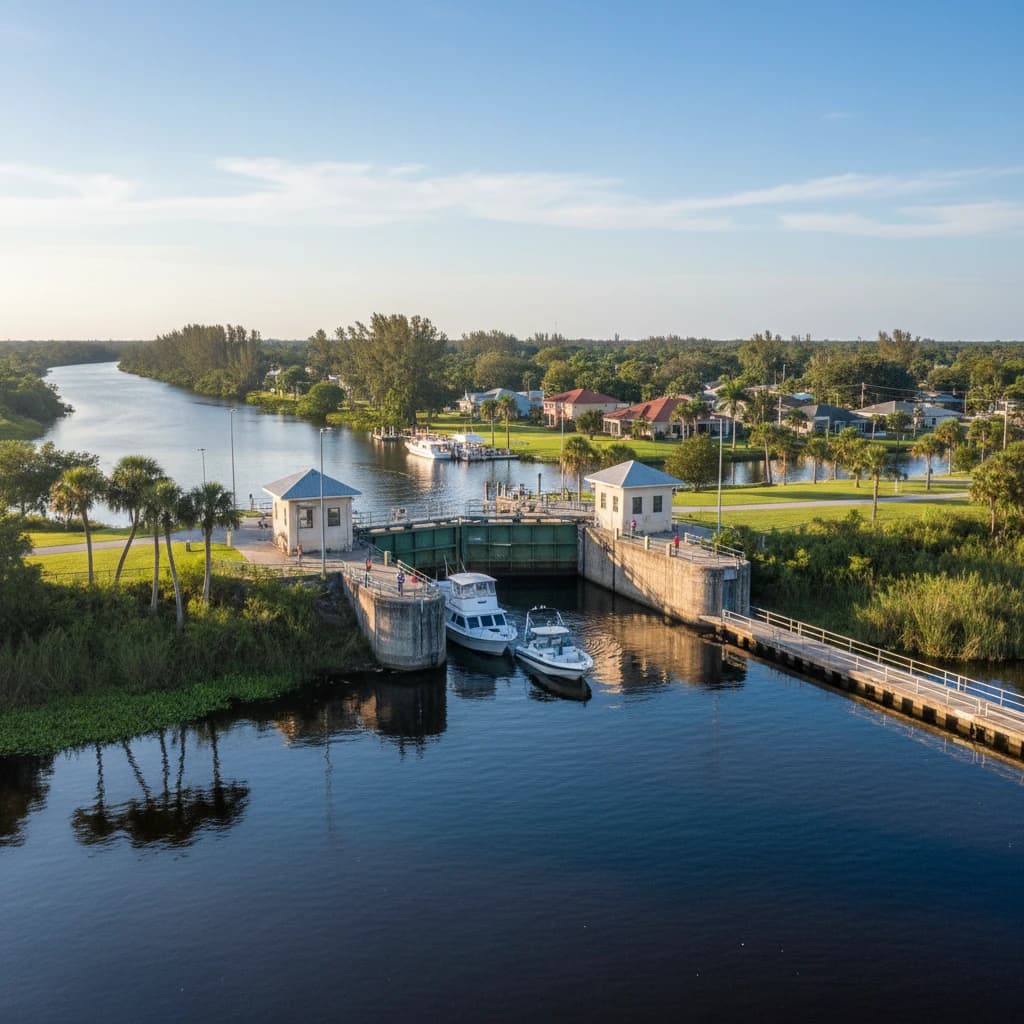
Ocean Point Claims works the full range of residential, commercial, and agricultural losses in Okeechobee and the surrounding county: hurricane and wind damage, roof claims, sudden water losses and the mold that follows, fire and smoke, and HOA or condo disputes where unit and master coverage overlap. We also represent owners on commercial and business-interruption claims, and we take on denied, underpaid, and reopened files, plus supplemental claims when the first check fell short. Okeechobee anchors the inland edge of the Treasure Coast, and we serve the coastal communities nearby, including Stuart, Port St. Lucie, and Fort Pierce. You can see every market we cover on our locations page.
Where Okeechobee settlements fall short
Underpayment here follows a few predictable moves. The first is scope reduction: the carrier's adjuster writes for a partial roof slope or a handful of interior panels when the real damage runs further. The second is a causation argument, where wind or storm damage gets reclassified as age, maintenance, or pre-existing wear so it falls outside coverage, a tactic that hits older rural roofs and metal buildings hardest. The third, and the costliest on this kind of stock, is missed matching. Florida Statute 626.9744 requires a reasonably uniform appearance when damaged items are replaced, but on discontinued tile, shingle, and metal roofing, carriers still try to pay for a patch that will never blend. They rarely apply it for you; it has to be argued, with documentation. Owners are right to push: a 2010 Florida OPPAGA study of Citizens Property Insurance claims (Report No. 10-06) found policyholders who used a public adjuster recovered materially more than those who did not, with the largest gap on hurricane losses (oppaga.fl.gov); individual results vary.
How Ocean Point builds and pushes an Okeechobee claim
We start with a free review of your loss and your policy. From there a licensed Florida public adjuster inspects the property on-site, documents every damaged system, and reads the full policy, including the endorsements and exclusions that change what is owed. We then build a line-item Xactimate estimate that captures the true scope, not the carrier's shorthand. We submit and negotiate under Florida Statute 627.70131, which sets the insurer's deadlines to acknowledge, investigate, and pay. When a carrier digs in, we escalate: appraisal over the amount of loss, state-supervised mediation, or a Civil Remedy Notice under Florida Statute 624.155 when the conduct crosses into bad faith. If new damage surfaces after settlement, the supplemental window under Florida Statute 627.70132 may still let us reopen and recover more. We work statewide from Hobe Sound as a Florida public adjuster.
Fees, your rights, and reaching an Okeechobee public adjuster
Public adjusters in Florida work on contingency under Florida Statute 626.854, so our fee is a percentage of what we recover for you. No recovery, no fee. Florida law also gives you a 10-day right to cancel a public adjuster contract after signing, so there is no pressure and no upfront cost in starting a conversation. Because Okeechobee claims so often turn on storm dating, causation, and matching, an early conversation before you accept a first offer protects the most money. If your home, ranch, or business took storm, wind, water, or fire damage, or you are facing a denial or a short check, call (888) 824-1306 for a free review, or reach us through our contact page. Ocean Point Claims holds Florida DFS license #W829547 and represents you, the policyholder, never the insurance company.