
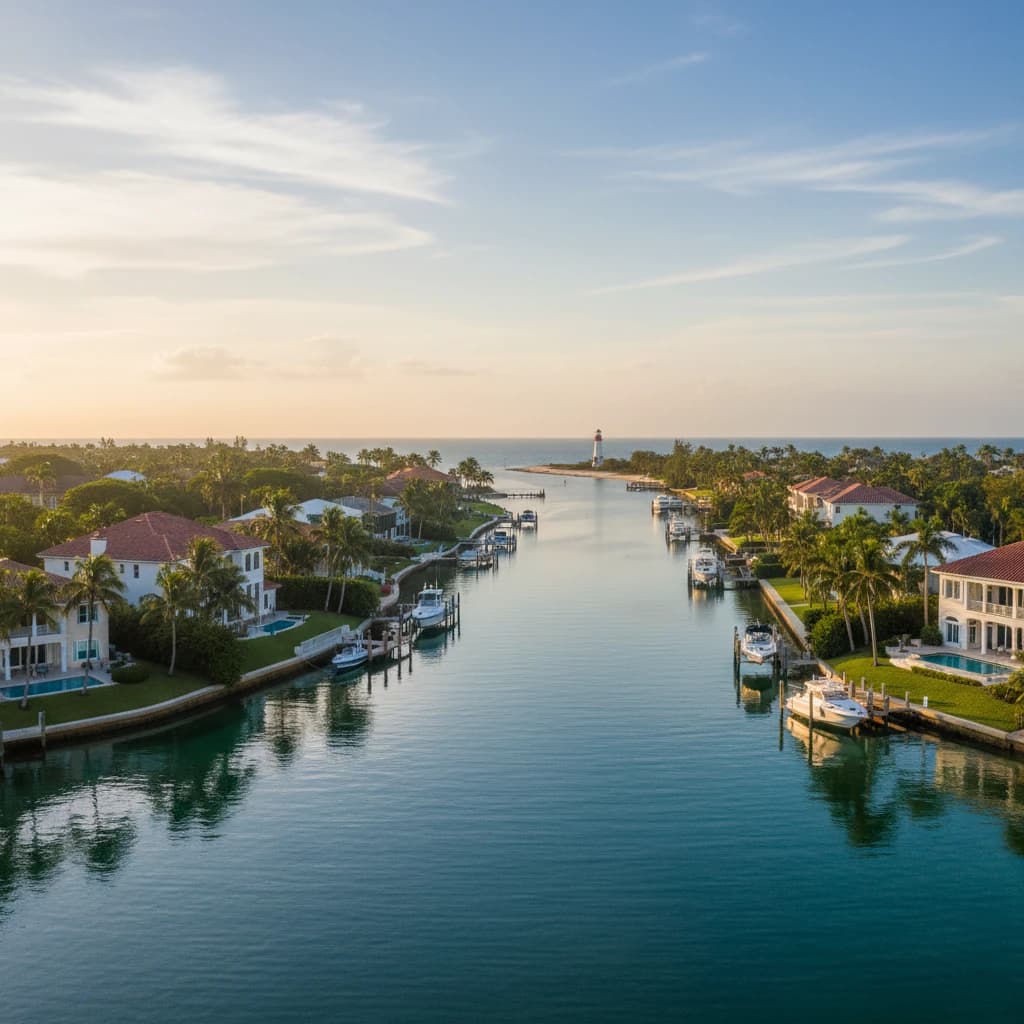
Short answer: A Boynton Beach public adjuster represents you, not your insurer, on Palm Beach County property claims, and under Fla. Stat. 626.854 the fee is capped and contingent. Boynton runs from oceanfront condos to 1980s-and-90s tile-roof neighborhoods east of I-95, where discontinued tile turns a small loss into a matching fight and condo files split between the master policy and each owner's HO-6. Ocean Point Claims (FL DFS #W829547) documents the full scope across both policies and holds carriers to the deadlines in Fla. Stat. 627.70131.
How Frances and Wilma set the pattern for Boynton Beach claims
Two storms still shape how insurers approach losses here. When Hurricane Frances came ashore in 2004, then Wilma followed in 2005, Boynton Beach generated significant claim volumes that taught carriers exactly which streets and which roof systems would file. Two decades later that history drives how new claims get adjusted: files near the coast and along the older corridors east of I-95 draw extra scrutiny, repeat-damage arguments, and quick assumptions about pre-existing wear. We use only the documented storm record when we date a loss, because tying current damage to a specific wind event, and separating it from prior repairs, is often the difference between a paid claim and a denial built on "old damage."
Why a Boynton Beach roof or condo loss gets complicated
Boynton Beach runs from the Atlantic coast inland past I-95, and the building stock changes as you move west. Mid-century single-family homes sit near the older core, oceanfront condos line the coast, and newer 55-and-over communities keep rising west of US-1. That spread matters at claim time. A large share of the single-family homes carry tile roofs put on in the 1980s and 90s, and once a run of discontinued tile breaks, matching becomes the whole fight. Florida's matching statute, Fla. Stat. 626.9744, requires a reasonably uniform appearance, but carriers routinely try to patch a slope instead of replacing it. Along the coast, condo associations face master-policy versus HO-6 scope disputes, where the line between what the building covers and what the unit owner covers has to be documented across both policies before anyone pays.
Claims we handle across Palm Beach County
Ocean Point Claims is a licensed Florida public adjusting firm (DFS license #W829547), and we work the full range of property losses in Boynton Beach and throughout Palm Beach County. That includes hurricane and wind damage, tile and shingle roof claims, sudden water losses and the mold that follows, fire and smoke, and the HOA and condo association claims that turn on master-policy language. We also represent commercial owners on building and business-interruption losses, and we take on claims that are already denied, underpaid, or stalled, plus supplemental claims where the first check never covered the real scope. If you are outside the county, our Florida statewide public adjuster coverage and the full locations list show where else we work.
Why Boynton Beach settlements come up short
Underpayment here usually traces to three moves. First, scope reduction: the carrier's adjuster writes for a repair when the damage calls for replacement, leaving out tear-off, code upgrades, or interior follow-on work. Second, causation disputes: with the Frances and Wilma history on file, insurers lean hard on "pre-existing" and "wear and tear" to shave wind damage off the estimate. Third, and most common on the older tile homes, missed matching: the offer covers a patch of replacement tile that will never match the rest of the roof, ignoring the uniform-appearance requirement in Fla. Stat. 626.9744. On coastal condos the same shortfall hides inside the master-versus-HO-6 gap, where each policy points at the other and the unit owner absorbs the difference. The scale of no-pay outcomes is visible in the state's own numbers: FLOIR reports that a large share of recent Florida hurricane claims closed without any payment (roughly 35% of closed Helene claims and 38% of closed Milton claims), most often on below-deductible or flood-coverage findings rather than a documented paid loss (floir.gov).
How Ocean Point builds and pushes a Boynton Beach claim
We start with a free review of your policy and your loss, then inspect the property on-site, document every damaged system, and read the full policy, including the endorsements and exclusions that change what is owed. From there we build a line-item Xactimate estimate that reflects the real scope, not a patch. We submit and negotiate under Fla. Stat. 627.70131, which sets the insurer's investigation and payment deadlines, and we hold the file to that timeline. When an adjuster digs in, we escalate: appraisal to resolve disagreement over the amount of loss, state-program mediation, or a Civil Remedy Notice under Fla. Stat. 624.155 when the carrier acts in bad faith. If new damage surfaces after settlement, we pursue a supplemental claim within the window set by Fla. Stat. 627.70132.
Fees, timing, and talking to a public adjuster
Public adjusters in Florida work on contingency under Fla. Stat. 626.854, so our fee is a percentage of what we recover for you, and if there is no recovery there is no fee. You also have a 10-day right to cancel after signing, no questions asked. There is no upfront cost for the initial review and no obligation to hire us afterward. Because Boynton Beach claims so often turn on storm dating, matching, and condo scope, an early conversation, before you accept a first offer, tends to protect the most money. Call (888) 824-1306 for a free, no-obligation review, or reach us through our contact page and we will look at your loss with you.