
By Anthony Barber · FL DFS #W101847 · Reviewed: · 2 min read
Why leak detection matters for the insurance claim
Florida policies cover sudden and accidental water discharge. They do not cover long-term seepage, gradual leaks, or wear-and-tear plumbing failures. The source of the leak determines which side of that line the claim falls on.
Without a clear source documentation:
- Carriers default to "gradual / wear and tear"
- Claim gets denied or severely limited
- Policyholder eats the cost
With a proper leak-detection report:
- Source is identified (specific fitting, valve, joint, pipe segment)
- Discharge can be characterized (sudden vs. gradual)
- Repair scope is defined (targeted vs. whole-system)
- Mitigation can begin with the correct plan
Types of leaks we work with
- Supply-line failures: copper, PEX, CPVC pipe ruptures
- Slab leaks: sub-slab plumbing (typically copper) pinhole or rupture
- Cast iron pipe failures: drain-line collapse or rupture (a South Florida specialty)
- Polybutylene pipe failures: distribution pipe in 1980s-90s Florida homes
- Appliance supply lines: washer, dishwasher, ice maker, toilet
- AC condensate line clogs: overflow damage
- Roof leaks: wind-driven or gradual intrusion
- Pool plumbing: underground loop or equipment-pad leaks
- Irrigation / outdoor supply: when it damages foundation or structure
Detection technology
Licensed leak-detection contractors typically use:
- Acoustic listening equipment: slab leaks, pressurized supply
- Thermal imaging: hidden water behind walls and ceilings
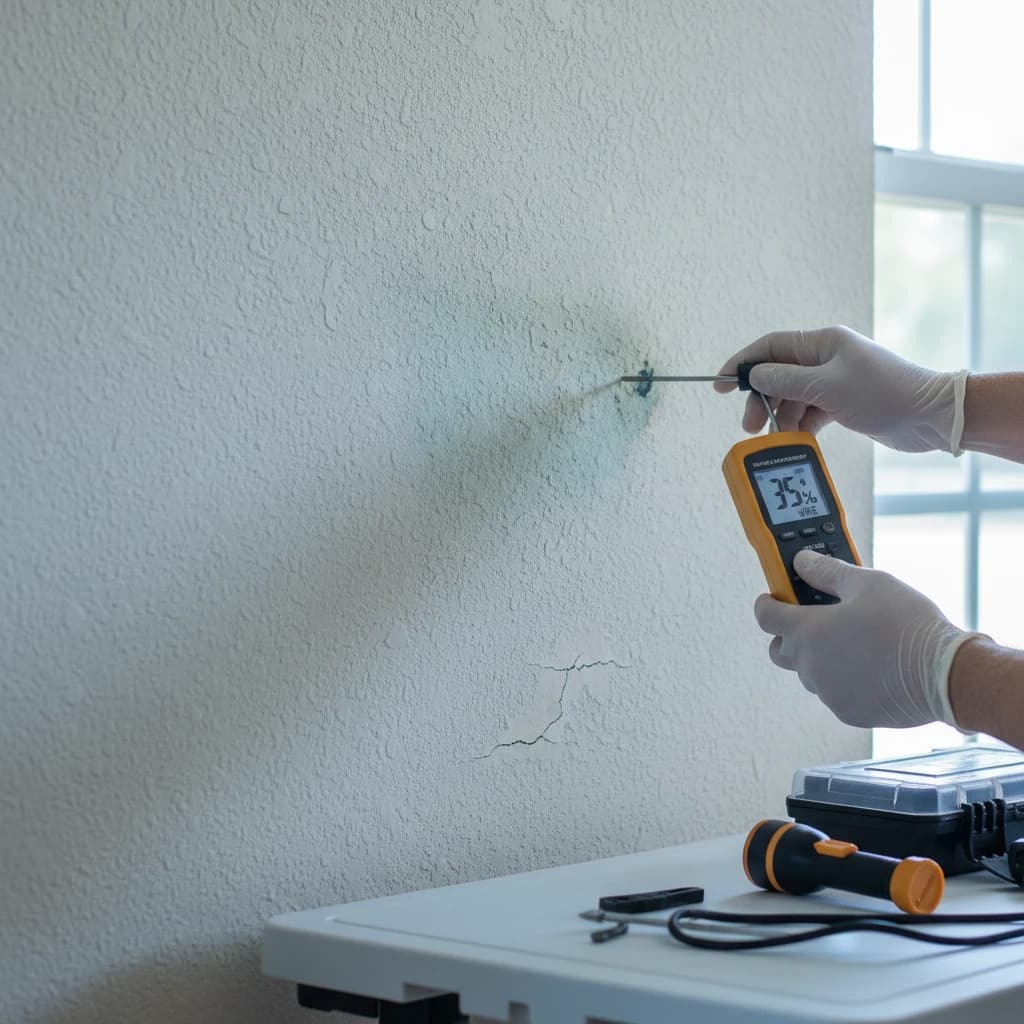
- Moisture meters: quantitative wetness measurement
- Tracer gas: slab leaks, otherwise inaccessible lines
- Borescope / camera inspection: inside pipe walls and voids
- Pressure testing: isolate which segment of a supply system is failing
How the claim unfolds
- Leak detection contractor identifies the source and documents it in a written report.
- Mitigation contractor begins water extraction and drying.
- Ocean Point documents the full water-damage scope (drywall, flooring, cabinetry, contents, mold risk).
- Policy review identifies applicable coverages (water damage, limited water endorsement, mold sublimit).
- Submission with the leak-detection report attached: sudden-and-accidental characterization preserved.
- Negotiation or escalation as needed.
Common pitfalls
- No detection report submitted: carrier defaults to wear-and-tear
- Plumber's bill treated as detection report: a plumbing repair invoice doesn't document source in claim-grade detail
- Mitigation started before detection: scope can't be characterized
- Pipe section thrown away: physical evidence of the failure lost
- Detection cost claimed as separate line: usually covered as part of the loss, not separately
Who leads leak / water claims
Anthony Barber (FL DFS #W101847) leads water-related losses including leak-detection claims. Jacob More (#W740935) handles legacy-plumbing claims (cast iron, polybutylene).