
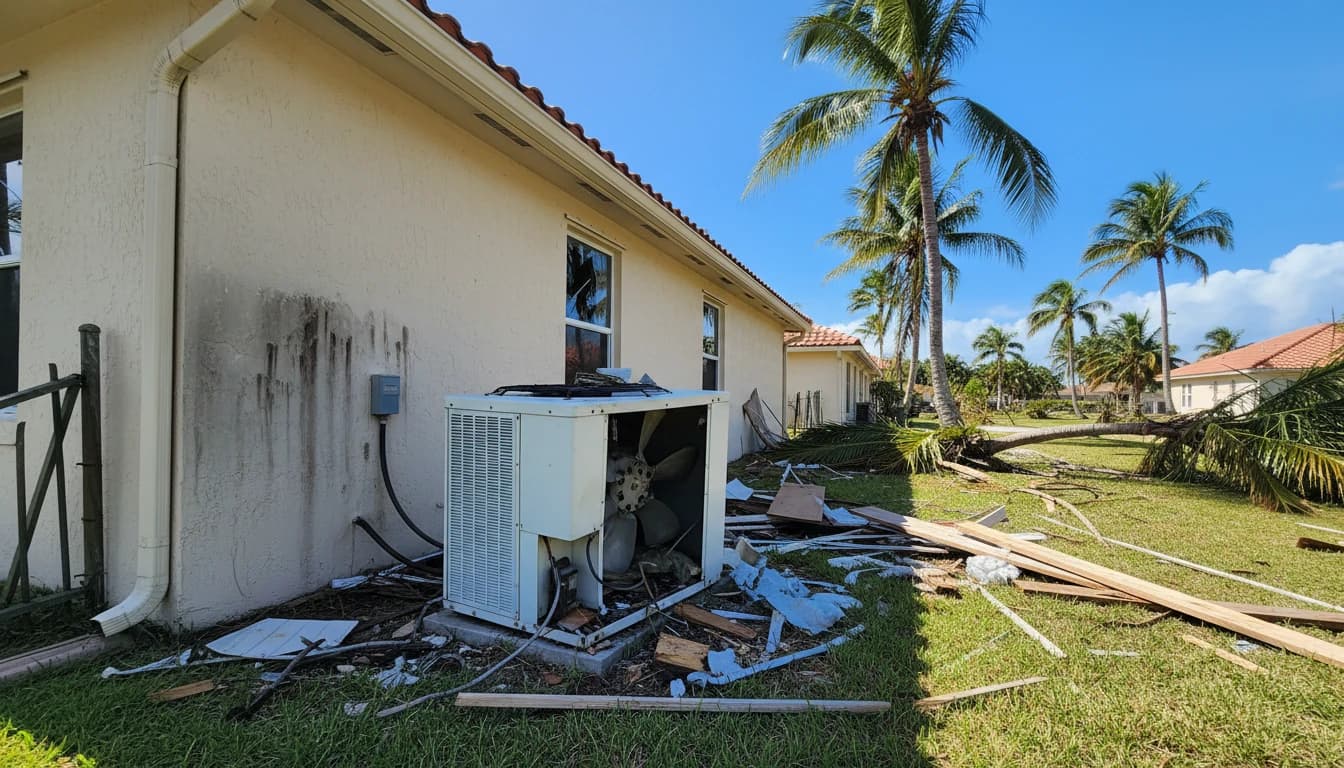
How HVAC gets damaged
Lightning / power surge
Direct lightning strike or grid surge. Damages:
- Compressor
- Control boards
- Capacitors
- Contactors
- Thermostats and smart controls
Water intrusion
From roof leak, flooding, or burst pipe. Damages:
- Electrical components (all)
- Blower motors (corrosion)
- Coil (contamination)
- Drain pan and float switches
- Control systems
Storm debris
Condenser hit by wind-blown debris. Damages:
- Fins and coil
- Fan motor
- Housing
- Electrical connections
Smoke contamination
HVAC draws smoke-laden air through returns. Contaminates:
- Coil
- Blower
- Ducts
- Filters
- Insulation surrounding ducts
Coverage basis
Standard HO-3 and commercial property policies cover HVAC damage from:
- Named perils (wind, lightning, hail, fire)
- Water damage from covered causes
- Sudden-and-accidental failures
Excluded typically:
- Wear and tear
- Mechanical breakdown (unless endorsed)
- Pre-existing issues
Common dispute: repair vs. replacement
Carrier preference: repair
- Individual component replacement
- Keep existing system
- Lower cost
Policyholder position (often): replacement
- Age of system
- Extent of damage
- R-22 vs. R-410A refrigerant (older systems)
- Efficiency code requirements (SEER minimums)
- Warranty implications
The economics
When repair exceeds ~40-50% of replacement cost, replacement often justified. Age (15+ years) strengthens replacement argument.
Code upgrades
Florida Building Code requires minimum SEER ratings for new HVAC installations (currently 14 SEER or higher in Florida for residential). If repair is economically borderline, code-upgrade costs may push toward replacement.
Law-and-ordinance coverage pays the delta.

Documentation essentials
- Pre-loss system age (manufacturer date on plate)
- Service records
- Post-loss professional evaluation
- Detailed damage assessment
- Repair quote vs. replacement quote
- Code-compliance requirements
- Efficiency specifications
Industrial hygienist role (for smoke and water)
On smoke-contaminated or water-affected systems:
- Air sampling showing contamination
- Duct cleaning vs. replacement determination
- Coil cleaning vs. replacement
- Clearance testing post-remediation
Common carrier tactics
Component-only
"Replace the capacitor; keep the system." Ignores broader damage.
Inadequate pricing
Xactimate HVAC line items often below Florida market; contractor quotes counter.
Deny as wear-and-tear
Without specific evidence of pre-existing deterioration.
Limit scope to visible
Miss internal contamination, electrical damage, refrigerant system issues.
The NADCA standard
National Air Duct Cleaners Association (NADCA) sets standards for duct cleaning. Post-smoke or water events, NADCA-compliant cleaning (or replacement) is typically required. Reference this standard in scope documentation.
Replacement specifications
If replacement is warranted:
- SEER rating meeting current code
- Equivalent capacity (tons)
- Matching refrigerant system
- Installation labor
- Permit and inspection
- Removal and disposal of old system
How Ocean Point handles HVAC scope
- HVAC contractor evaluation (not carrier's preferred vendor)
- NADCA-certified duct cleaning / replacement quote
- IH report if contamination
- Code-compliance analysis
- Side-by-side scope vs. carrier
- Negotiation or escalation