
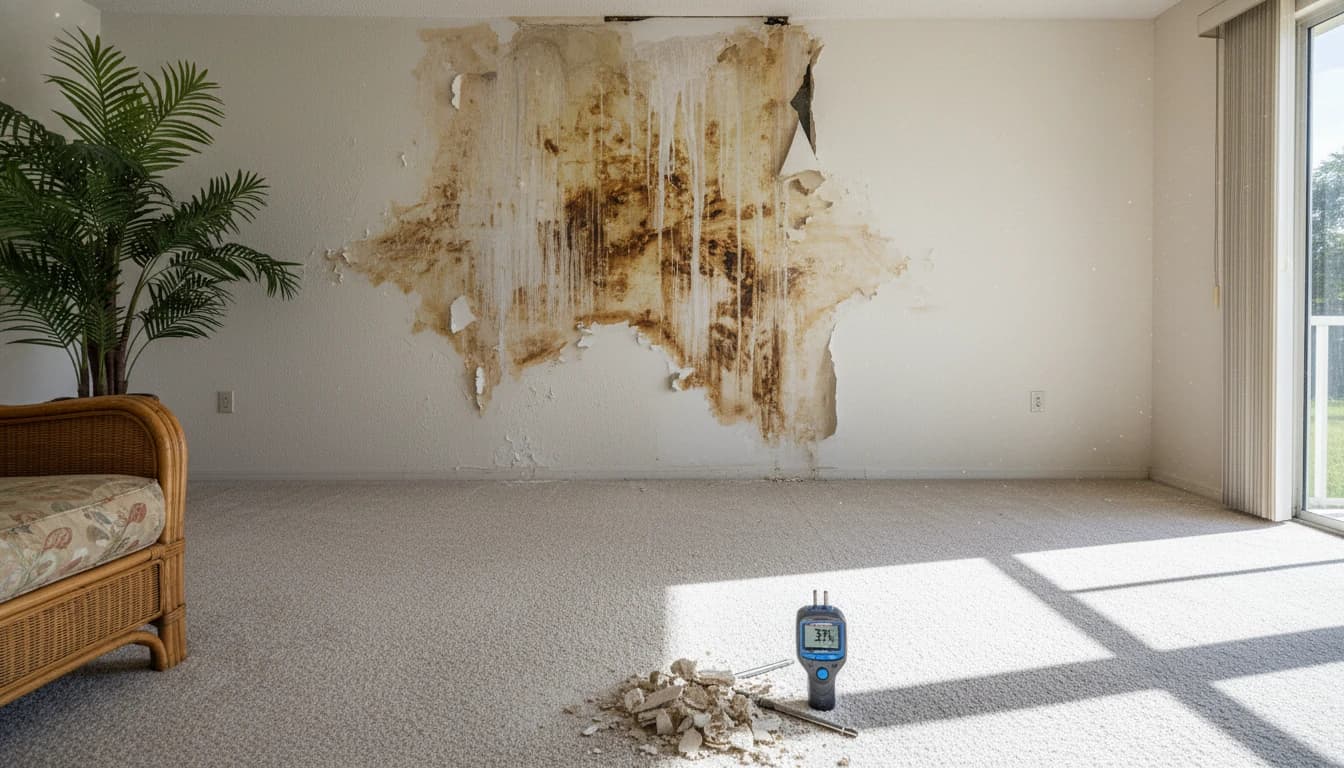
Why hidden damage matters
Water follows gravity and capillary paths. A ceiling stain from an overhead leak is the end of the trail: the path from source to stain can span 4-20 linear feet through wall cavities, insulation, and structural framing.
Carriers document what they see. Field adjusters typically don't open walls. The damage inside wall cavities goes unpaid unless someone specifically documents it.
Where water hides
Wall cavities
Water wicks up drywall from below and down from above. Insulation holds moisture. Stud bays can stay wet for weeks.
Under cabinets
Base kitchen cabinets trap water. Floors under cabinets often stay wet long after visible areas dry.
Inside insulation
Fiberglass and cellulose both absorb and retain moisture. Mold develops.
Subfloor
OSB and plywood subfloor absorb from above and below. Swelling, delamination, structural compromise.
Behind built-ins
Bookshelves, vanities, entertainment centers hold water and block airflow.
HVAC ducts
Metal ducts rust. Flex-duct liners grow mold. Return-air chases distribute moisture.
Plumbing chases
Vertical chases carry pipe and also carry leaked water through multiple floors.
How to detect it
Moisture meter
Pin or pinless. Readings on drywall, flooring, framing. Elevated readings indicate hidden moisture.
Thermal imaging
Moisture is cooler than dry material. Thermal cameras reveal patterns indicating hidden wet areas.
Borescope
Insert through small inspection hole to photograph inside wall cavity.
Air sampling
Elevated mold spores in specific rooms (vs. outside baseline) suggest hidden moisture source.
Destructive investigation (last resort)
Small access holes to document directly.
When to investigate
- Any water event of meaningful scope
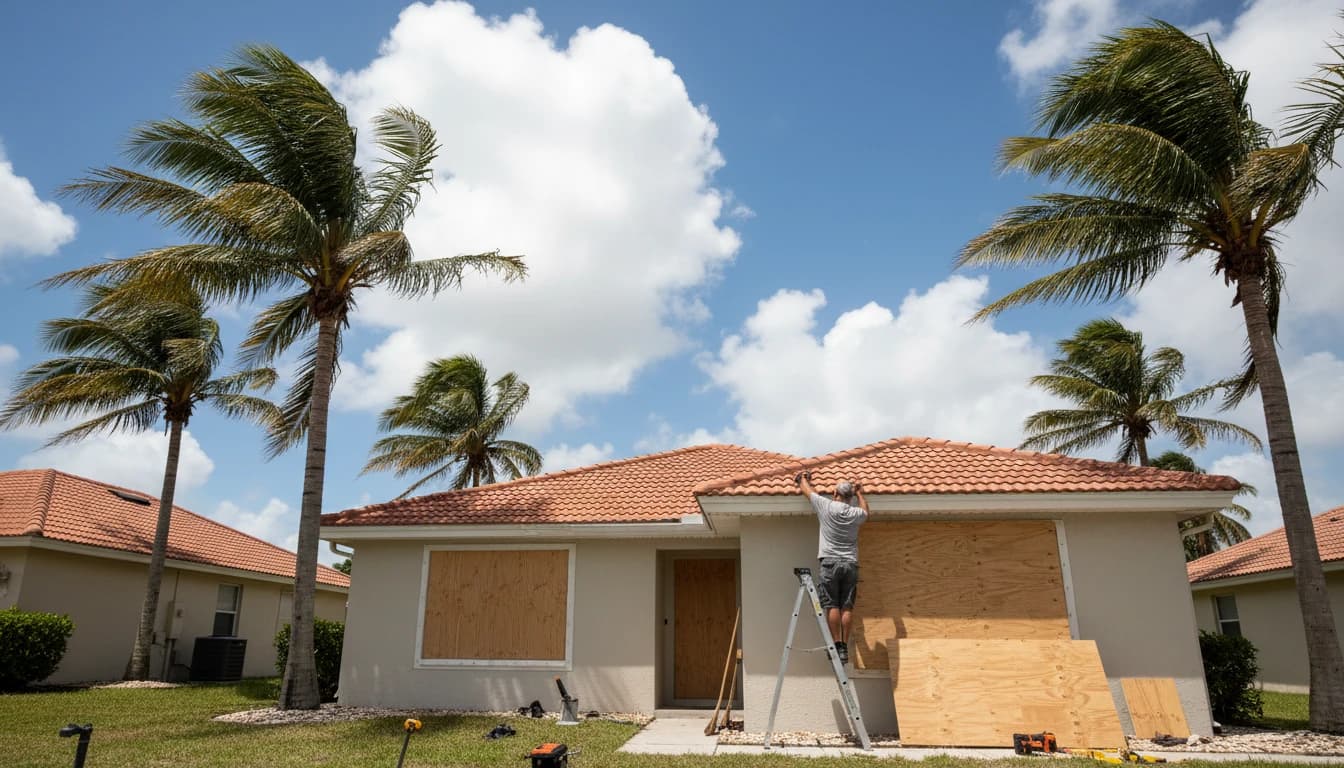
- Post-storm roof leaks with interior staining
- Mold or musty odor with no visible source
- Prior water claim with suspected inadequate remediation
- Persistent moisture readings after mitigation

Documenting for the claim
- Moisture readings with location, date, and meter brand
- Thermal imaging screenshots with date/time
- Borescope photos with location noted
- IH report documenting hidden damage
- Post-demo photos showing revealed damage
The scope that follows
Properly-documented hidden damage supports:
- Additional drywall removal
- Insulation replacement
- Framing drying, treatment, or replacement
- Subfloor removal/replacement
- Cabinet replacement (when backs are saturated)
- Flooring continuous-area replacement
- HVAC remediation
Each line item is recoverable when documented.
Common carrier responses
- "The adjuster didn't see any hidden damage" → submit IH/moisture documentation
- "That damage wasn't there at first inspection" → document timeline of discovery
- "Not related to the covered peril" → establish causation via moisture path analysis
Supplemental filings
Hidden damage discovered during repairs is the most common supplemental trigger. File within the 18-month window.