
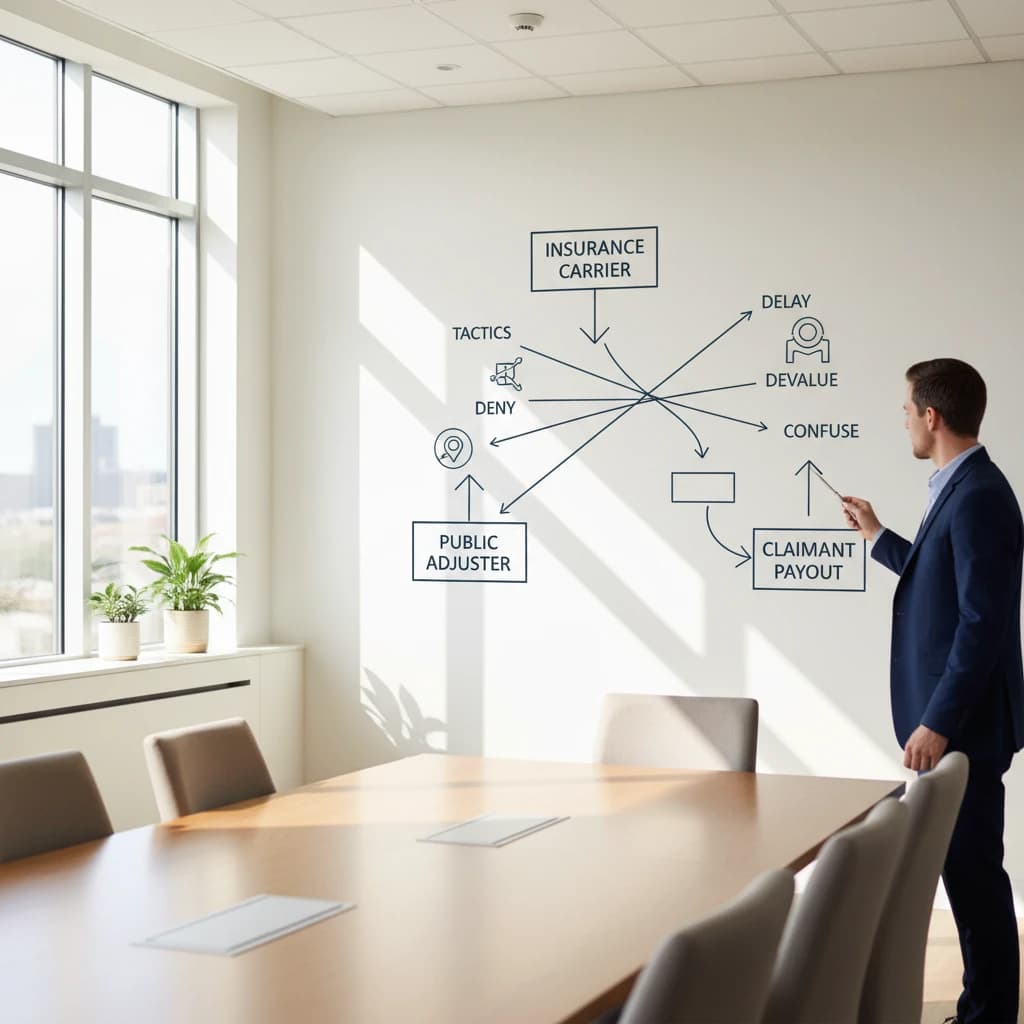
The playbook, decoded
Short answer: Florida insurers reduce payouts using a predictable playbook: narrowing the damage scope, calling damage cosmetic, inflating depreciation, steering you to preferred vendors, leaning on insurer-friendly engineer reports, sending partial payments to close the file, forcing appraisal early, and ignoring your contractor's estimate. Spotting these moves early helps you push back and recover what your policy actually owes.
Most underpaid Florida claims are not bad luck; they follow a repeatable set of cost-control tactics that insurers apply file after file. The damage is real, the policy covers it, and yet the offer lands far below the true cost to repair. Once you can name the tactic in front of you, it loses most of its power, and you can respond with documentation instead of frustration.
How insurers quietly shrink a claim
Reduction usually starts with the scope of loss. An adjuster writes for a patch instead of full replacement, omits matching for roofing or flooring, or leaves out code-driven work that ordinance or law coverage may pay for. From there the familiar moves stack up: labeling storm damage as cosmetic, inflating depreciation so the actual cash value collapses, and minimizing interior damage that traces back to a covered opening in the building. Each move shaves dollars in a way that looks technical and routine, which is exactly why it works.
The pressure and the paperwork
Other tactics are about control and timing rather than line items. Preferred-vendor steering puts the carrier's contractor between you and an honest repair number. A favorable engineer report becomes the stated reason for denial, even when its conclusions do not match field conditions. A partial payment arrives framed as final, nudging you to cash it and close. And appraisal can be invoked early, before the scope is fully documented, locking in a low baseline. Meanwhile a detailed contractor or Xactimate estimate sits in the file, acknowledged but ignored.
Reading the playbook on your own claim
This hub breaks down each tactic in plain terms: what it looks like, why carriers use it, and how a Florida policyholder counters it with proof of loss, photo documentation, independent estimates, and the rights spelled out in your policy and the homeowner bill of rights. None of this requires you to become an adjuster. It requires recognizing the pattern and holding the carrier to the contract. If your offer feels low or a denial does not match the damage you can see, have your claim reviewed. Ocean Point Claims works on a no recovery, no fee basis, so a second look on your numbers costs you nothing.
Frequently asked questions
How do I know if my Florida insurance company is underpaying my claim?
Is my insurer allowed to call my damage cosmetic and deny it?
Should I cash a partial payment from my insurance company?
What is appraisal and why would my insurer push for it early?
Do I have to use my insurer's preferred contractor or vendor?
Ready to talk to a licensed Florida public adjuster?
☎ (888) 824-1306Free claim review. No recovery, no fee. Answered 24/7.
Get a free claim review- License
- FL DFS #W829547
- Experience
- 21 years · 500+ mediations
- Rating
- 4.9★ (89 Google reviews)
- Fee
- No recovery, no fee