
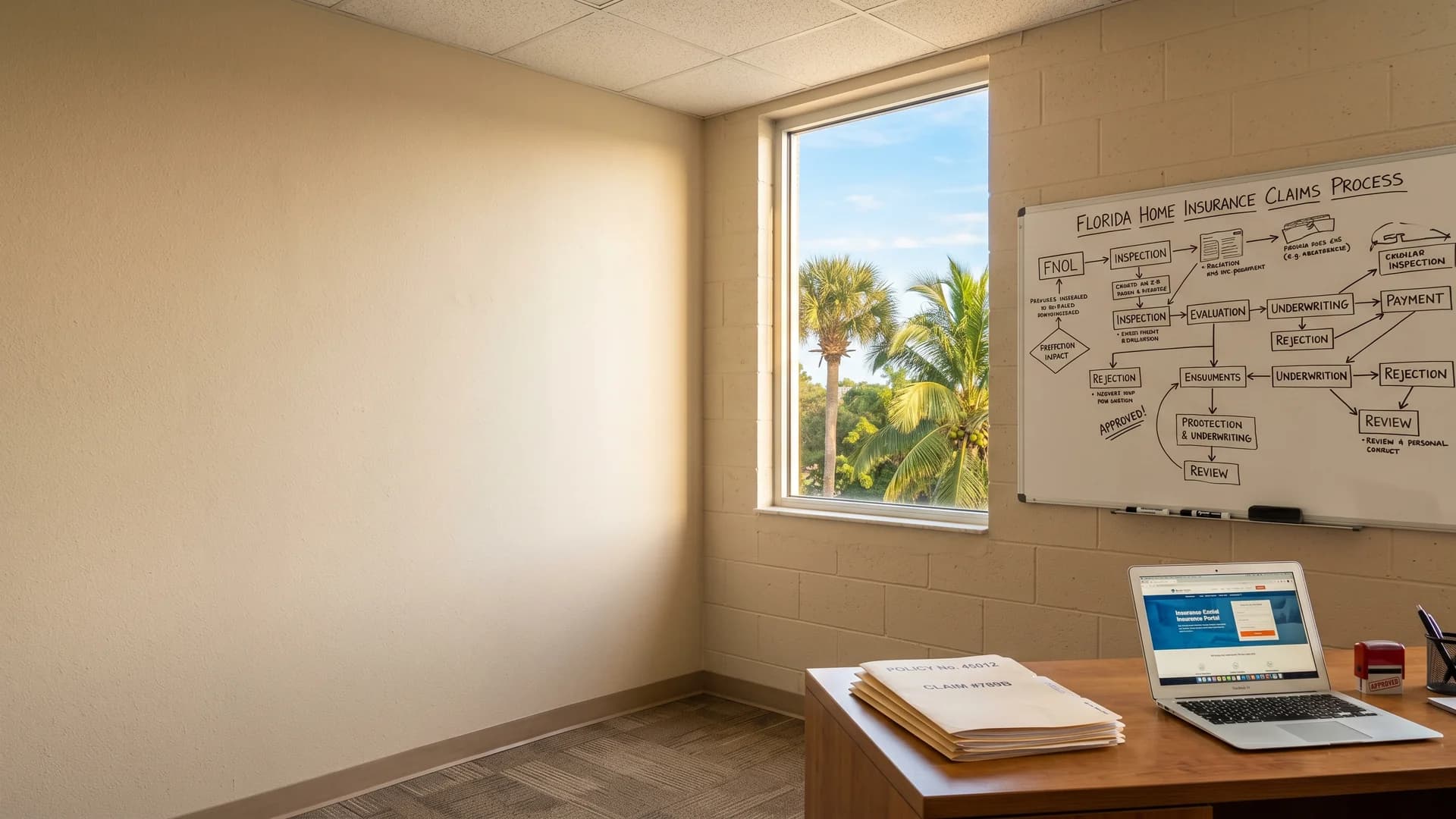
Inside the Florida claim process
Short answer: In Florida, a property insurance claim moves through first notice of loss, an adjuster inspection, a carrier estimate, internal review, and payment authorization, followed by any reinspection or supplement. When you and your insurer disagree on the amount of loss, Florida dispute paths like state mediation and policy appraisal can close the gap.
A Florida property insurance claim is a sequence of decisions made mostly by people who work for your insurer, and understanding that sequence is the difference between a fair payment and a quiet shortfall. Every claim follows the same skeleton, even when carriers describe it in their own language, and knowing each step shows you where your file sits and where leverage exists.
From first notice of loss to the carrier estimate
It begins with first notice of loss, the moment you report the damage. The carrier opens the claim, schedules an inspection, and sends a field or desk adjuster to document the damage. What happens before and after that visit matters: how you prepare the property, how the adjuster behaves on site, what gets photographed, and what gets left out. From those notes the carrier builds an estimate, often in Xactimate, and that figure becomes the number every later decision is measured against. If scope is missed here, the underpayment is baked in early and hard to unwind later.
Internal review, payment, and the dispute paths
Once an estimate exists, it travels through internal approval chains before any money is authorized. Reviewers apply your policy language, deductible, depreciation, and coverage limits, then release payment in stages, frequently holding back recoverable depreciation until repairs are finished. Claims commonly stall here, draw a reinspection, or call for a supplement when hidden damage surfaces during repairs. When you and the carrier cannot agree on the amount of loss, Florida gives you formal options: state mediation and the appraisal clause in your policy, where each side names an appraiser, the two appraisers select a neutral umpire, and any two of the three set the binding amount.
The pages below break each stage down in plain terms, from how an adjuster works a property and how a carrier estimate is built to supplement review, appraisal, and how an umpire breaks a deadlock, so you can see exactly where your claim stands.
If your payment feels low, your claim has stalled, or a denial does not match the damage, a public adjuster can review the file on your behalf. Ocean Point Claims represents Florida policyholders only, on a no recovery, no fee basis. Start with a free review of your claim.
Frequently asked questions
How long does the Florida insurance claim process take?
Why did my insurance company pay less than my contractor's estimate?
What is the appraisal clause and when should I use it?
Can I file a supplement after my claim has already been paid?
What is the difference between mediation and appraisal in Florida?
Ready to talk to a licensed Florida public adjuster?
☎ (888) 824-1306Free claim review. No recovery, no fee. Answered 24/7.
Get a free claim review- License
- FL DFS #W829547
- Experience
- 21 years · 500+ mediations
- Rating
- 4.9★ (89 Google reviews)
- Fee
- No recovery, no fee